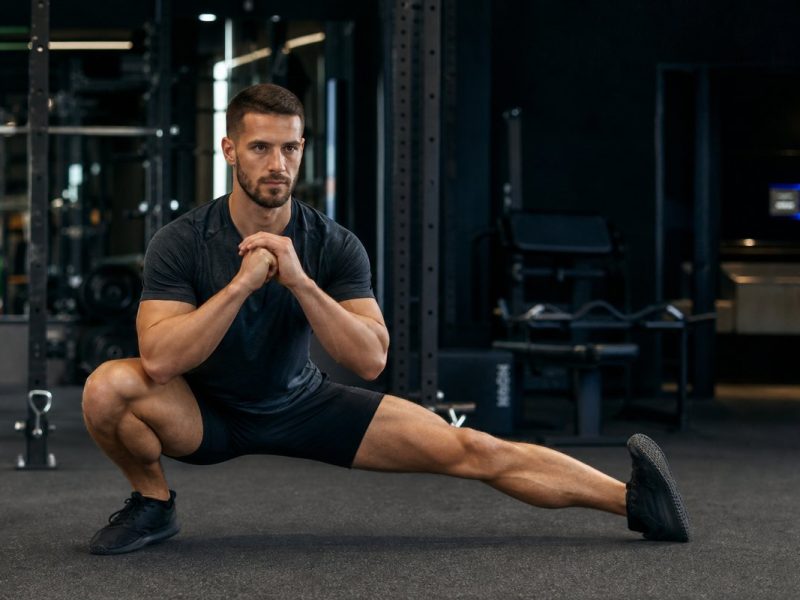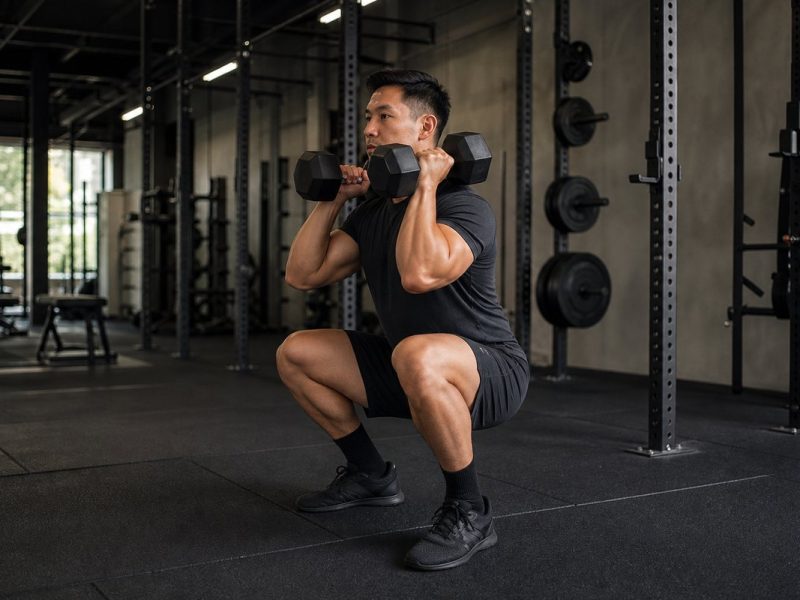

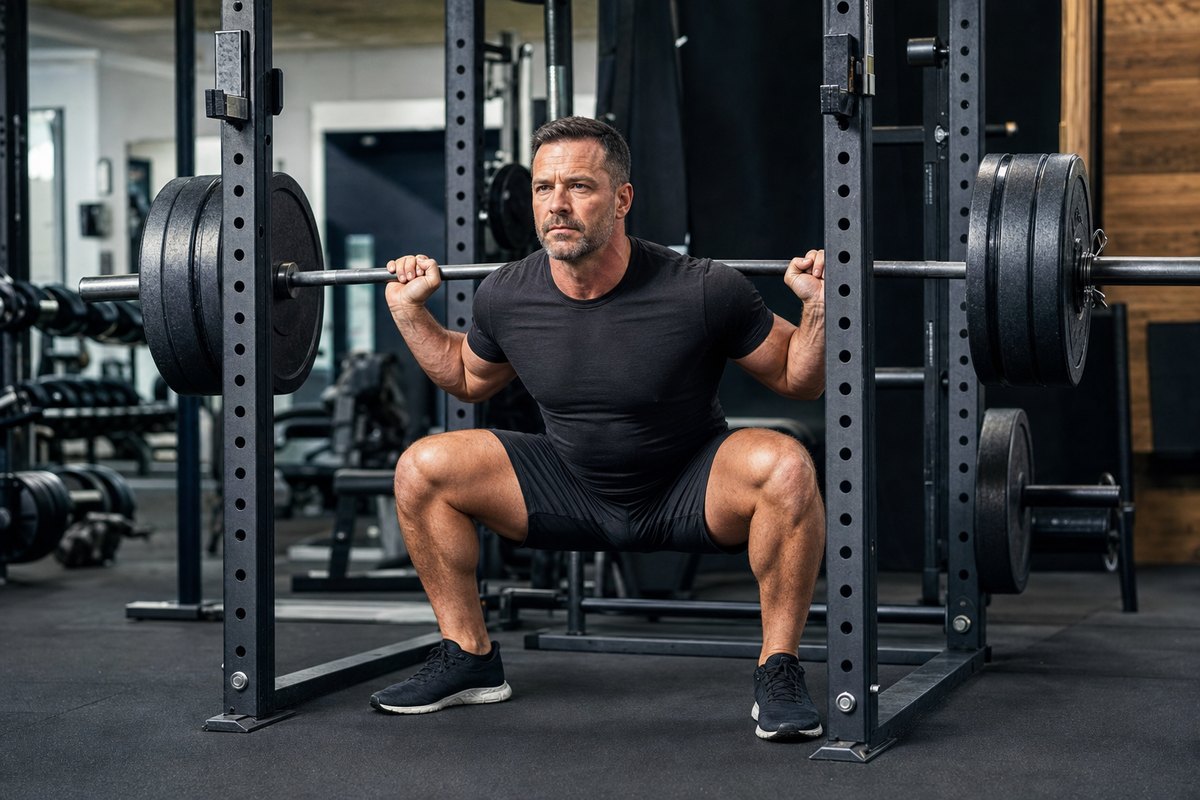
The wide-stance squat opens the feet wider than shoulder-width. The wider base shifts emphasis to the glutes, adductors and hamstrings while reducing knee flexion demand. It’s the powerlifter’s stance for maximum load, and a smart choice for anyone chasing glute development.
What it is
The wide-stance squat is a back squat performed with feet 1.3-1.8x shoulder-width, toes flared outward at 30-45°. The wider stance shortens the range of motion, biases the posterior chain (glutes, adductors, hamstrings), and lets most lifters handle more weight than standard-stance squats.
Muscles worked
| Muscle | Contribution |
|---|---|
| Glutes | ~35 % |
| Adductors, hamstrings | ~35 % |
| Quadriceps | ~25 % |
| Core | ~5 % |
How to wide-stance squat: 5 steps
-
Set the bar
Bar on back, **feet at 1.3-1.8x shoulder-width, toes out 30-45°.**
-
Brace
**Core tight, chest up, knees push outward.**
-
Descend
**Sit hips back and down, knees track over toes.**
-
Depth
**Hip crease at or below knee level.**
-
Drive up
Push through floor, hips forward, return to standing.
How it differs from standard squat
- Feet at 1.3-1.8x shoulder-width. Wider than standard.
- Toes flared 30-45°. Standard is 15-20°.
- Glute and adductor emphasis. Less quad, more posterior chain.
- Shorter range, heavier loads. Powerlifter default for that reason.
Common mistakes
When to use this variation
Use wide-stance squats for max strength, glute development, or when standard squats bother the knees. Program 3-4 sets of 5-8 reps. Pair with narrow-stance work for complete leg development.
FAQ
How wide?
1.3-1.8x shoulder-width. Beyond that stresses hips without extra benefit.
Toe angle?
30-45° outward. Match knee tracking to toes to protect the joint.
Wide-stance or sumo deadlift?
Similar muscles engaged. Squat trains the descent-and-drive pattern; sumo deadlift trains the pull. Use both.
Related exercises
- Squat: standard stance
- Narrow-Stance Squat: opposite variation
- Sumo Deadlift: similar hip pattern
- Box Squat: often programmed wide-stance
Published by: Martin Wood — Writer covering quad exercises
Reviewed, corrected and approved by: Martin Wood — Editor-in-chief
Updated on July 21, 2026