
The squat is the king of strength exercises. There is no movement that does more for total-body power, leg size, athletic performance and bone density per minute spent under the bar. It is also the lift that intimidates beginners the most, partly because the technique looks complicated and partly because the gym crowd has built an unhelpful mythology around it.
This guide cuts through that. We’ll cover what the squat actually trains, how to set it up step by step, the depth question (everyone’s favourite argument), the five mistakes that cost beginners their knees, and the variations worth using once you’ve earned them. By the end you should have everything you need to walk up to a rack and squat with intent.
What is the squat?
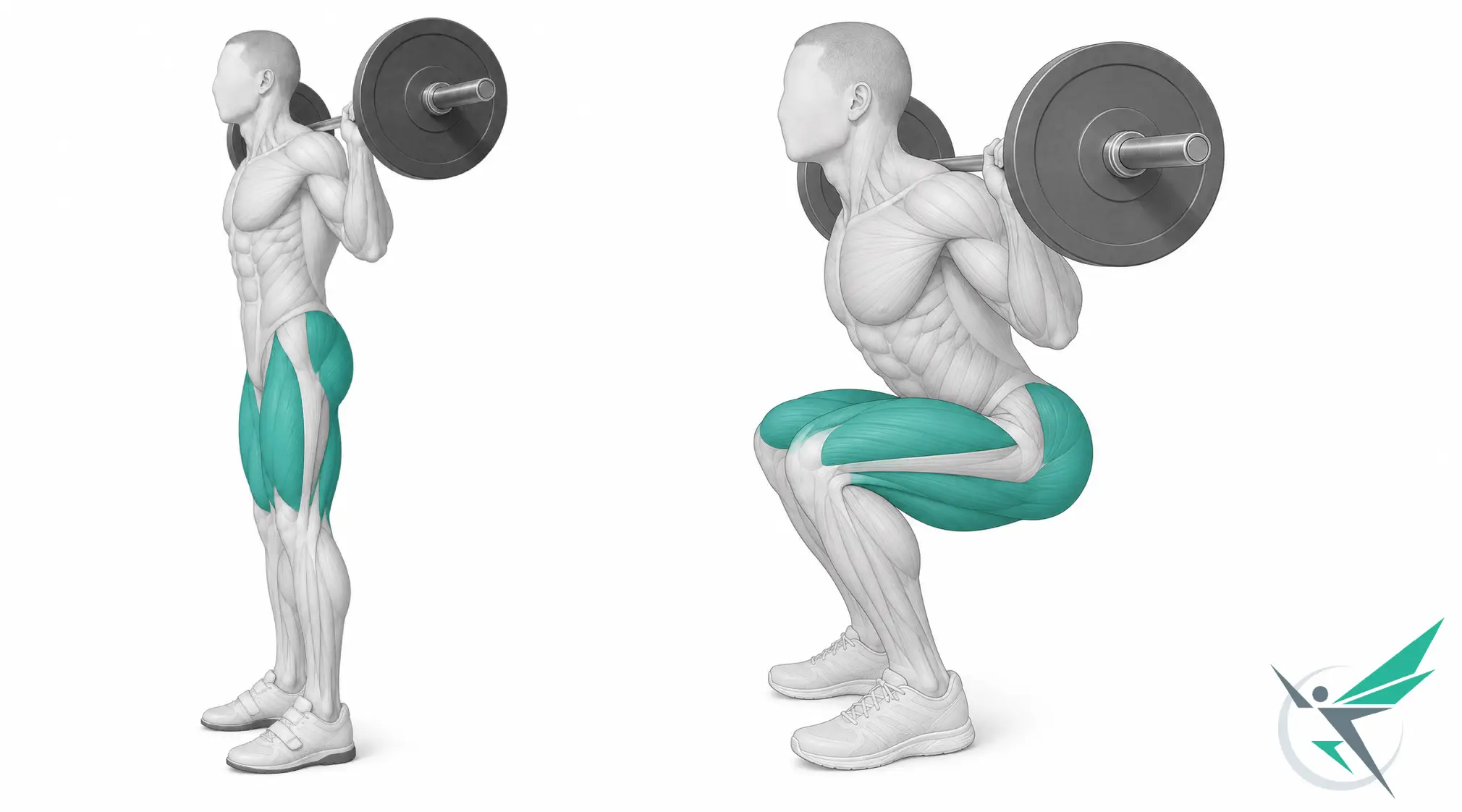
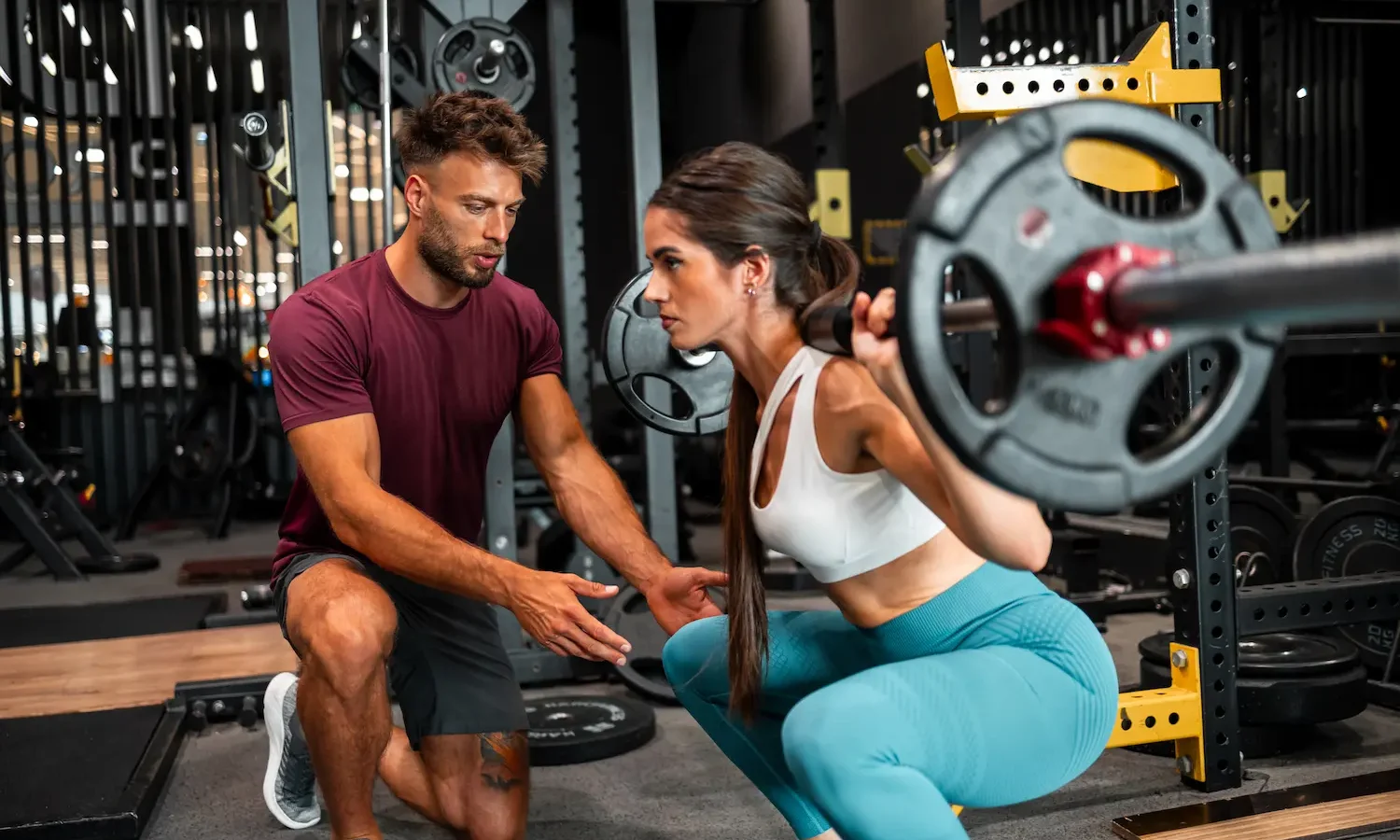
The squat is a vertical loading pattern in which you place a loaded barbell across your upper back, descend by bending the hips and knees until your hip crease drops below the top of your knee, and stand back up. It is one of the three lifts in powerlifting alongside the bench press and deadlift, and arguably the most useful of the three for general fitness.
The squat is sometimes called the “back squat” to distinguish it from variations where the bar sits elsewhere (front rack, overhead, goblet position). When people say “squat” without qualification, they almost always mean the high-bar back squat. Lower-bar variants (powerlifting style) shift the bar onto the rear delts and lean the torso forward more, which trades some quad work for more posterior chain involvement. Both are valid. Pick one, train it for a year, and worry about the other later.
Muscles worked
The squat is a true full-body lift. Nearly every muscle below your shoulders is doing something. Here’s the rough split:
| Muscle group | Role | Contribution |
|---|---|---|
| Quadriceps | Primary mover, knee extension | ~40 % |
| Glutes (gluteus maximus) | Hip extension at the bottom | ~30 % |
| Hamstrings | Hip extension, knee stabilisation | ~15 % |
| Erector spinae · Core · Calves | Posture, bracing, balance | ~15 % |
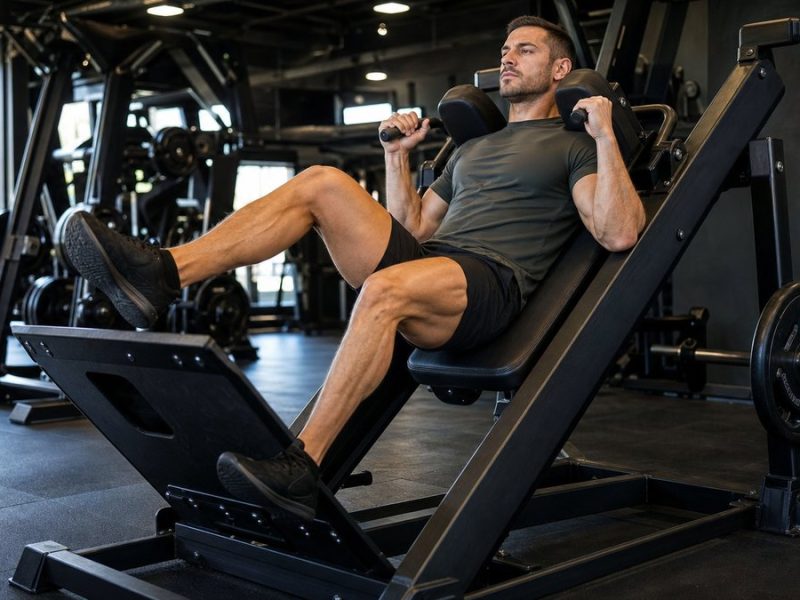
Two notes worth dwelling on. First: the squat is not a quad-isolation exercise, despite what your friend in the powerlifting forum says. The glutes are doing massive work, especially in the bottom half of the rep. If you want bigger quads specifically, the front squat or the leg press will do more for them per set than the back squat will.
Second: the core. The amount of bracing required to hold a heavy bar on your back without collapsing forward is huge. Many beginners “fail” their squats not because their legs gave up but because their lower back rounded and the lift turned into a good morning. A strong squat is built on a strong torso as much as on strong legs.
How to squat: 5 steps
Read all five steps before your first set under load. Cues in bold are non-negotiable.
-
Set the rack and unrack the bar
Set the J-hooks just below shoulder height. Step under the bar, place it across your upper back on the rear delts and traps. Pinch the upper back tight. Stand up to unrack and take 2-3 controlled steps backwards.
-
Set your stance
Feet shoulder-width to slightly wider, toes turned out 15-30°. Plant the whole foot — heel, ball, big toe, little toe. Spread the floor apart with your feet.
-
Brace and descend
Deep breath into the belly, brace the core hard. Break at hips and knees at the same time. Sit down between your heels, knees tracking over feet (not caving). Torso upright (high-bar) or slightly forward-leaning (low-bar).
-
Hit depth and reverse
Descend until your **hip crease drops below the top of your knee**. Brief turnaround at the bottom — no bounce. Drive the floor away with the whole foot.
-
Stand up
Lead with the chest (high-bar) or hips (low-bar). Bar travels in a straight vertical line over the mid-foot. Lock out hips and knees at the top. Reset the breath and go again.
A clean rep takes about three seconds. Pause squats slow it down further. If your bottom position feels rushed, it is.
Common mistakes to avoid
The squat punishes lazy technique faster than the bench press. Most knee and back issues in lifting trace back to one of these five.
Squat variations
You don’t need to do all of these. Pick one or two as accessory work alongside your main back squat.
- Front squat. Bar racked on the front delts. Forces a more upright torso and bias toward the quads. Demands wrist and shoulder mobility. Excellent for weightlifters and anyone with a back-friendly leg day.
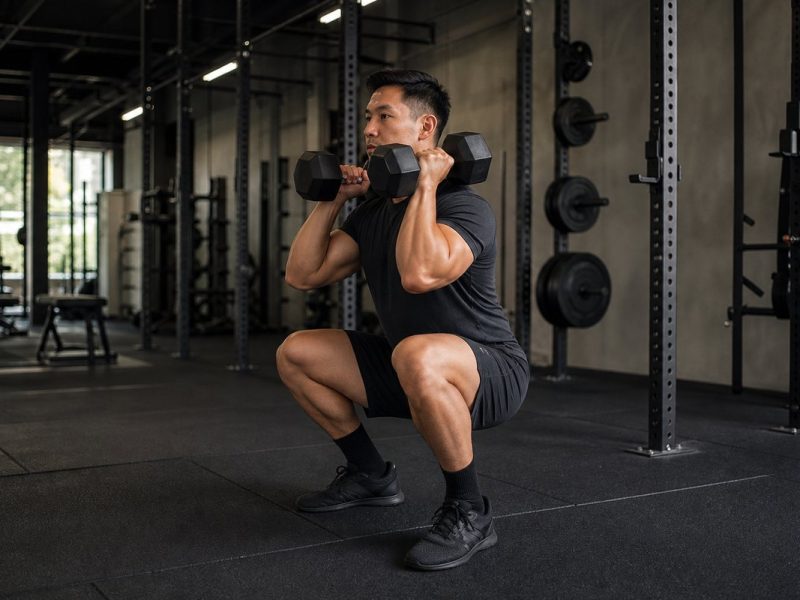
- Goblet squat. Single dumbbell or kettlebell held at chest level. The teaching variant of the squat. Self-corrects depth and posture. Anyone who can’t squat with a bar should goblet squat for a month first.
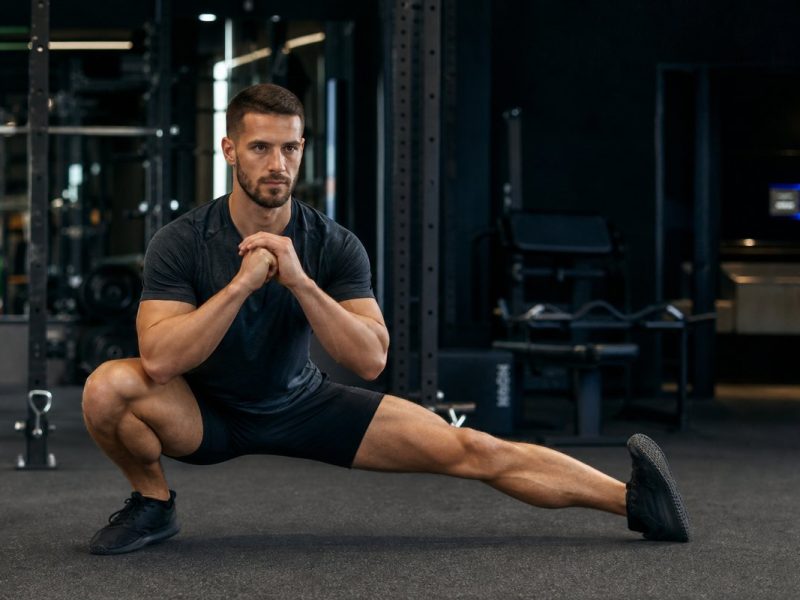
- Bulgarian split squat. Rear foot elevated on a bench, single-leg squat. Brutal for hypertrophy. Addresses left-right asymmetries that the back squat hides. Build up slowly — DOMS on this one is legendary.
- Box squat. Squat down to a box at parallel, pause briefly, stand up. Powerlifting accessory that breaks the stretch reflex and teaches sitting back into the hips. Useful if your sticking point is at the bottom.
- Pause squat. Three-second pause at the bottom. The same idea as the paused bench press: kills momentum, builds bottom-position strength. Add to your training when your squat plateaus.
- Overhead squat. Bar locked out overhead in a snatch grip. Brutal mobility test, modest hypertrophy benefit. Useful for crossfit and weightlifting; skip if you’re just trying to get strong.
Sample workout: 4-week strength block
Squat twice per week. Add 2.5-5 kg to your top sets each week if all reps were clean and at the right depth. If you cut depth or grind a rep, repeat the week.
| Week | Day 1 | Day 2 | Intensity |
|---|---|---|---|
| 1 | 3 × 8 | 3 × 5 | 65 / 70 % 1RM |
| 2 | 4 × 6 | 4 × 4 | 72 / 78 % |
| 3 | 5 × 5 | 5 × 3 | 78 / 85 % |
| 4 (deload) | 3 × 5 | 3 × 3 | 65 / 70 % |
After four weeks, retest the 1RM (or projected 1RM from a 5RM). Add one accessory leg movement on day 1 (Bulgarian split squat or front squat) and one posterior chain movement on day 2 (Romanian deadlift).
Frequently asked questions
How deep should I squat?
To at least parallel — meaning the crease of the hip drops below the top of the knee. Going deeper is fine if your mobility allows it without losing the lower-back arch. Going less deep is, with very rare exceptions, a sign you’re using too much weight.
My knees hurt when I squat. Should I stop?
Maybe. First check the obvious: are your knees caving in? Are you cutting depth and dumping the load onto the front of your knees? Are your shoes too soft? Fix those first. If pain persists after a fortnight of clean technique with reduced load, see a physio. The squat is rarely the cause of knee pain in healthy adults; bad squat technique often is.
Should beginners squat with a barbell or use a machine?
Barbell. The squat is one of the most learnable lifts on the planet — start light (an empty bar), film yourself, get a coach if possible. Leg press machines are useful for hypertrophy but they teach you nothing about coordination, balance and bracing. The earlier you learn to squat properly, the better.
How often should I squat?
Twice a week is the productivity sweet spot for most beginners and intermediates. Once a week is enough to maintain strength but slow to grow. Three times a week works for some advanced lifters with clean technique but is too aggressive for most.
Is the squat bad for my back?
No, with caveats. The squat is one of the most effective lifts for building a strong, resilient lower back. It’s also one of the easiest to do badly. Round the lower back under load and you can hurt yourself. Brace properly, hit depth, keep the bar over your mid-foot, and the squat will protect your back, not damage it.
Related exercises
- Front Squat: more quad, more upright, harder on mobility
- Goblet Squat: the teaching squat, for technique work
- Bulgarian Split Squat: brutal single-leg variant
- Romanian Deadlift: posterior chain partner to the squat
- Leg Press: machine accessory for added quad volume
For beginner progression, place the squat inside a broader safe strength training plan rather than treating it as a one-off exercise.
Published by: Jay — Writer covering quad exercises
Reviewed, corrected and approved by: Martin Wood — Editor-in-chief
Updated on September 29, 2026