
The narrow-stance squat uses feet closer than shoulder-width to shift emphasis onto the quads. The narrower base reduces glute and adductor contribution while increasing knee flexion — creating one of the most quad-dominant squat variations possible.
What it is
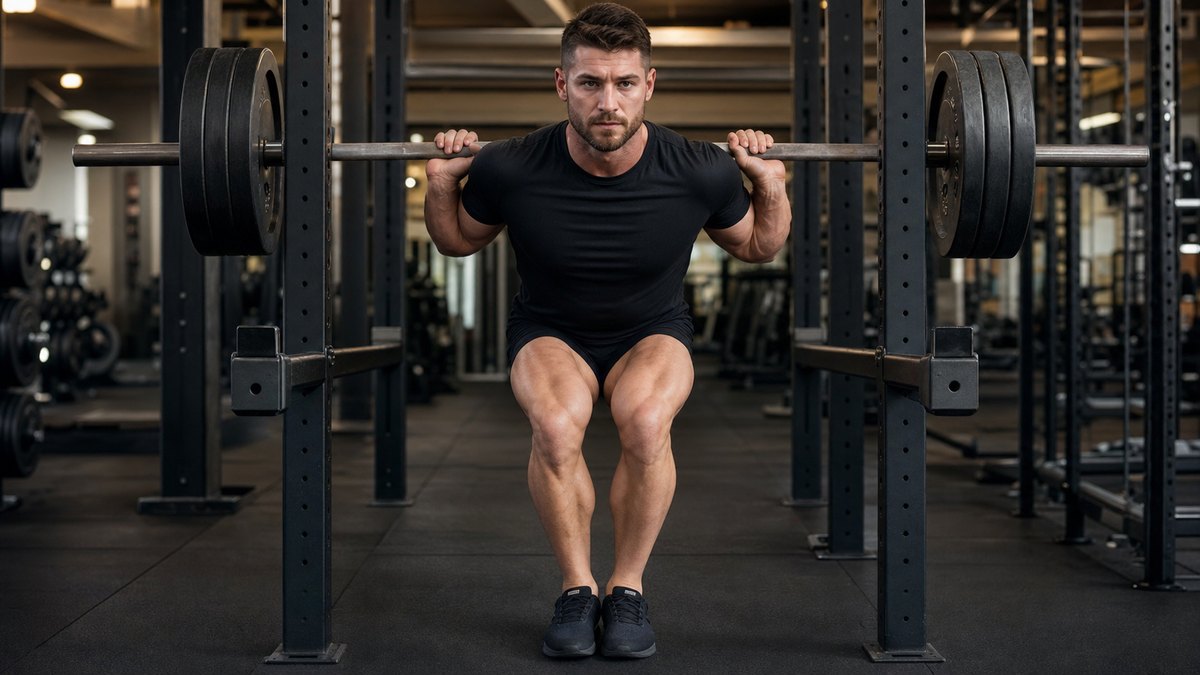
The narrow-stance squat is a back squat or front squat with feet at hip-width or narrower (rather than the standard shoulder-width). The narrower foot placement forces more knee flexion and less hip contribution, biasing the quadriceps.
Muscles worked
| Muscle | Contribution |
|---|---|
| Quadriceps | ~55 % |
| Glutes | ~20 % |
| Hamstrings, adductors | ~15 % |
| Calves, core | ~10 % |
How to narrow-stance squat: 5 steps
-
Set the bar
Bar on back (or front rack), **feet at hip-width or slightly closer.**
-
Brace
**Core tight, chest up.**
-
Descend
**Knees track over toes, hips slightly back,** quads engage strongly.
-
Depth
**Hip crease below knees.** Deeper knee bend than wide-stance.
-
Drive up
Push through the floor, return to standing.
How it differs from standard squat
- Feet at hip-width or narrower. Standard is shoulder-width or wider.
- More knee flexion. Narrow stance forces greater knee bend at depth.
- Quad-dominant. Less glute and adductor contribution.
- Lighter loads. Reduced hip contribution caps weight to 80 % of standard squat.
Common mistakes
When to use this variation
Use narrow-stance squats to bias quads or when standard-width squats aggravate hip mobility issues. Program 3 sets of 8-12 reps. Pair after wide-stance work for full quad development.
FAQ
How narrow?
Hip-width to touching feet. Beyond touching is too narrow and stresses the knees.
Toes forward or slightly out?
Slightly out is fine and often more comfortable. Straight forward is more strict but demands better ankle mobility.
Narrow squat or hack squat?
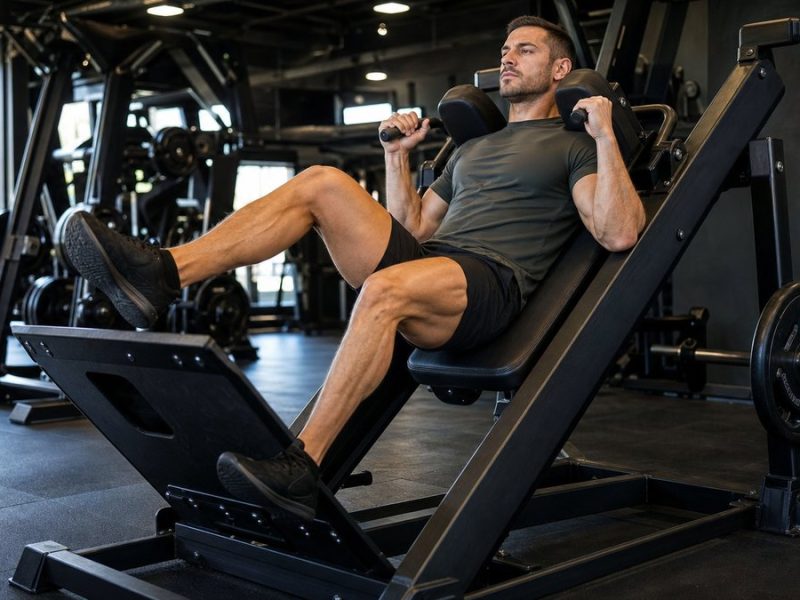
Both bias quads. Hack squat is machine-supported. Narrow squat trains the same pattern free-standing.
Related exercises
- Squat: standard stance
- Wide-Stance Squat: opposite variation
- Hack Squat: machine equivalent
- Front Squat: front-loaded quad-dominant
Published by: Martin Wood — Writer covering quad exercises
Reviewed, corrected and approved by: Martin Wood — Editor-in-chief
Updated on July 21, 2026