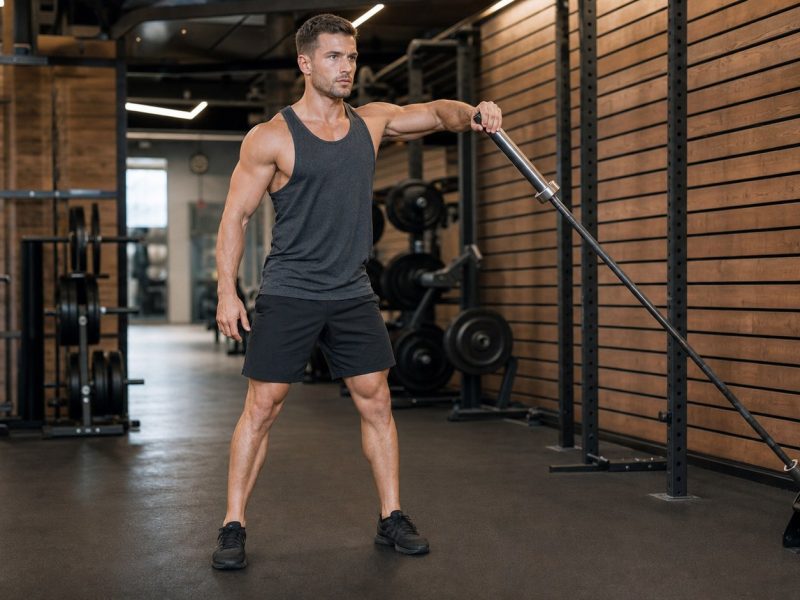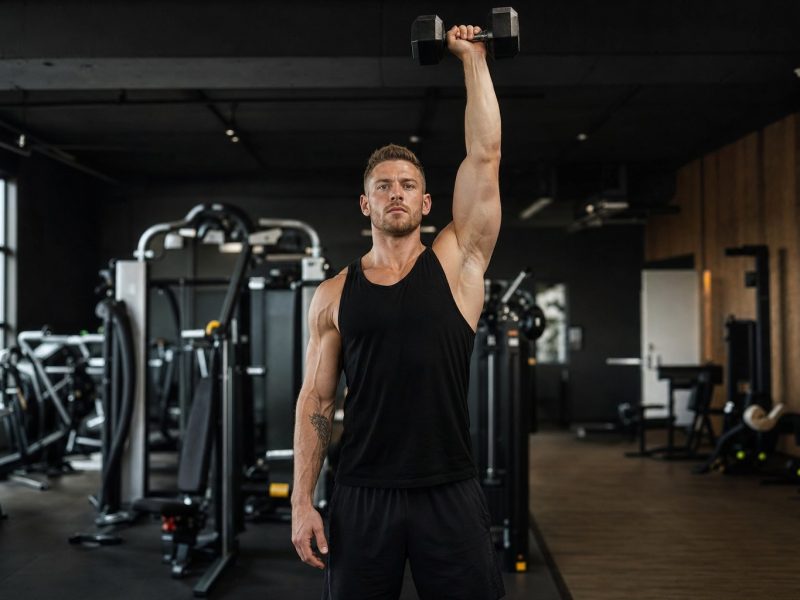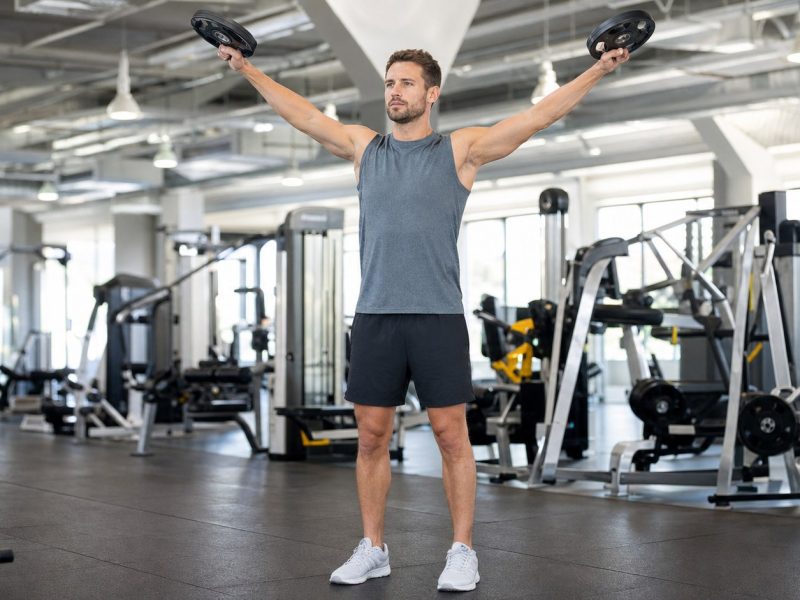

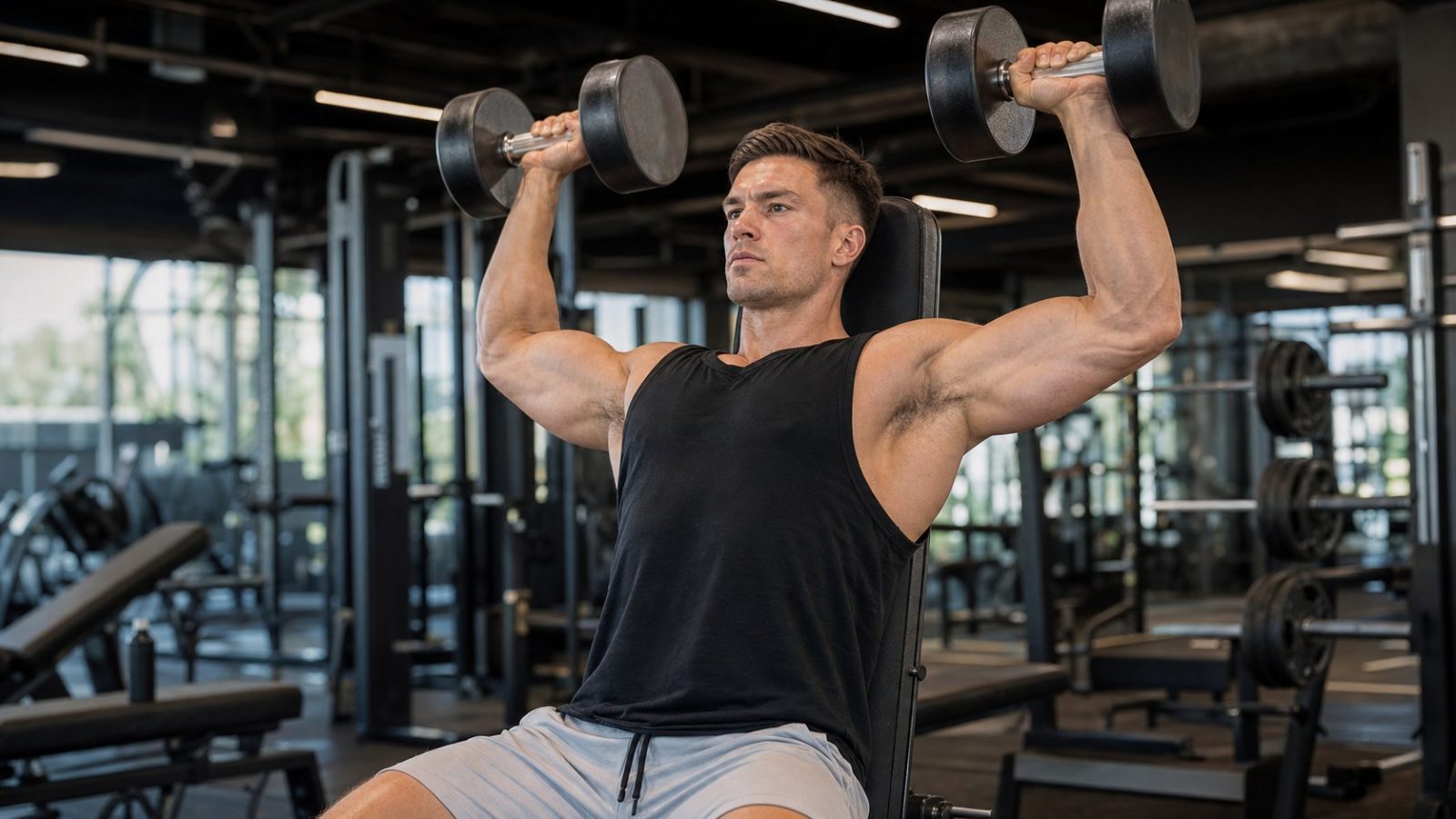
The seated dumbbell shoulder press is the strict alternative to the standing overhead press. Sitting with back support eliminates leg drive and body english, forcing pure shoulder work. Independent dumbbells allow deeper range and correct side-to-side imbalances.
What it is
The seated dumbbell shoulder press is a strict overhead press performed sitting on a bench with back support (typically 80-90° angle). Two dumbbells are pressed from shoulder level to overhead lockout. The seated back-supported position eliminates cheating from the legs or lower back.
Muscles worked
| Muscle | Contribution |
|---|---|
| Anterior deltoid | ~50 % |
| Lateral deltoid | ~25 % |
| Triceps | ~20 % |
| Traps, upper chest | ~5 % |
How to seated dumbbell shoulder press: 5 steps
-
Set the bench
Set an **incline bench to 85-90°.** Sit with back fully supported.
-
Position dumbbells
**Dumbbells at shoulder height,** palms forward, elbows below shoulders.
-
Brace
**Core tight, feet planted,** back pressed into bench.
-
Press up
**Press dumbbells straight up to full arm extension.**
-
Controlled descent
Lower over 2-3 sec back to shoulder height.
How it differs from standing OHP
- Seated with back support. Standing OHP requires trunk stabilisation.
- Dumbbells instead of barbell. Independent arm work corrects imbalances.
- No leg drive possible. Impossible to push-press cheat.
- Slightly lighter loads. No leg contribution; use 80 % of standing DB press weight.
Common mistakes
When to use this variation
Use seated DB press as the main dumbbell shoulder builder. Program 3-4 sets of 8-12 reps. Pair with lateral raises and rear delt work for balanced shoulder development.
FAQ
Bench angle?
85-90° is the standard. Slight incline (75-80°) can reduce shoulder impingement risk.
Palms forward or neutral?
Both work. Neutral (palms facing each other) is easier on shoulders; palms forward is more traditional.
Seated or standing?
Seated is stricter and better for pure shoulder isolation. Standing requires more core engagement and allows heavier loads. Use both.
Related exercises
- Overhead Press: standing barbell
- Standing DB Shoulder Press: standing variant
- Arnold Press: rotational variant
- Incline Dumbbell Press: seated at 45°
Published by: Martin Wood — Writer covering shoulder exercises
Reviewed, corrected and approved by: Martin Wood — Editor-in-chief
Updated on July 20, 2026