
The standing dumbbell shoulder press combines the shoulder demand of an overhead press with the core stabilisation of a standing lift. Independent dumbbells correct imbalances, and the standing position engages the entire trunk as a stabiliser.
What it is
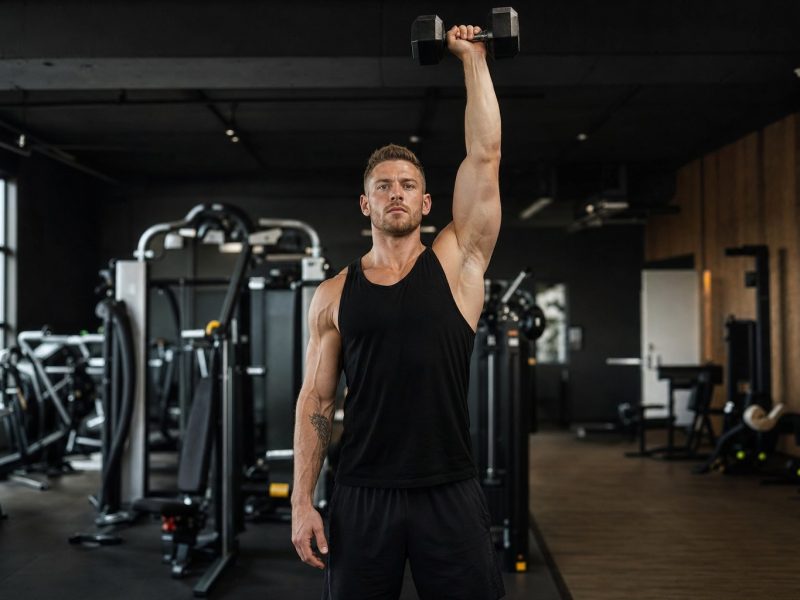
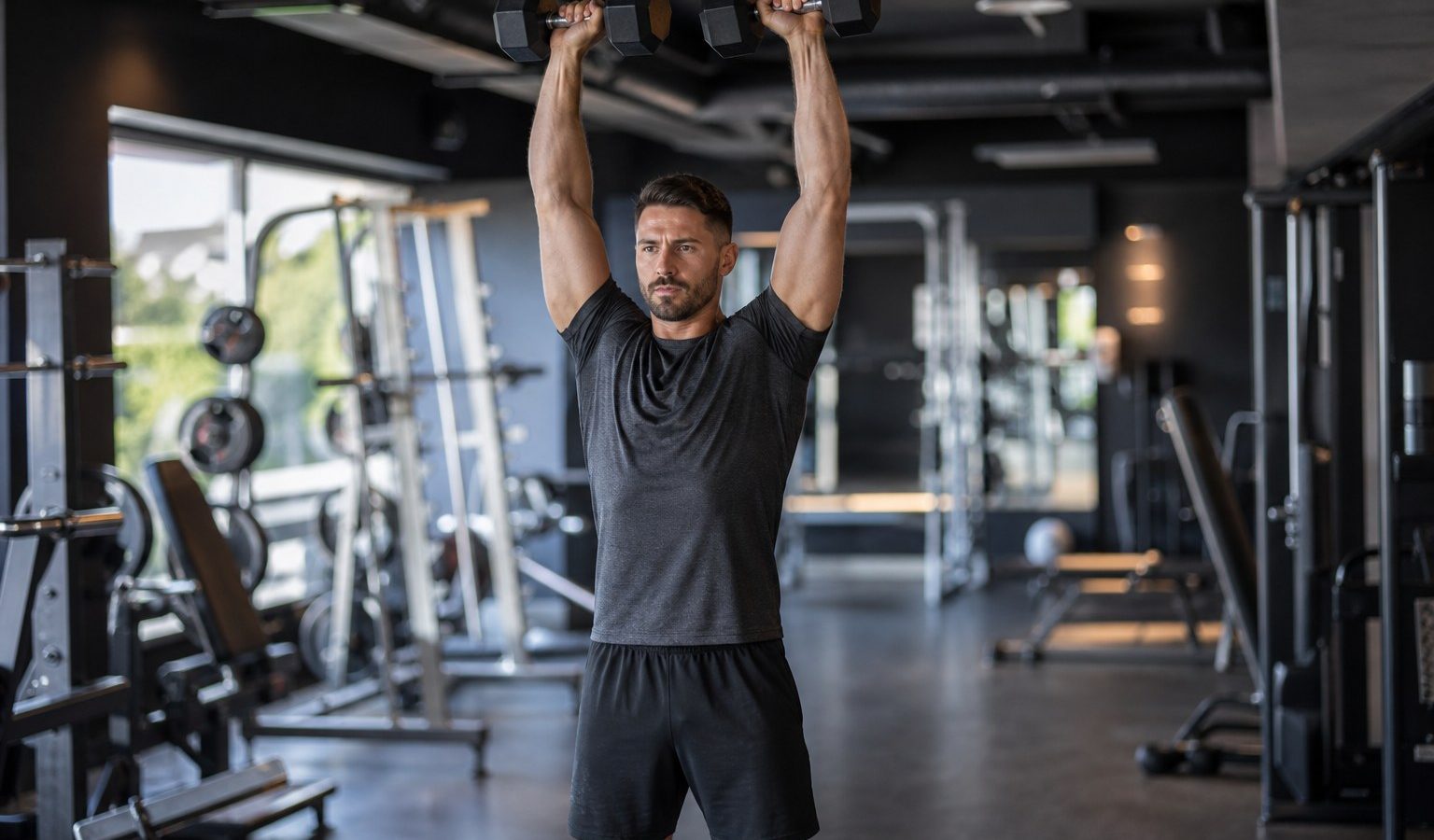
The standing dumbbell shoulder press is an overhead press performed standing with a dumbbell in each hand. The lifter presses from shoulder level to full arm extension overhead. The lack of back support means the core, glutes and lower back all work isometrically to hold the lifter in place.
Muscles worked
| Muscle | Contribution |
|---|---|
| Anterior deltoid | ~45 % |
| Lateral deltoid | ~25 % |
| Triceps | ~20 % |
| Core, glutes | ~10 % |
How to standing dumbbell shoulder press: 5 steps
-
Stand tall
Feet hip-width, **dumbbells at shoulder height,** palms forward.
-
Brace
**Core tight, glutes squeezed, ribs down.**
-
Press up
**Press dumbbells straight up to lockout** — trunk stays vertical.
-
Lock out
**Arms fully extended above the head.**
-
Controlled descent
Lower over 2-3 sec back to shoulder height.
How it differs from seated DB press
- No back support. Trunk must stabilise the whole lift.
- Full core engagement. The standing position doubles as core work.
- Slightly heavier loads possible. Subtle leg drive (kept minimal) can extend loading.
- Higher fall risk. Loss of control affects the whole body, not just the arms.
Common mistakes
When to use this variation
Use standing DB press when you want combined shoulder and core work. Program 3-4 sets of 8-12 reps. Pair after compound barbell OHP or as the primary DB press if a bench isn’t available.
FAQ
Standing or seated?
Standing = more core, harder to isolate shoulders. Seated = stricter shoulder isolation. Choose based on goal.
Is leg drive OK?
Not if you want the strict press stimulus. If leg drive kicks in, it becomes a push press — a different exercise.
Alternating or simultaneous?
Simultaneous is standard. Alternating adds anti-rotation core work and allows heavier per-arm loads.
Related exercises
- Overhead Press: barbell version
- Seated DB Shoulder Press: seated variant
- Push Press: leg-drive assisted version
- One-Arm DB Press: unilateral variation
Published by: Martin Wood — Writer covering shoulder exercises
Reviewed, corrected and approved by: Martin Wood — Editor-in-chief
Updated on July 20, 2026