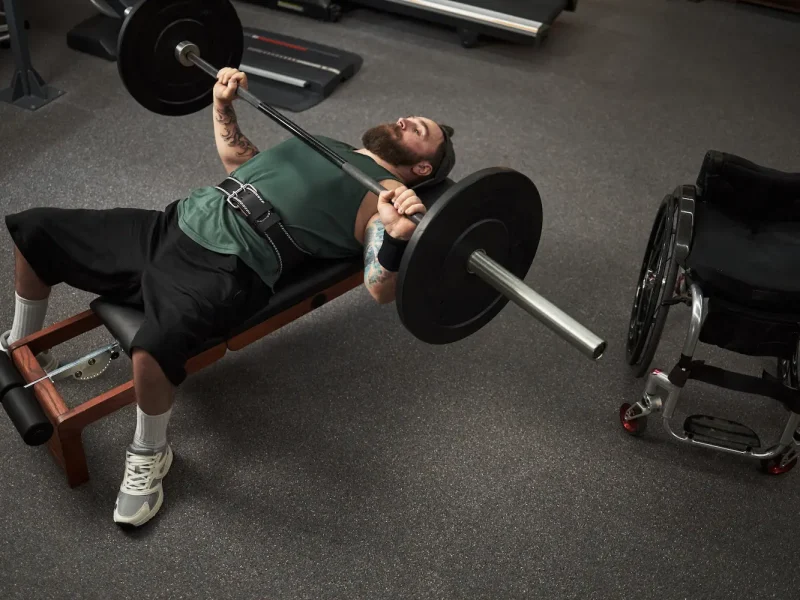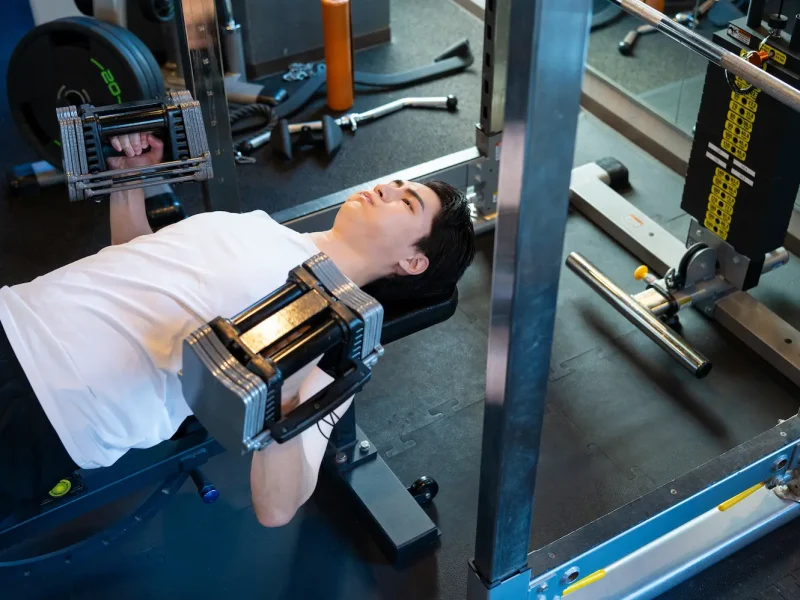


The wide-grip bench press is the bench press with the hands wider than competition-legal width — roughly 5-10 cm wider than the standard shoulder-width-plus grip. The wider grip shortens the press range, shifts emphasis from the triceps to the pectoralis major (outer chest), and is a classic mass-builder for the chest.
What it is
The wide-grip bench press is a chest-emphasis bench press variation with the hands placed wider than the standard grip — typically rings-out on an Olympic bar (~81 cm between hands) or even slightly wider. The motion is identical to a standard bench, but the wider hand position increases the chest stretch at the bottom and reduces the press range (shorter elbow lockout distance).
Muscles worked
| Muscle | Contribution |
|---|---|
| Pectoralis major (sternal head) | ~55 % |
| Anterior deltoid | ~20 % |
| Triceps brachii | ~15 % |
| Lats, traps, scapular stabilisers | ~10 % |
How to wide-grip bench press: 5 steps
-
Set up wide on the bench
Lie on the bench. **Grip the bar with rings-out hand position** (~81 cm spacing on a standard Olympic bar). Index fingers on the rings, thumbs wrapped.
-
Tighten the back and brace
**Retract scapulae tightly**, slight upper-back arch, feet planted firmly. Brace the core. Unrack with assistance if heavy.
-
Lower to the lower chest
Lower the bar in 2-3 seconds to the **lower chest / sternum** area. **Elbows tuck at 60-75°** from the torso — slightly wider than standard but not fully flared.
-
Touch and press up
Touch the chest lightly (no excessive bounce), then **press the bar straight up** in a slight backward arc to lockout. Bar travels in a slightly shorter distance than standard grip.
-
Lock out and reset
Full elbow extension at the top, shoulders still pinned. Reset the brace, lower for the next rep.
How it differs from bench press
- More chest, less triceps. Wider grip = more pec stretch + shorter lockout distance. Triceps contribute less.
- Shorter range of motion. The hand position is further from the chest at the bottom — typical bar travel is 15-25 % less than a competition grip.
- Higher shoulder load. Wide grip increases shoulder external rotation demand. Lifters with shoulder issues should use this variation cautiously or skip it.
- Often heavier than competition grip. Most lifters can wide-grip bench 5-10 % more than their standard grip (because the range is shorter) — but the shoulder cost is real.
Common mistakes
When to use this variation
Use wide-grip bench when your chest lags behind your shoulders and triceps, or as a bench-press variation block aimed at chest hypertrophy. Skip it if you have AC joint or rotator cuff issues — the wide grip puts the shoulder in a vulnerable position. Don’t use it as your main bench for powerlifting prep; competition bench is shoulder-width-plus.
FAQ
How wide should the grip be?
Rings-out (~81 cm hand spacing) is the standard wide grip. Wider than that increases shoulder stress without significantly more chest activation. Don’t go wider than rings-out unless you have an unusually wide chest and stable shoulders.
Will wide-grip bench give me bigger pecs faster?
It targets the chest more than standard or close-grip bench. Combined with adequate volume and progressive overload, yes — most lifters see meaningful chest development from a 4-6 week wide-grip block.
Is wide-grip bench bad for shoulders?
For healthy shoulders, no. For shoulders with existing issues (impingement, rotator cuff strains), yes — the wide grip increases the impingement-prone position. Either skip the variation or use it with a paused, controlled tempo.
Related exercises
- Bench Press: standard grip
- Close-Grip Bench Press: triceps emphasis
- Dumbbell Bench Press: chest stretch variant
- Cable Crossover: chest isolation