
The neutral-grip bench press is the bench press performed with the palms facing each other — typically with a specialty bar (Swiss bar / football bar) or two dumbbells held parallel. The neutral grip dramatically reduces shoulder stress compared to the standard pronated grip, making it the shoulder-friendly bench variant of choice for lifters with rotator cuff or AC joint issues.
What it is
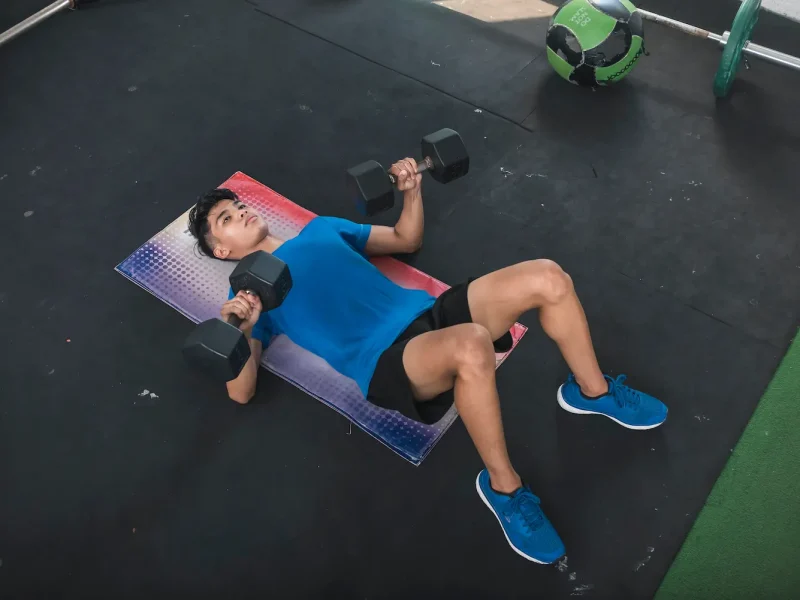
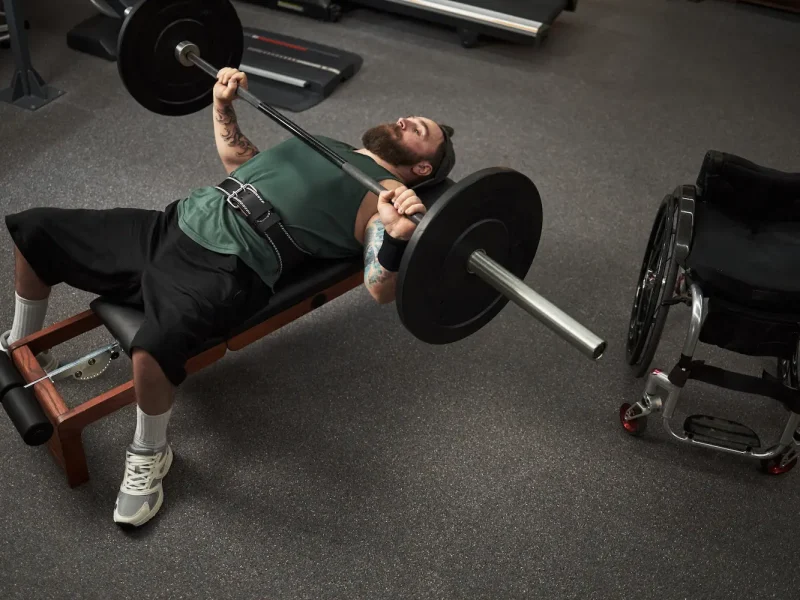
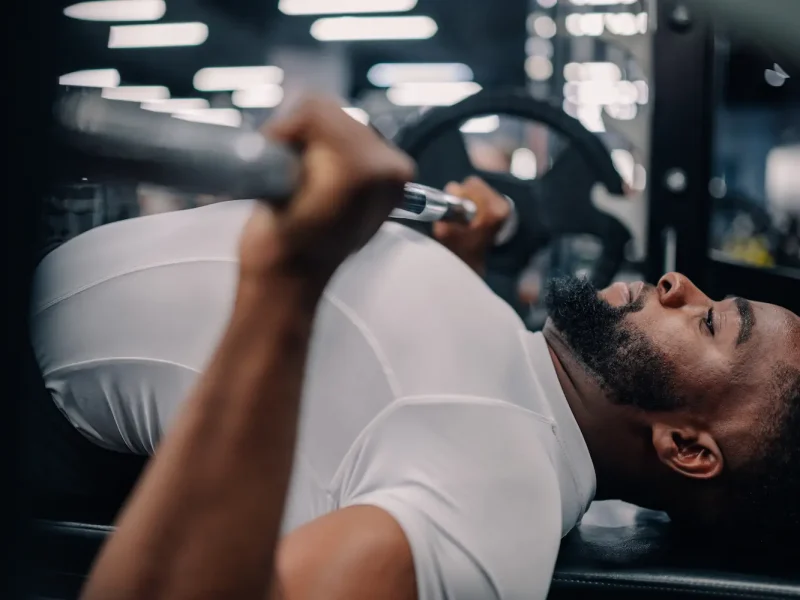
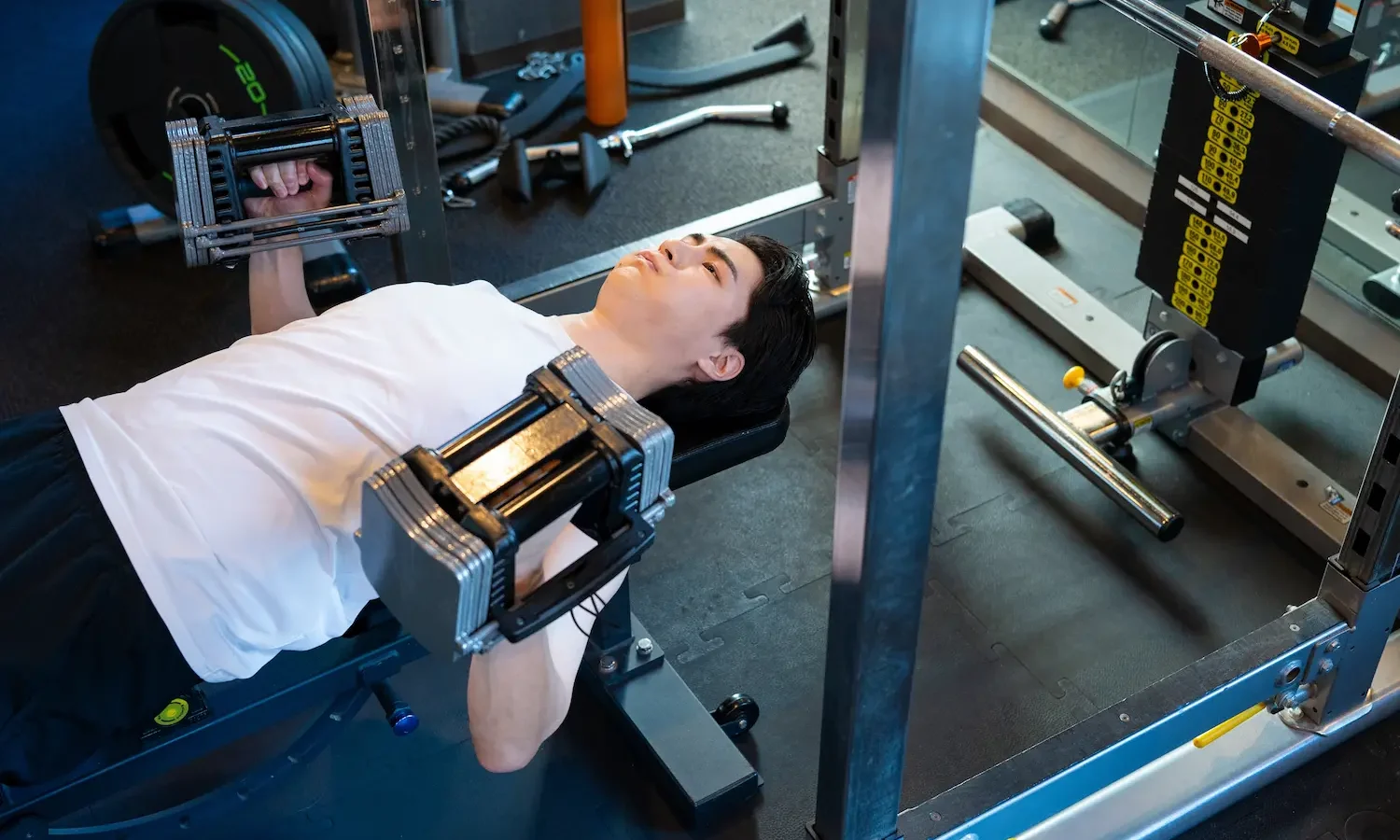
The neutral-grip bench press is a chest pressing exercise performed with the palms facing each other instead of the standard pronated grip (palms away). It can be done with a Swiss bar (also called a football bar), a multi-grip bar with parallel handles, or two dumbbells held with palms facing inward throughout. The motion is the same as standard bench, but the grip biomechanics shift the elbow path and significantly reduce shoulder external rotation stress.
Muscles worked
| Muscle | Contribution |
|---|---|
| Pectoralis major | ~40 % |
| Triceps brachii | ~30 % |
| Anterior deltoid | ~20 % |
| Stabilisers, lats, traps | ~10 % |
How to neutral-grip bench press: 5 steps
-
Set up the bar or dumbbells
Swiss bar or multi-grip bar: choose the parallel handles. Dumbbells: hold them with **palms facing each other** at shoulder height after lying back.
-
Set the bench position
Lie on the bench, retract scapulae, slight upper-back arch, feet planted firmly. Brace the core. Palms facing each other throughout.
-
Lower with elbows naturally tucked
Lower the bar/dumbbells in 2-3 seconds. **Elbows naturally tuck at 30-40° from the torso** — the neutral grip biomechanics encourage this. Touch the lower sternum / upper abs area.
-
Pause briefly at the bottom
**Touch lightly, brief pause** (no bouncing). Maintain shoulder retraction.
-
Press up to lockout
**Drive the bar/dumbbells straight up** to lockout. Palms stay facing each other throughout. Lock out, lower for the next rep.
How it differs from bench press
- Shoulder-friendly grip. The neutral position drastically reduces external rotation stress on the shoulder — most common cause of bench-related shoulder pain.
- Elbows naturally tucked. The grip biomechanics place the elbows at about 30-40° from the body, tighter than pronated bench. More triceps activation.
- Lower bar touch. Natural touch point is the lower sternum or upper abs — similar to a reverse-grip bench.
- Slightly lower max load. Most lifters neutral-grip bench 80-90 % of their standard bench load. The pec-stretch geometry is slightly less favourable than the pronated grip.
Common mistakes
When to use this variation
Use the neutral-grip bench press when the standard pronated bench bothers your shoulders, when you want a triceps-emphasis variation, or as a deload-week alternative to standard bench (lighter on the shoulders). Anyone with persistent bench-related shoulder discomfort should try neutral-grip pressing before considering surgical or rehab interventions — many lifters find it eliminates the pain entirely.
FAQ
What if I don’t have a Swiss bar?
Use two dumbbells held with palms facing each other throughout the press. The dumbbell version is the most accessible — every gym has dumbbells, few have Swiss bars.
Neutral grip on which bench angle?
Flat is most common, but neutral grip works well on incline (upper-chest + shoulder-friendly) and decline (lower-chest emphasis) too. The grip benefits transfer across bench angles.
Will I lose chest size by switching to neutral grip?
No — the chest still does the primary work. The neutral grip slightly shifts emphasis toward the triceps but the pectoralis major remains the prime mover. For lifters whose shoulders limit standard bench frequency, neutral grip allows higher training volume — often producing better chest growth in the long run.
Related exercises
- Bench Press: pronated-grip standard
- Dumbbell Bench Press: DB version (often performed neutral)
- Close-Grip Bench Press: triceps emphasis
- Floor Press: range-limited shoulder-friendly variant
Published by: Jay — Writer covering chest exercises
Reviewed, corrected and approved by: Martin Wood — Editor-in-chief
Updated on September 29, 2026