
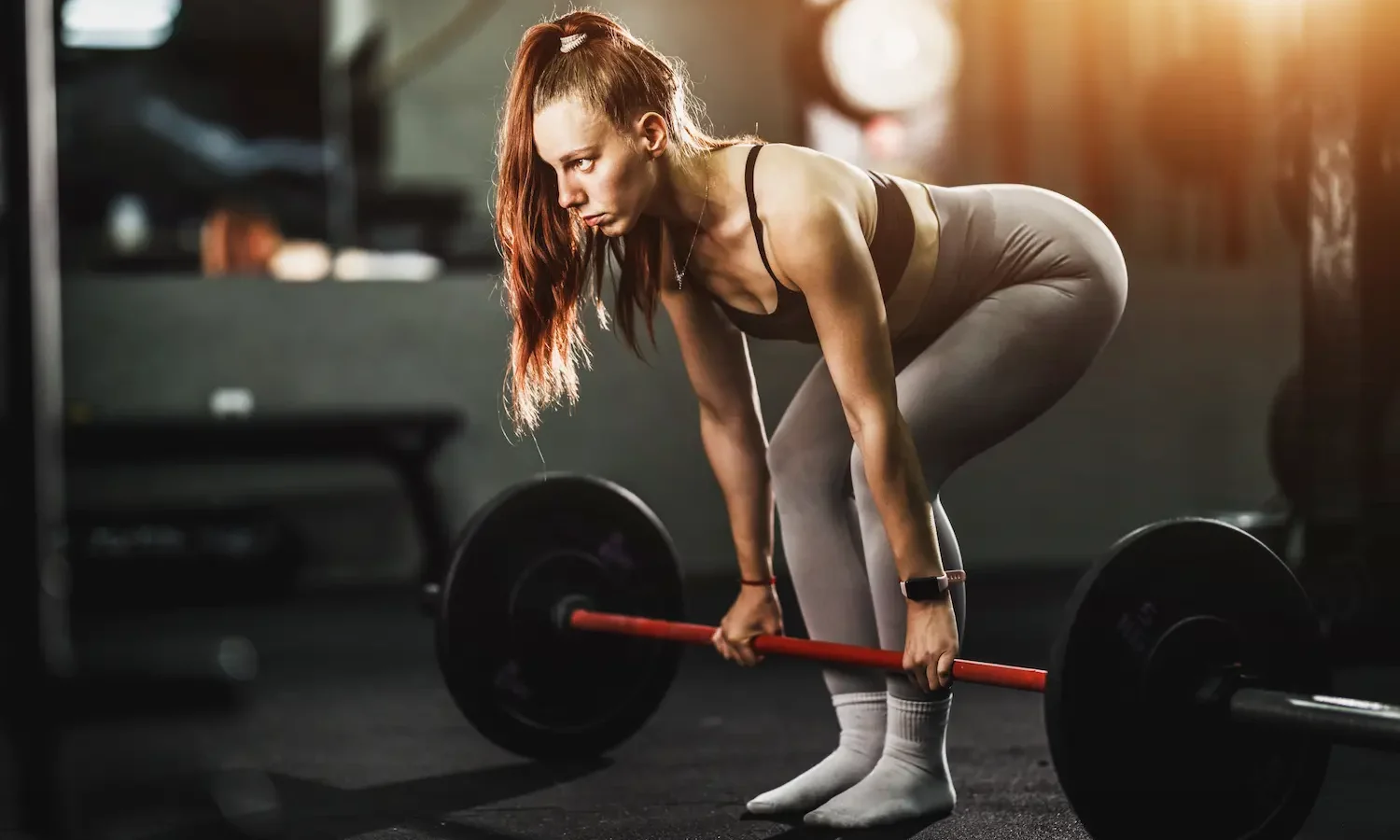
The snatch-grip deadlift is the conventional deadlift performed with a very wide grip — hands out near the collars. The wide grip drops the hips, raises the chest demand, and lengthens the range of motion. Olympic lifters use it to build a powerful pull from the floor; bodybuilders use it to hammer the upper back and traps. It is one of the most honest tests of back strength in the gym.
What it is
The snatch-grip deadlift is a deadlift taken with a grip roughly twice shoulder-width, the same width an Olympic lifter would use for the snatch. The wide hands lower the body at the start, increasing knee and hip flexion and adding several inches of bar travel. The upper back works overtime to keep the bar tight, which is why loads sit around 70-80 % of a standard deadlift.
Muscles worked
| Muscle | Contribution |
|---|---|
| Glutes, hamstrings | ~35 % |
| Upper back, traps | ~30 % |
| Erector spinae, lats | ~20 % |
| Quadriceps, forearms | ~15 % |
How to snatch-grip deadlift: 5 steps
-
Find the snatch grip
Take a grip roughly twice shoulder-width — out near the collars. **Use the rings on the bar as a reference.**
-
Drop into position
The wide grip lowers your hips. **Let them sit lower than a normal deadlift** and bring the chest up.
-
Set the upper back
**Pull the shoulder blades down and lock the lats.** The traps must fight hard to stop the shoulders rolling forward.
-
Drive off the floor
**Push the floor away and keep the bar against the legs.** Expect the start to feel slow because of the longer range.
-
Lock out and lower
Finish tall with hips extended. **Lower under control** through the full wide-grip range.
How it differs from conventional deadlift
- Much wider grip. Hands out near the collars instead of just outside the legs.
- Lower hips, longer range. The wide grip drops the body and adds bar travel, so each rep does more total work.
- Bigger upper-back demand. The traps and rhomboids work hard to stop the shoulders from rolling forward.
- Lighter loads. Most lifters use 70-80 % of their standard deadlift for the same rep range.
Common mistakes
When to use this variation
Use the snatch-grip deadlift to build a stronger pull off the floor and a thicker, more resilient upper back. It suits hypertrophy and general strength blocks: 3-4 sets of 4-8 reps at 70-80 % of standard deadlift. Use straps once grip becomes the limiting factor, so the back gets the full training stimulus. One snatch-grip session per week alongside regular pulling is plenty.
FAQ
Should I use straps?
Yes, once grip limits the set. The wide grip is hard to hold, and straps let the upper back and legs — the real targets — get fully trained.
Snatch-grip deadlift or deficit deadlift?
Both lengthen the range and build the floor pull. The deficit deadlift keeps a normal grip and emphasises the legs; the snatch-grip version hits the upper back harder.
Is the wide grip bad for the shoulders?
Not for most lifters, since the arms hang straight down under load. If you have a shoulder issue, ease into the width gradually and stop the grip short of your full snatch width.
Related exercises
- Deadlift: the standard-grip pull
- Deficit Deadlift: another range-extended pull
- Snatch-Grip Romanian Deadlift: wide-grip hip hinge
- Block Pull: shorter-range overload pull