
The goblet squat is the most underrated lower-body exercise on earth. It teaches perfect squat technique, loads the quads and glutes effectively without spinal load, and you can do it with one dumbbell or one kettlebell — anywhere, anytime. If you can’t yet barbell squat well, the goblet squat is your starting point. If you can already squat heavy, it’s the perfect accessory.
Strength coach Dan John popularised the goblet squat in the 2000s as a teaching tool, and the world has slowly caught up. This guide covers the standard goblet squat — what makes it different from a back squat, why beginners should start here, and how to use it past the beginner stage.
What is the goblet squat?
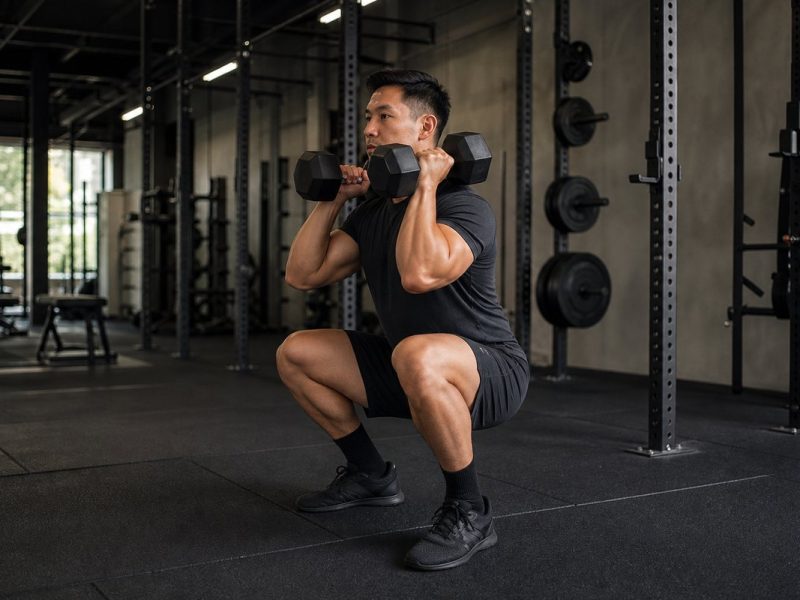
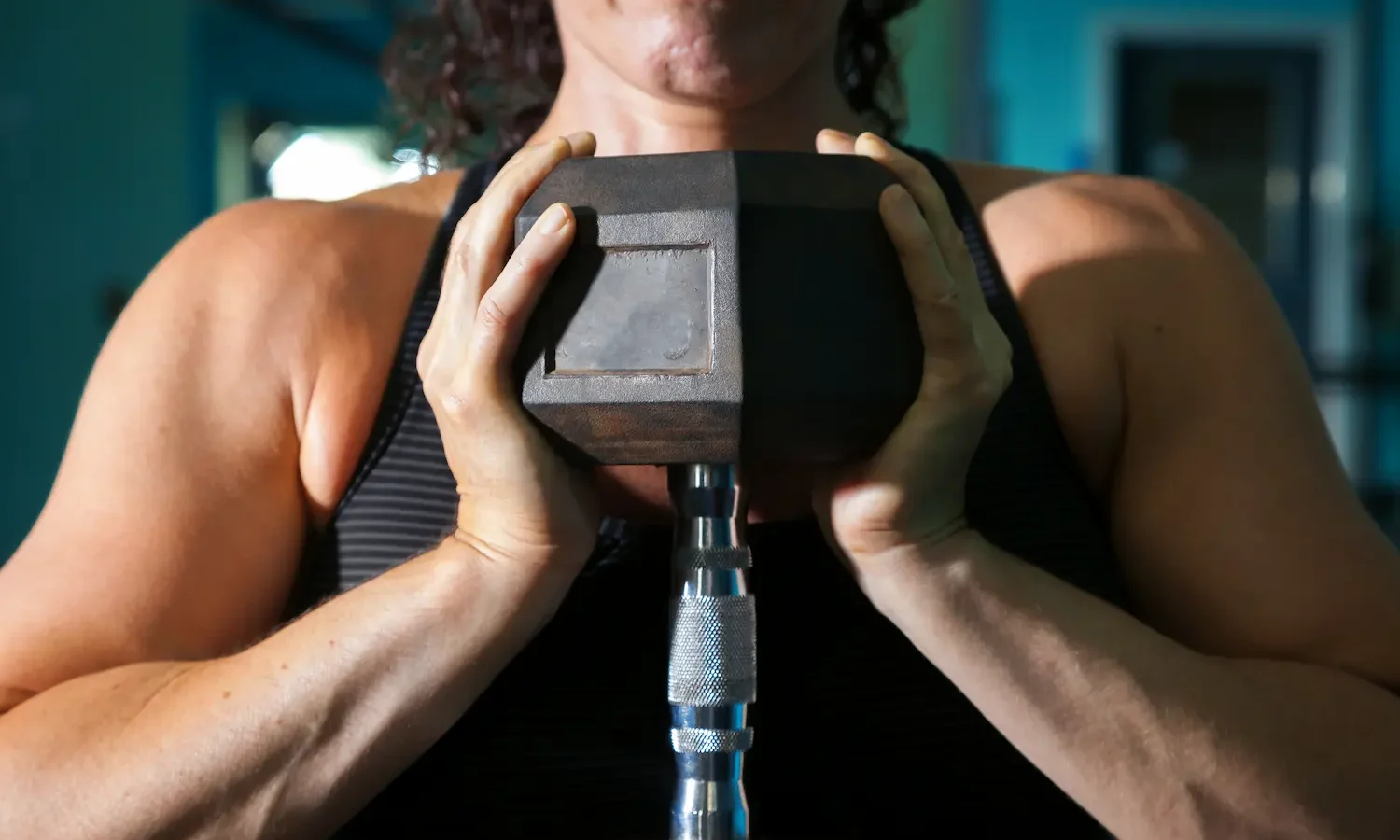
The goblet squat is a bilateral squat performed holding a single dumbbell or kettlebell at chest level — vertically, with both hands cupping the top of the dumbbell or the horns of the kettlebell — like holding a goblet. From this position, you squat down to depth and stand back up.
Compared to the back squat, the goblet squat has three advantages: it forces an upright torso (the front-loaded weight pulls you upright); it self-corrects depth (most beginners can squat deeper with a goblet than with a bar); and it requires no rack, no barbell, no setup. The disadvantage: load is limited by what you can hold at chest level. Most lifters max out around 30-40 kg.
Muscles worked
| Muscle group | Role | Contribution |
|---|---|---|
| Quadriceps | Primary mover, knee extension | ~50 % |
| Glutes | Hip extension | ~25 % |
| Hamstrings · Adductors | Stabilisation | ~15 % |
| Core · Upper back · Forearms | Holding the goblet position | ~10 % |
The goblet squat hits the same primary muscles as the back squat (quads, glutes) but adds significant upper-back and core work because you have to hold the dumbbell against your chest. It’s the most “complete” beginner squat option.
How to goblet squat: 5 steps
-
Set up the goblet position
Stand tall, feet shoulder-width to slightly wider, toes turned out 15-30°. Hold a dumbbell vertically at chest level — both hands cupping the top of the dumbbell, elbows pointing down.
-
Brace and engage
Pull elbows in close to the ribs. Tighten the upper back. Take a deep breath into the belly, brace the core. The dumbbell rests against your chest throughout.
-
Squat down to depth
Sit down between your heels. Push the knees outward to track over the toes. **Hip crease drops below the top of the knee.** The front-loaded weight will help you stay upright — let it.
-
Pause briefly at the bottom
Half-second pause. Use the elbows to push the knees outward if they want to cave inward. Brief turnaround, no bounce.
-
Drive back up
Push the floor away with the whole foot. Lead with the chest. Lock out hips and knees at the top. Reset breath, repeat.
Common mistakes to avoid
Goblet squat variations
- Kettlebell goblet squat. Same exercise with a kettlebell instead of a dumbbell. Slightly different feel due to weight distribution.
- Paused goblet squat. 2-3 second pause at the bottom. Brutal hypertrophy variation.
- Heels-elevated goblet squat. Heels on small plates. Greater quad emphasis, deeper squat for those with limited ankle mobility.
- Jumping goblet squat. Light load, explosive jump out of the bottom. Conditioning + power work.
- Box goblet squat. Squat down to a box, pause, stand up. Teaches consistent depth.
- Back squat. The progression — heavier loads, similar pattern.
Sample workout: 4-week beginner block
Goblet squats 2-3 times per week. Excellent as a primary leg exercise for beginners, or as accessory work for intermediate lifters who already squat heavy.
| Week | Sets × reps | Load |
|---|---|---|
| 1 | 3 × 10 | Light dumbbell (10 kg) |
| 2 | 3 × 12 | Moderate (15 kg) |
| 3 | 4 × 10 | Moderate-heavy (20 kg) |
| 4 (deload) | 3 × 10 | Light |
Once you can goblet squat 25-30 kg for 12 strict reps, you’re ready to move to the barbell back squat.
Frequently asked questions
Goblet squat or barbell squat?
Goblet for beginners (under 6 months of training); barbell once you can move 25-30 kg goblet for clean reps. Intermediate and advanced lifters use both — barbell as the primary, goblet as accessory or warm-up.
How heavy should I goblet squat?
The grip and upper-body fatigue limits the load before the legs do. Most lifters max out around 30-40 kg single dumbbell. Past that, switch to barbell variations.
Why are my legs sore after goblet squats?
Goblet squats often produce more leg soreness than back squats at equivalent loads because they force a deeper, more upright squat. The deeper range of motion stretches the muscles more, which causes more DOMS the day after.
Can I do goblet squats every day?
At light loads (10-15 kg) for 2-3 sets, daily is fine and many beginner programs prescribe daily greasing the groove. At heavy loads (25 kg+) for working sets, twice a week with rest days between is the sweet spot.
What’s the difference between goblet squat and front squat?
Both load the front of the body and force an upright torso. The goblet uses one dumbbell at chest height; the front squat uses a barbell racked on the front delts. Front squat allows much heavier loads but requires wrist and shoulder mobility. Goblet is the more accessible option.
Related exercises
- Back Squat: barbell progression
- Front Squat: barbell front-loaded variant
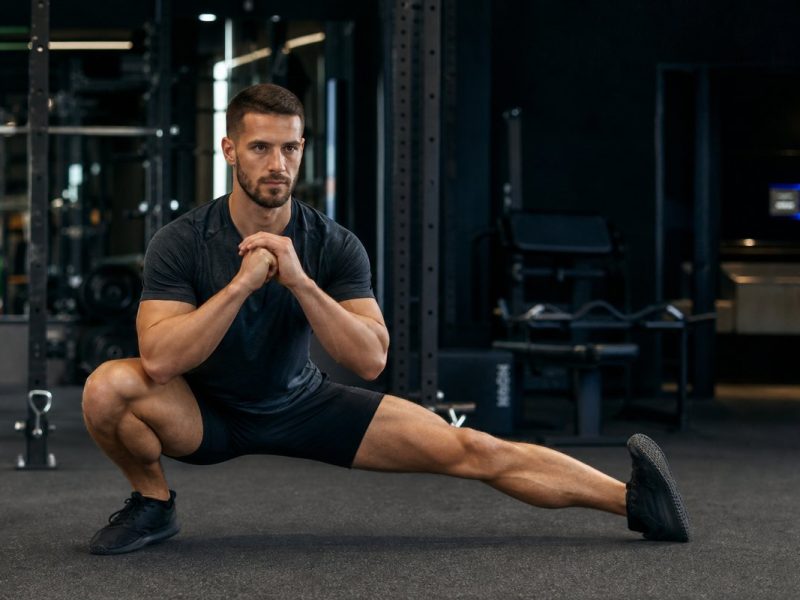
- Lunge: unilateral counterpart
- Bulgarian Split Squat: hardest unilateral leg work
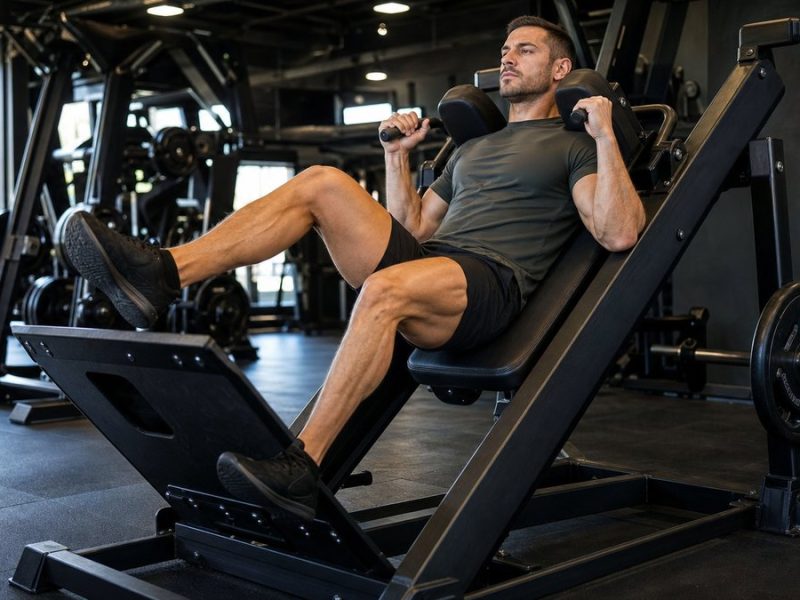
- Leg Press: machine quad accessory