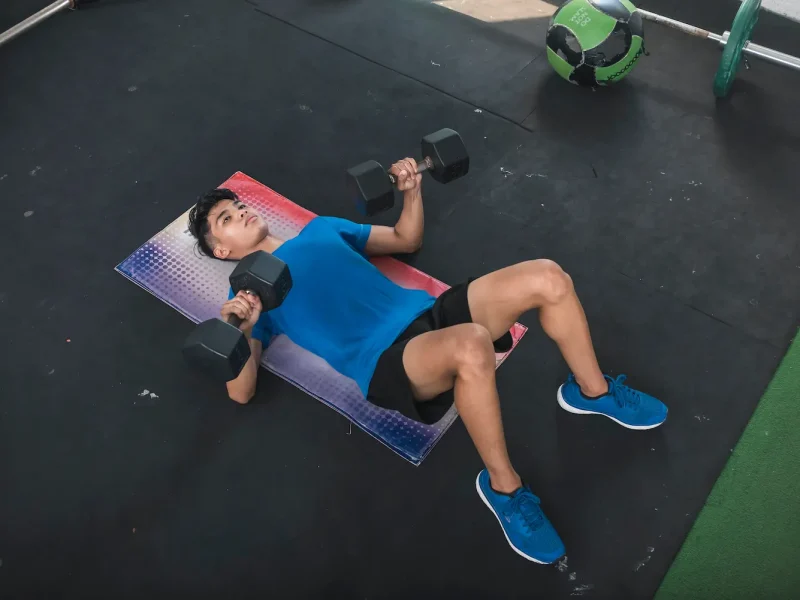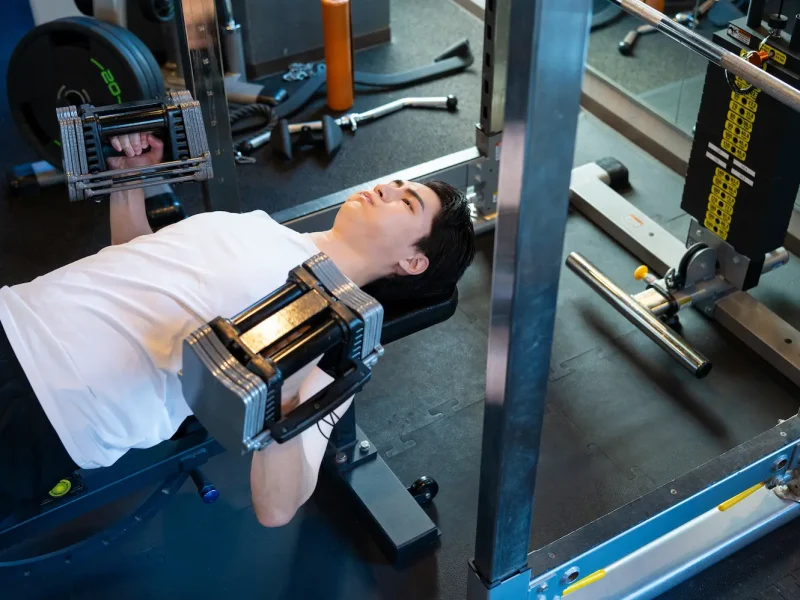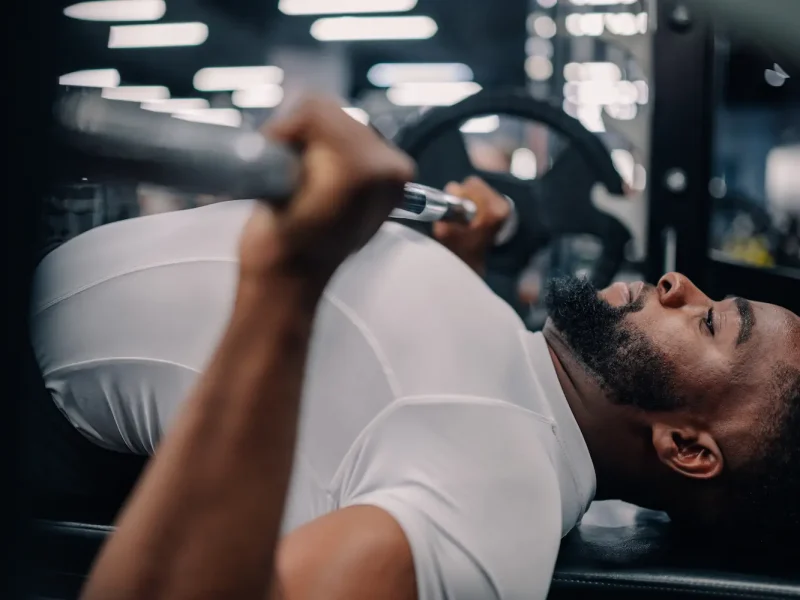

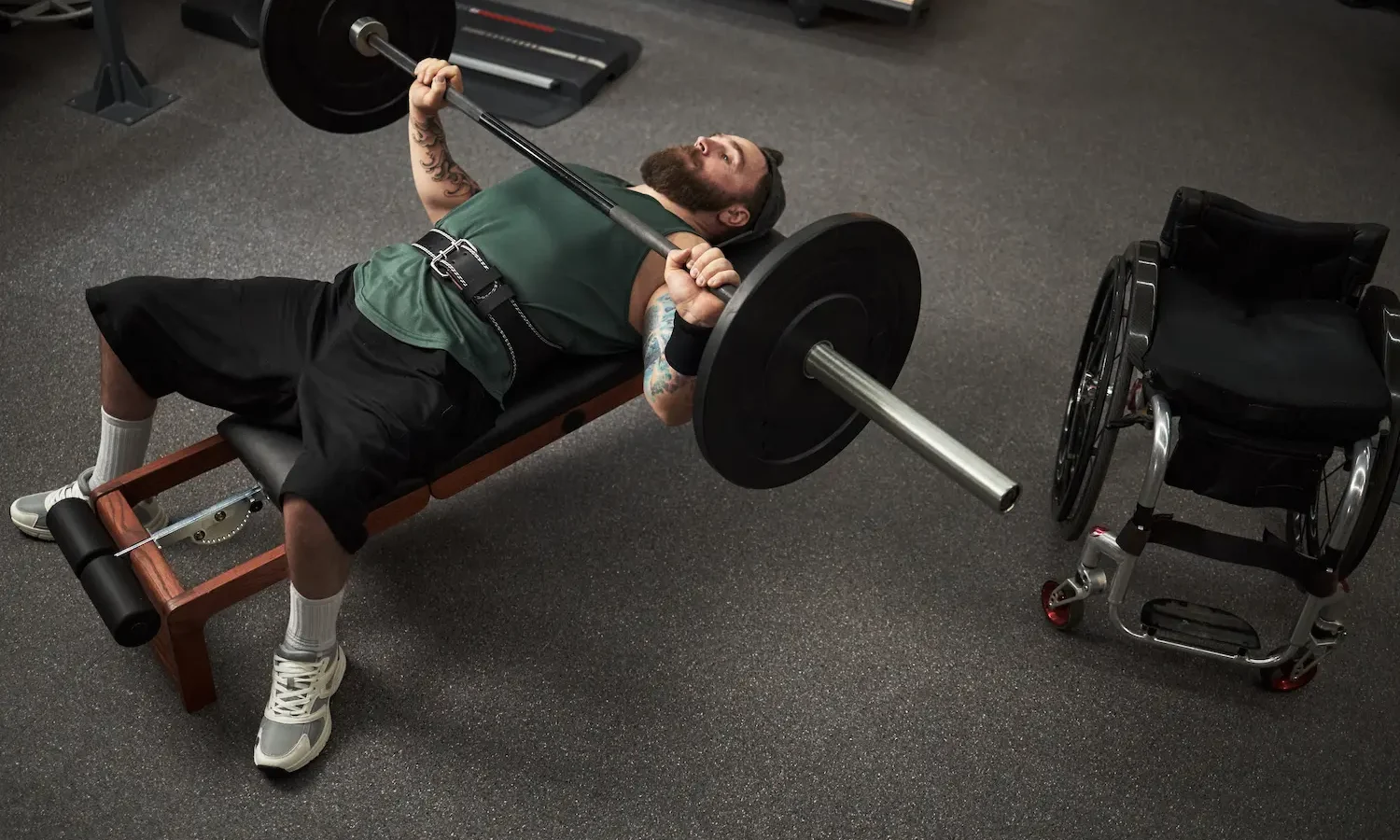
The close-grip incline bench press combines two bench variations into one: the incline angle (upper-chest emphasis) with the close grip (triceps emphasis). The result is a press that builds the upper chest, triceps, and front deltoids together — and is unusually demanding on the shoulders without being unsafe.
What it is
The close-grip incline bench press is the close-grip bench press performed on an incline bench (typically 30-45°). Hands placed shoulder-width or slightly narrower, the bar lowered to the upper chest, elbows tucked tight. The press combines the upper-chest stretch of the incline angle with the triceps emphasis of the close grip.
Muscles worked
| Muscle | Contribution |
|---|---|
| Triceps brachii | ~35 % |
| Pectoralis major (clavicular / upper) | ~30 % |
| Anterior deltoid | ~25 % |
| Stabilisers, lats, traps | ~10 % |
How to close-grip incline bench press: 5 steps
-
Set up the bench at incline
Adjust the bench to 30-45° incline. Bar loaded in the rack at standard height for the incline.
-
Grip the bar close
Lie on the incline, **grip the bar shoulder-width or slightly narrower** (15-25 cm hand spacing). Retract scapulae, slight upper-back arch.
-
Lower with elbows tucked
Lower the bar in 2-3 seconds. **Elbows tuck tight at 20-30° from the torso.** Bar travels to the **upper chest / clavicle area**.
-
Touch the upper chest
Touch lightly at the upper chest, just below the clavicle. Brief pause — no bounce.
-
Press up to lockout
**Drive the bar straight up** in a slightly backward arc toward the eyes/forehead. Triceps and upper chest fire together. Lock out, lower for the next rep.
How it differs from close-grip bench press
- Incline angle. The 30-45° incline shifts upper-body load onto the upper chest and front deltoids — areas the flat close-grip bench underdevelops.
- More anterior deltoid work. The angle increases shoulder flexion demand. Lifters with shoulder issues may find this variation more taxing.
- Slightly lower max load. Most lifters close-grip incline-bench 70-85 % of their flat close-grip bench. The angle is less mechanically favourable.
- Combines two emphases. Where flat close-grip bench builds triceps + mid-chest, the incline version builds triceps + upper-chest. Useful for lifters who need both regions developed.
Common mistakes
When to use this variation
Use close-grip incline bench when both your upper chest and your triceps need work — typically for upper-body bodybuilding programs or for fixing a flat-chested look. Run it 1-2 times per week alongside dips and pushdowns for full triceps + upper-chest coverage. Best for intermediate lifters with healthy shoulders.
FAQ
How narrow should the grip be?
Shoulder-width to slightly narrower (15-25 cm between hands). Don’t go super narrow (less than 15 cm) — wrist stress increases without additional triceps benefit.
What incline angle?
30-45° is the standard range. 30° emphasises chest+triceps relatively equally; 45° shifts more to the front deltoid and upper chest. Most lifters use 30-35°.
Close-grip incline or just close-grip flat bench?
Depends on goals. Flat close-grip = maximum triceps load. Incline close-grip = triceps + upper chest combined. Use flat for pure triceps mass, incline for combined development.
Related exercises
- Close-Grip Bench Press: flat triceps emphasis
- Incline Bench Press: standard incline grip
- Skull Crusher: barbell triceps isolation
- Dips: bodyweight triceps + chest
Published by: Jay — Writer covering chest exercises
Reviewed, corrected and approved by: Martin Wood — Editor-in-chief
Updated on September 29, 2026