
The close-grip bench press is the bench variant for triceps. Same equipment as the standard bench press, same starting position, but with hands placed shoulder-width or slightly inside instead of wider. That single change shifts about 30 % of the work from the chest to the triceps — and gives you a way to train heavy triceps strength without isolation exercises.
Powerlifters use the close-grip bench as primary triceps work, especially for building lockout strength. Bodybuilders use it as a finisher after main bench work. Either way, it earns its place in the program. This guide covers the standard barbell version.
What is the close-grip bench press?
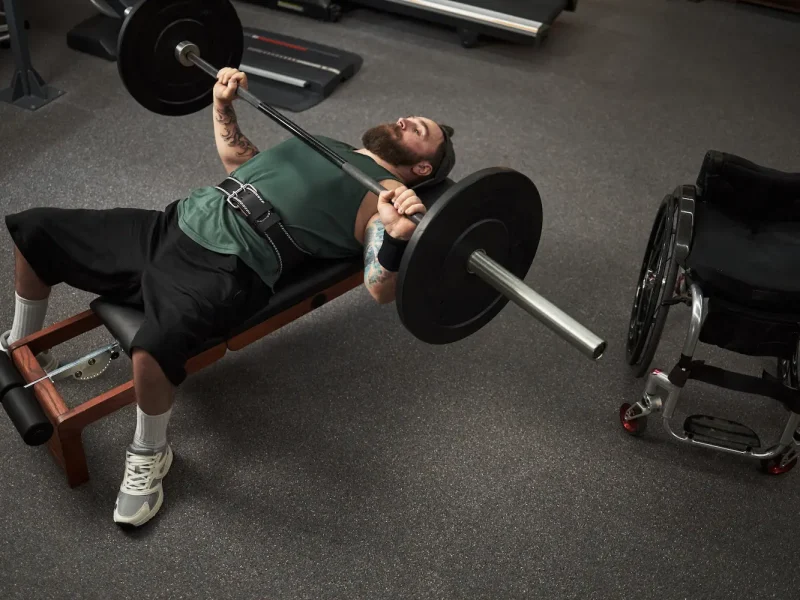
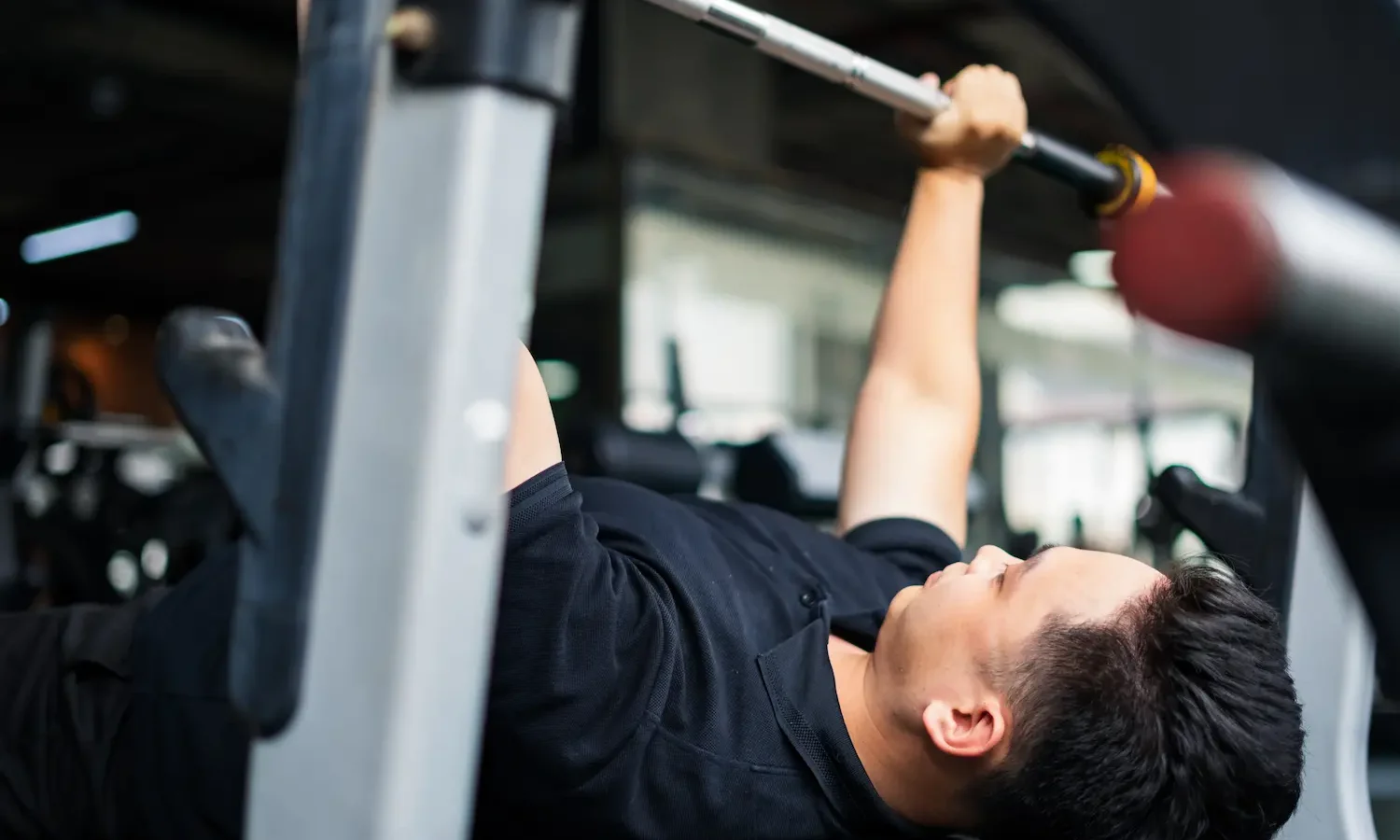
The close-grip bench press is a horizontal pushing exercise performed flat on a bench, in which the barbell is gripped at shoulder width or slightly narrower (rather than the standard wider grip). The bar is lowered to the lower chest with elbows tucked tight to the torso, then pressed back to lockout.
“Close-grip” doesn’t mean hands touching. The optimal grip width is roughly shoulder-width or about a thumb-width inside. Going too narrow (hands close together) puts strain on the wrists without adding triceps work. Stick to shoulder-width.
Muscles worked
| Muscle group | Role | Contribution |
|---|---|---|
| Triceps brachii (all heads) | Primary mover, elbow extension | ~50 % |
| Pectoralis major (lower fibers) | Press initiation | ~25 % |
| Anterior deltoid | Press support | ~20 % |
| Forearms · Core | Stabilisation | ~5 % |
The close-grip bench is the heaviest pure triceps exercise you can do. Compared to skull crushers or pushdowns, you can load 2-3× more weight on the close-grip bench because the chest and shoulders contribute as helpers.
How to close-grip bench press: 5 steps
-
Set up under the bar with close grip
Lie flat on the bench. Grip the bar at **shoulder width or slightly inside** — not hands together. Wrists stacked over forearms. Plant feet firmly on the floor.
-
Set the upper back
Pull shoulder blades together and down. Slight arch, glutes on the bench. Take a deep breath, brace the core. Unrack the bar to lockout.
-
Lower with elbows tucked
Lower the bar to the lower chest in a 2-second controlled descent. **Elbows tucked tight to the torso** — about 30-45° from the body, not flared. The bar should travel down toward your sternum, not toward your throat.
-
Touch and press
Touch the bar to the lower chest gently — no bouncing. Drive the bar straight up by extending the elbows. Triceps lead the press.
-
Lock out and reset
Soft lockout at the top — elbows nearly straight. Pause briefly, reset breath, repeat.
Common mistakes to avoid
Variations
- Standard bench press. Wider grip, more chest, less triceps. The foundational variant.
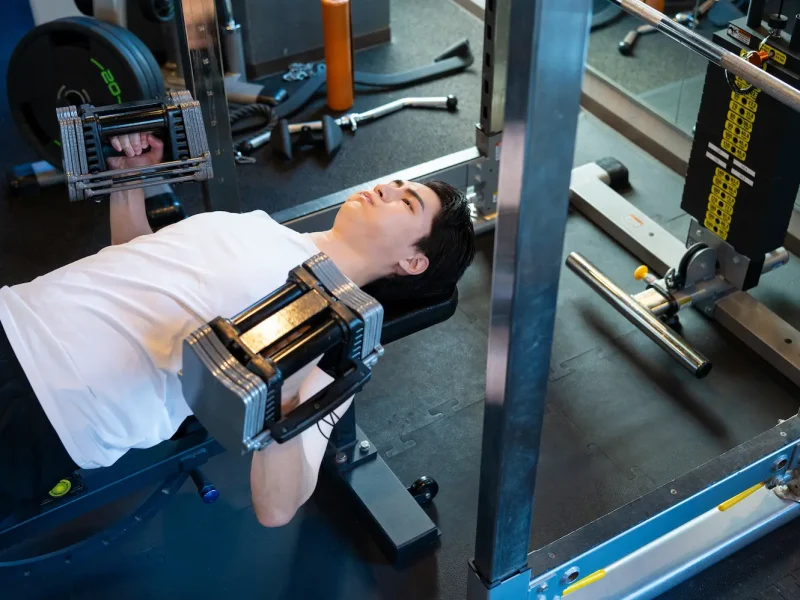
- Dumbbell close-grip press. Two dumbbells held neutral grip, pressed together. Triceps focus with greater ROM.
- JM press. Hybrid between close-grip bench and skull crusher. Powerlifting accessory favorite.
- Board press. Bench with a board on the chest to limit ROM. Pure lockout work.
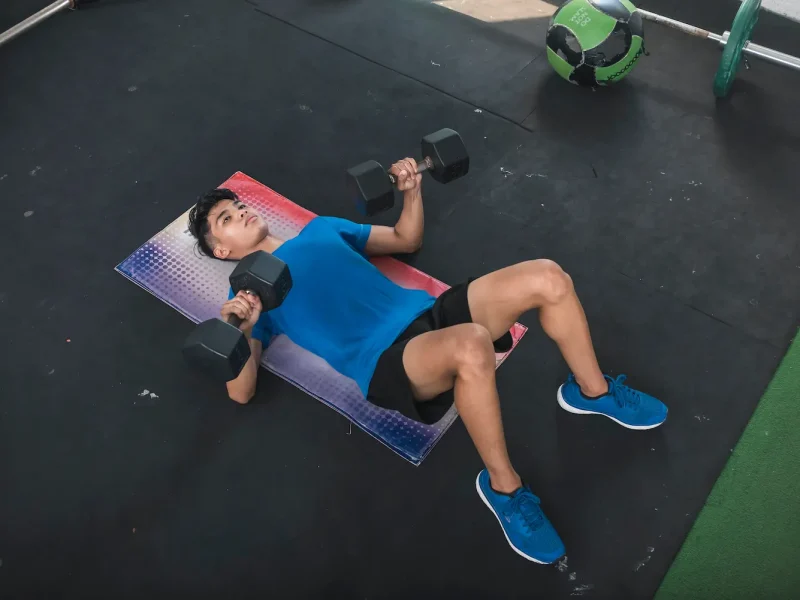
- Floor press. Lying on the floor, no leg drive. Reduced ROM. Triceps and lockout focus.
- Skull crusher. Lighter loads, pure triceps isolation. Complement.
Sample workout: 4-week triceps strength block
Close-grip bench once per week, after standard bench day. Pair with skull crushers or pushdowns for additional triceps volume.
| Week | Sets × reps | Intensity | RPE |
|---|---|---|---|
| 1 | 3 × 8 | 65 % 1RM | 7 |
| 2 | 4 × 6 | 72 % | 7-8 |
| 3 | 5 × 5 | 78 % | 8 |
| 4 (deload) | 3 × 5 | 65 % | 6 |
Frequently asked questions
How narrow should the grip be?
Shoulder width or slightly inside. Going much narrower (hands touching) puts strain on the wrists and doesn’t add triceps work. The thumb-distance-inside-shoulder rule is a good guide.
How much should I close-grip bench compared to my regular bench?
Most lifters close-grip about 80-85 % of their wider bench. So if you bench 100 kg for 5, expect 80-85 kg for 5 close-grip.
Should I lower the bar to the lower chest or higher?
Lower chest, around the bottom of the sternum. **Elbows stay tucked** to the torso — this is what makes the close-grip a triceps exercise rather than a chest exercise.
Why do my wrists hurt during close-grip bench?
Probably the grip is too narrow. Move hands to shoulder width. Also check that your wrists are stacked over your forearms — not bent backwards.
Can the close-grip bench replace skull crushers?
It can, but most balanced programs include both. Close-grip bench builds triceps strength with heavy loads. Skull crushers isolate the triceps better at lighter loads. Different stimuli.
Related exercises
- Bench Press: standard wider-grip variant
- Skull Crusher: triceps isolation
- Triceps Pushdown: cable triceps
- Dips: bodyweight triceps compound
- Floor Press: limited-ROM triceps press