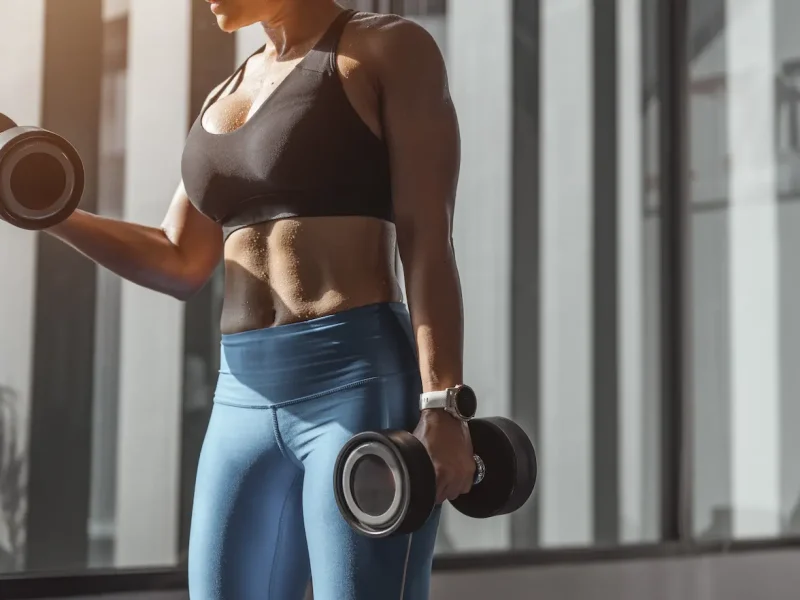

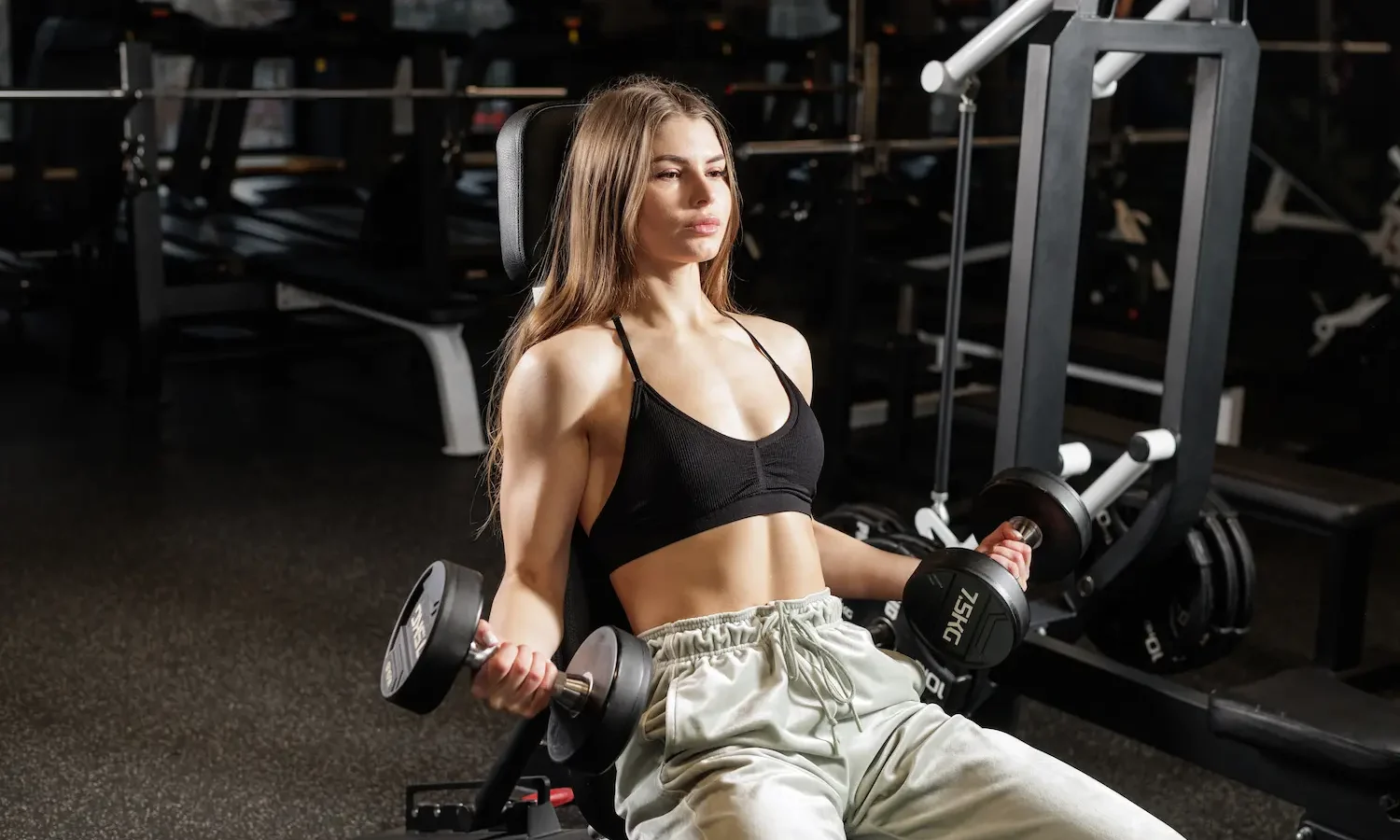
The seated dumbbell curl is the standing dumbbell curl performed sitting upright on a bench. Sitting eliminates body english from the hips and legs, forcing strict biceps execution. It’s the no-nonsense way to make sure every rep is honest.
What it is
The seated dumbbell curl is a dumbbell curl performed sitting upright on a flat bench with feet planted on the floor. The seated position locks the trunk in place, removing the temptation to use leg drive or torso swing. The biceps must do all the work.
Muscles worked
| Muscle | Contribution |
|---|---|
| Biceps brachii | ~70 % |
| Brachialis | ~15 % |
| Brachioradialis, forearms | ~10 % |
| Core | ~5 % |
How to seated dumbbell curl: 5 steps
-
Sit upright
Sit on a **flat bench set upright (90°),** feet planted on floor. Dumbbells in hand at sides.
-
Brace
**Back against the bench, elbows pinned to sides, core tight.**
-
Curl up
**Curl simultaneously or alternating,** supinating to palm-up at the top.
-
Peak squeeze
**Hold the contraction at the top.**
-
Controlled descent
**Lower over 2 seconds** to full extension, returning to neutral grip.
How it differs from standing dumbbell curl
- Trunk locked. Standing curls let the trunk drift; seated keeps it pinned.
- No leg drive. Standing allows subtle leg push; seated removes it entirely.
- Forced strict execution. The seated position exposes any cheating.
- Slightly lighter loads. Without body english, you’ll use 90-95 % of standing curl weight.
Common mistakes
When to use this variation
Use seated dumbbell curls when standing curls’ form gets sloppy with fatigue, when you want strict-form biceps work, or as a finisher after heavier compound work. Program 3-4 sets of 10-15 reps. Pair after heavier curls — seated forces strict reps even when the biceps are tired.
FAQ
Bench upright or inclined?
Upright (flat bench set to 90°) is the seated dumbbell curl. Inclined (45-60°) is the incline dumbbell curl — a different exercise.
Simultaneous or alternating?
Both work seated. Simultaneous is faster and more intense; alternating allows heavier loads per arm.
Why seated and not standing?
Strict form. If your standing dumbbell curls have become sloppy, seated forces them honest. Use it as a corrective tool, then go back to standing.
Related exercises
- Dumbbell Curl: standing version
- Alternate Dumbbell Curl: one arm at a time
- Incline Dumbbell Curl: bench at 45-60°
- Preacher Curl: isolated alternative
- Bayesian Curl: behind-the-body cable curl for long-head biceps tension.