
The pistol squat is the king of bodyweight leg exercises. A full single-leg squat to depth, performed with the non-working leg extended out in front, demanding extreme quad strength, ankle mobility, hip stability and balance. If you can do a clean pistol squat for reps, your legs are stronger than 95 % of gym-goers — without ever touching a barbell.
This guide covers the full pistol squat. It is not a beginner exercise. Most adults need months of progression (assisted pistols, box pistols, mobility work) before nailing the first strict rep.
What is the pistol squat?
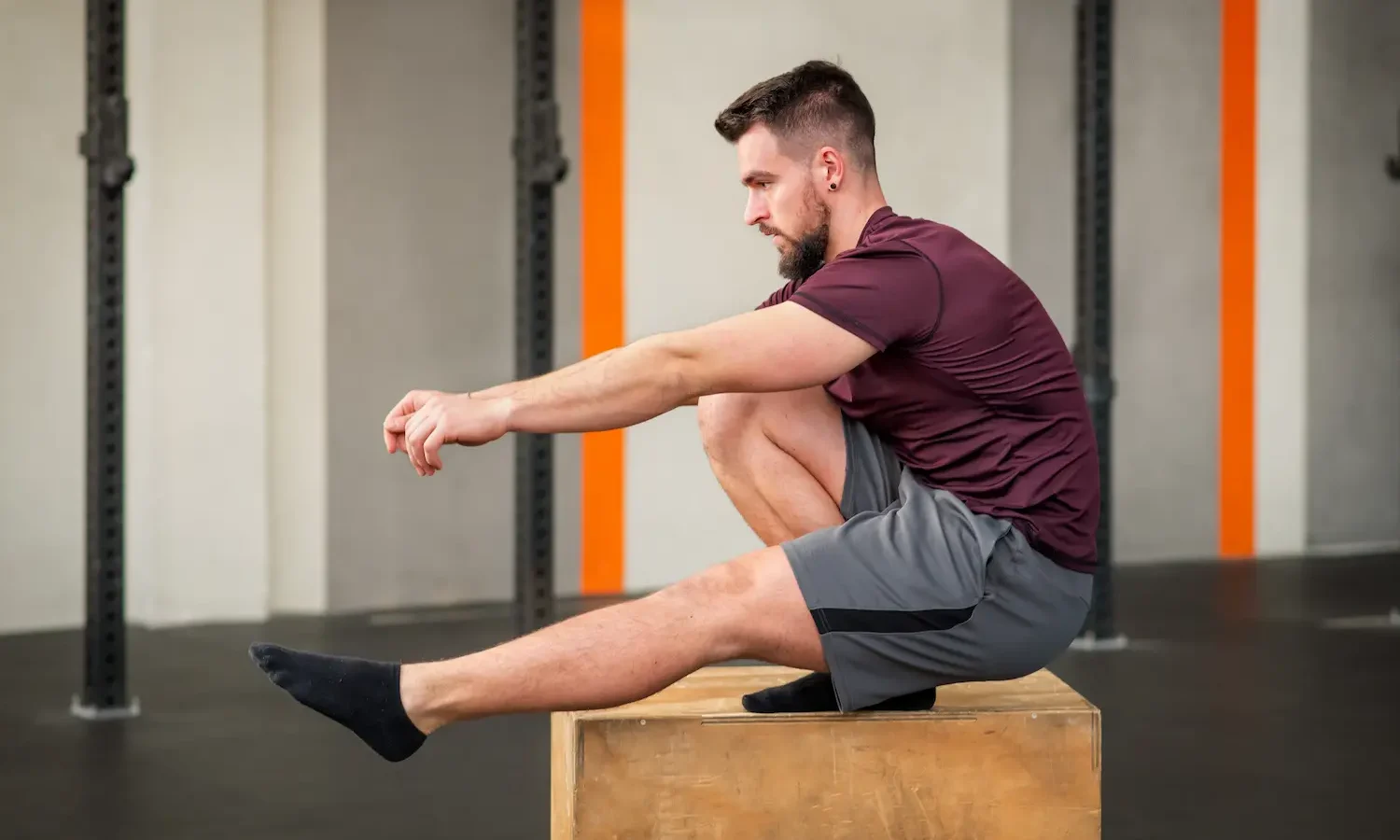
The pistol squat is a unilateral bodyweight squat performed on one leg, the other leg extended horizontally in front of the body. You squat down until the working-leg hamstring touches the calf (full depth), then stand back up — all on one leg, without using the non-working leg for assistance.
It is the bodyweight equivalent of a heavy Bulgarian split squat with added balance and mobility demands. The pistol squat is a benchmark of single-leg strength — and a perfect maintenance exercise for travel, when no equipment is available.
Muscles worked
| Muscle group | Role | Contribution |
|---|---|---|
| Quadriceps (working leg) | Primary mover, knee extension | ~50 % |
| Glutes (working leg) | Hip extension, stabilisation | ~20 % |
| Hamstrings (working leg) | Hip extension support | ~10 % |
| Calves, ankle stabilisers | Balance, ankle dorsiflexion | ~10 % |
| Core, hip flexors (lifted leg) | Stabilisation, leg-holding | ~10 % |
Pistol squats hit the quads and glutes hard, but they also expose every weakness — ankle mobility, hip mobility, core control. Most people fail the pistol not because their legs aren’t strong enough, but because they can’t keep balance through full range.
How to pistol squat: 5 steps
-
Set up the position
Stand on one leg, arms extended forward for balance. Lift the non-working leg slightly off the floor, ankle dorsiflexed. Engage the core, fix your gaze on a point 2-3 m ahead.
-
Initiate the descent
Push hips back and bend the working knee. Simultaneously raise the non-working leg straight out in front — it should rise as your hips descend. Keep arms forward as a counterbalance.
-
Descend with control
Lower in 3-4 seconds. **Keep the heel of the working foot planted flat.** The knee tracks over the toes. The non-working leg stays parallel to the floor at the bottom (or slightly above).
-
Reach the bottom
Full depth — working-leg hamstring touches the calf, hips below the working knee. Body stays upright, chest up, core braced. Brief pause here.
-
Drive back up
**Push through the whole foot** — heel emphasis. Stand up explosively, keep the non-working leg extended throughout the ascent. Lock out at the top. Reset for the next rep, switch legs after the set.
Common mistakes to avoid
Variations & progressions
- Box pistol squat. Squat down to a box and stand back up. Lets you control depth and learn the pattern.
- Assisted pistol squat. Hold a doorframe, TRX or pole for balance. Builds strength while bypassing balance limits.
- Counterbalance pistol squat. Hold a light dumbbell in front. The counterweight shifts your centre of mass and makes balance easier.
- Elevated-heel pistol squat. Heel on a small plate. Compensates for limited ankle mobility.
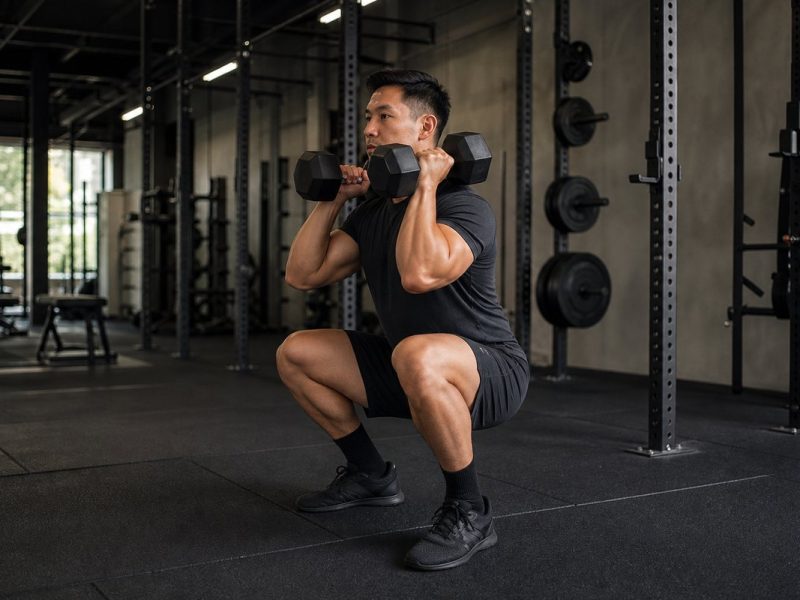
- Weighted pistol squat. Hold a dumbbell or kettlebell goblet-style. The progression once bodyweight feels easy.
- Bulgarian split squat. Easier unilateral squat, loadable with dumbbells.
Sample workout: 8-week pistol progression
The pistol is a skill as much as a strength feat. Train it 2-3 times per week, prioritising mobility (ankle, hip) and unilateral strength.
| Weeks | Progression | Sets × reps/leg |
|---|---|---|
| 1-2 | Box pistol (knee-height box) | 3 × 5 |
| 3-4 | Box pistol (lower box) | 3 × 8 |
| 5-6 | Assisted pistol (TRX/doorframe) | 4 × 6 |
| 7-8 | Full pistol or counterbalance pistol | 3 × 3-5 |
Frequently asked questions
How long does it take to learn the pistol squat?
2-6 months for most adults with consistent practice. Athletes with strong legs and good mobility can get there in 6-8 weeks. People with poor ankle mobility need extra mobility work and may take longer.
Why can’t I keep my heel down?</h3
Limited ankle dorsiflexion. Either work on ankle mobility daily (calf stretches, weighted dorsiflexion) or elevate your heel on a plate — most pistol athletes train both ways.
Pistol squat or weighted Bulgarian split squat?</h3
Both. Bulgarians allow more loading and pure quad-glute hypertrophy. Pistols build balance, mobility and bodyweight strength. Most balanced programs include both.
Are pistol squats bad for the knees?</h3
No — for a healthy knee. The deep knee bend looks scary but is well tolerated when the joint is healthy. People with cartilage damage or patellar tendon issues should choose a different exercise.
How many pistol squats should I be able to do?</h3
1 strict rep per leg = solid intermediate. 5 strict reps per leg = advanced. 10+ per leg with control = elite. Quality over quantity — sloppy partial pistols don’t count.
Related exercises
- Bulgarian Split Squat: easier unilateral squat
- Back Squat: bilateral barbell counterpart
- Goblet Squat: bilateral dumbbell version
- Lunge: lateral unilateral pattern
- Step-Up: unilateral knee-dominant alternative