
The leg extension is the purest quad isolation exercise in the gym. Where the squat and leg press involve the glutes and hamstrings as supporting actors, the leg extension does one thing: extend the knee against load. The quads do all the work.
Leg extensions get a bad rap from old-school strength coaches who claim they’re “bad for the knees”. The research mostly disagrees — performed with reasonable load and full range, leg extensions are safe and effective. This guide covers the strict version that builds quad mass without joint issues.
What is the leg extension?
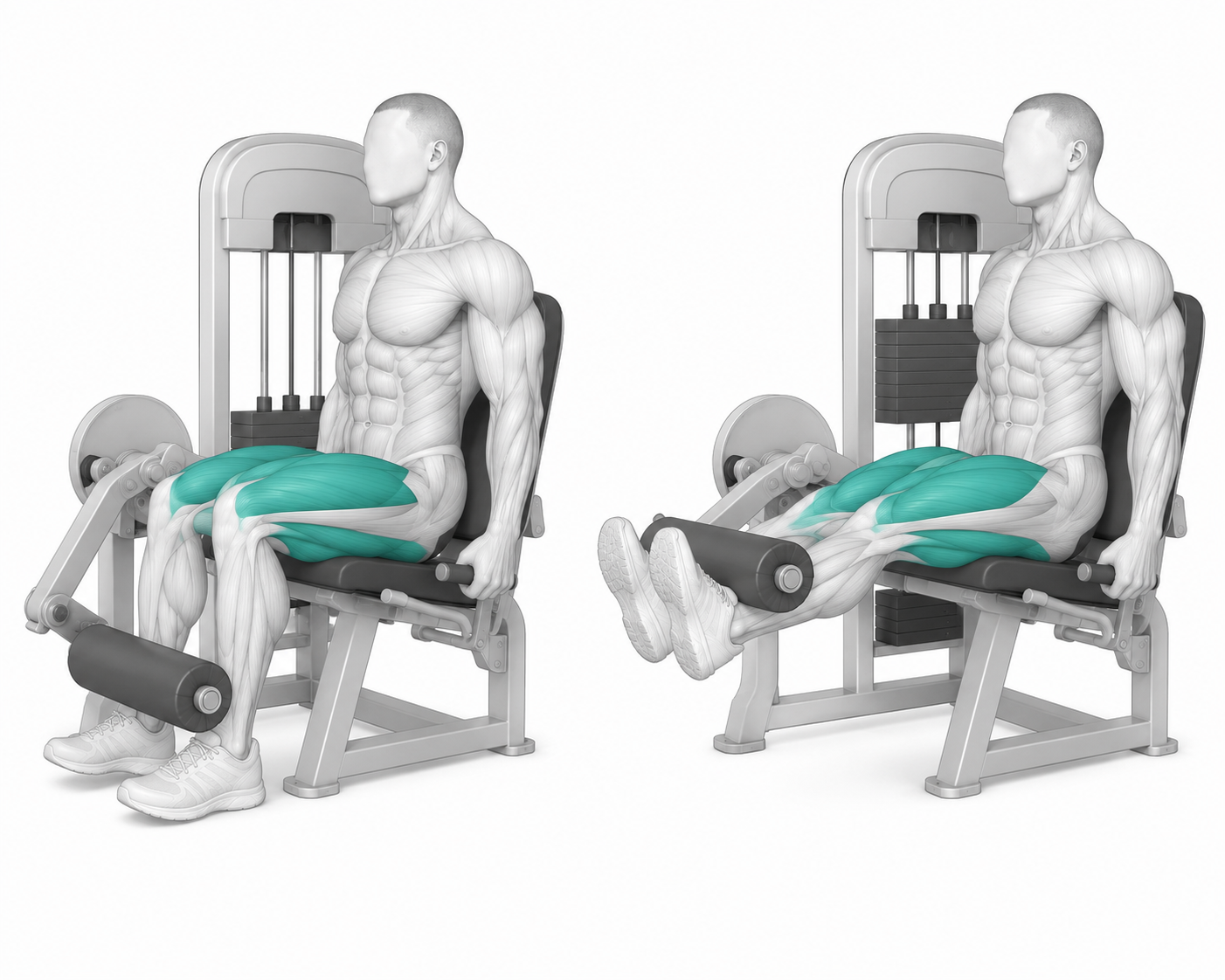
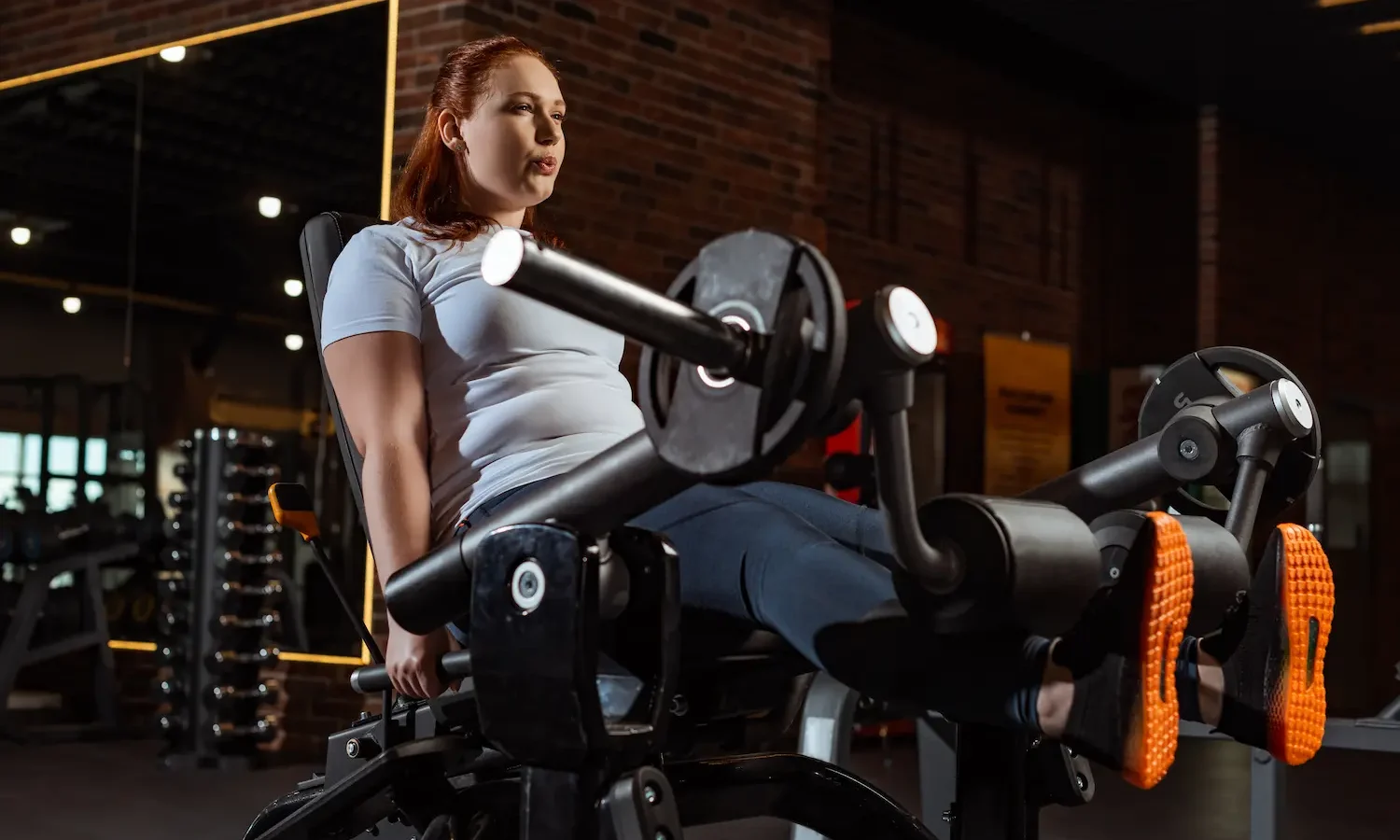
The leg extension is a knee-extension exercise performed on a leg extension machine, in which you sit with your back against a pad, place your shins under a padded roller, and extend the knees by lifting the roller until the legs are nearly straight. The motion isolates the quadriceps almost completely.
The leg extension is the counterpart to the leg curl — both are open-chain isolation exercises (the foot moves freely rather than against a fixed surface). Together they cover both functions of the upper-leg muscles: knee extension (quads) and knee flexion (hamstrings).
Muscles worked
| Muscle group | Role | Contribution |
|---|---|---|
| Quadriceps (rectus femoris, vastus lateralis, vastus medialis, vastus intermedius) | Primary mover, knee extension | ~95 % |
| Tibialis anterior (shin) | Foot stabilisation | ~5 % |
Of the four quad heads, the rectus femoris (the long head running down the front of the thigh) is the only one that crosses both the hip and knee joints. Leg extensions hit it hardest because the hip is in flexion (seated) — its strongest position for further knee extension.
How to leg extension: 5 steps
-
Set up on the machine
Sit on the leg extension machine with your back against the pad. Adjust seat so your knees align with the machine's pivot point. The roller pad sits on the front of your shins, just above the ankles.
-
Set the body position
Hold the handles at the side of the seat. Back firmly against the pad. Engage the core. Hips stay seated — they do not lift during the rep.
-
Extend the knees
Lift the roller by extending the knees. **Squeeze the quads** as the legs straighten. Stop when legs are nearly parallel to the floor or slightly past — peak contraction.
-
Pause at the top
Half-second to one-second pause at the top, quads fully contracted. Don't hyperextend the knees — soft lockout.
-
Lower in 2-3 seconds
Controlled eccentric. Lower until the knees reach 90° (or slightly past) — full ROM. Don't let the weight crash down. Reset, repeat.
Common mistakes to avoid
Variations
- Single-leg extension. One leg at a time. Doubles the focus, fixes asymmetries.
- Paused leg extension. 2-3 second pause at the top with quads fully contracted. Brutal hypertrophy variation.
- Toes-pointed-out leg extension. Toes turned out 30°. Slightly biases the inner quads (vastus medialis).
- Cable leg extension. Done with a cable and ankle strap if no machine is available. Less convenient but works.
- Sissy squat. Bodyweight version. Lean back, lower at the knees while keeping hips extended. Demanding bodyweight quad isolation.
Sample workout: 4-week quad block
Leg extensions 2 times per week, after compound leg work. High-volume, slow tempo.
| Week | Sets × reps | Tempo |
|---|---|---|
| 1 | 3 × 12 | 2 sec eccentric |
| 2 | 4 × 10 | 2 sec eccentric + 1 sec pause at top |
| 3 | 4 × 12 + 1 dropset | 3 sec eccentric |
| 4 (deload) | 3 × 10 | Smooth |
Frequently asked questions
Are leg extensions bad for the knees?
Not for healthy adults at moderate loads. The “leg extensions damage knees” claim comes from outdated research. Modern studies show they are safe and effective. People with pre-existing knee injuries (patellar tendinopathy, meniscus issues) should consult a physio first.
How heavy should I leg extend?
Quads respond well to moderate loads in the 8-15 rep range. The right weight lets you do strict reps with no swinging or hip lift. If your hips lift off the seat, the load is too heavy.
Should I lock out hard at the top?
Squeeze the quads hard at full extension, but don’t hyperextend the joint. The legs should reach parallel to the floor or slightly past — that’s your peak contraction. Hold for 1 second, then lower.
Leg extension or squat — which is better for quads?
Different tools. Squat builds total quad mass and strength alongside glutes/hamstrings. Leg extension isolates the quads and lets you target them directly. Most quad-focused programs include both.
How often should I do leg extensions?
Twice a week is the sweet spot. Quads recover faster than glutes/hamstrings — frequent moderate-volume work produces good growth.
Related exercises
- Squat: foundational compound
- Leg Press: machine compound
- Leg Curl: hamstring isolation counterpart
- Bulgarian Split Squat: unilateral compound
- Sissy Squat: bodyweight quad isolation
Published by: Jay — Writer covering quad exercises
Reviewed, corrected and approved by: Martin Wood — Editor-in-chief
Updated on September 29, 2026