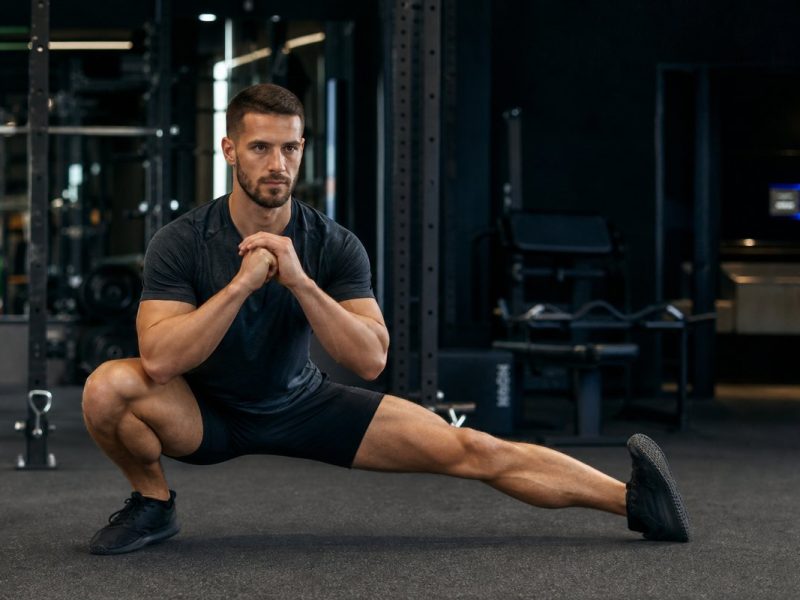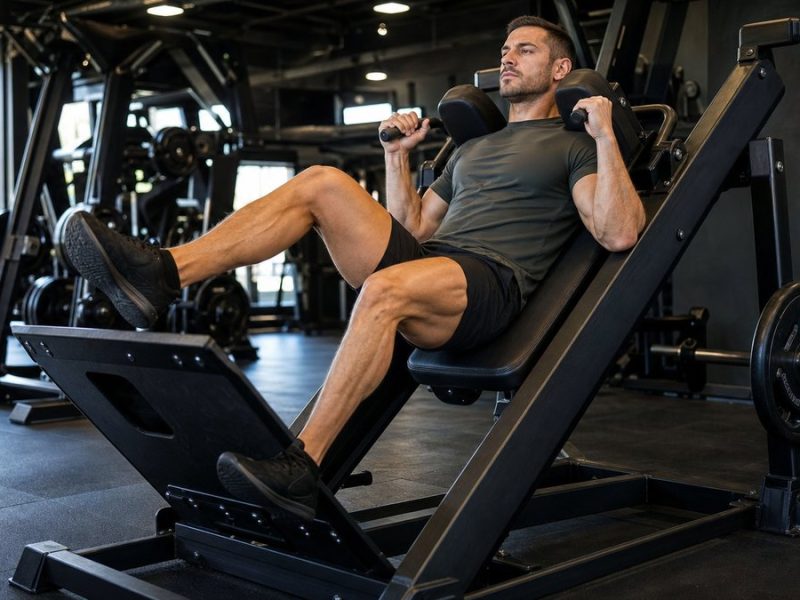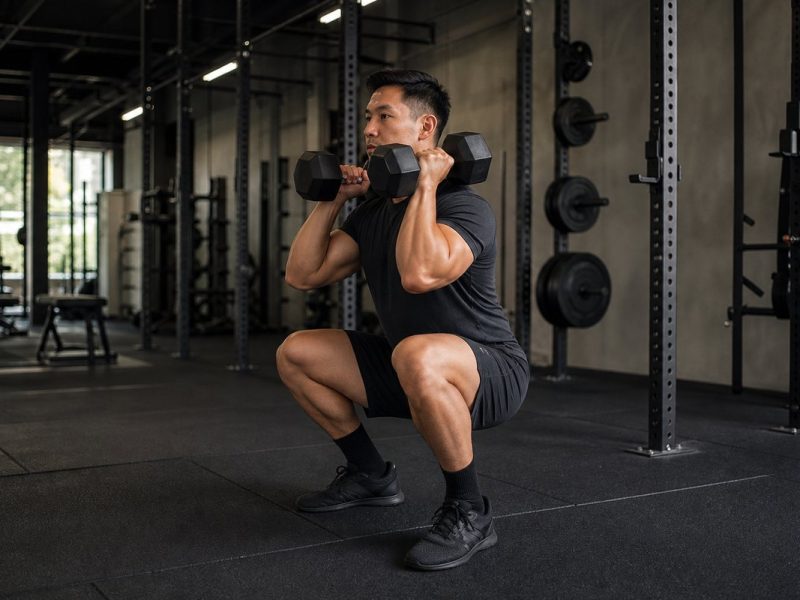

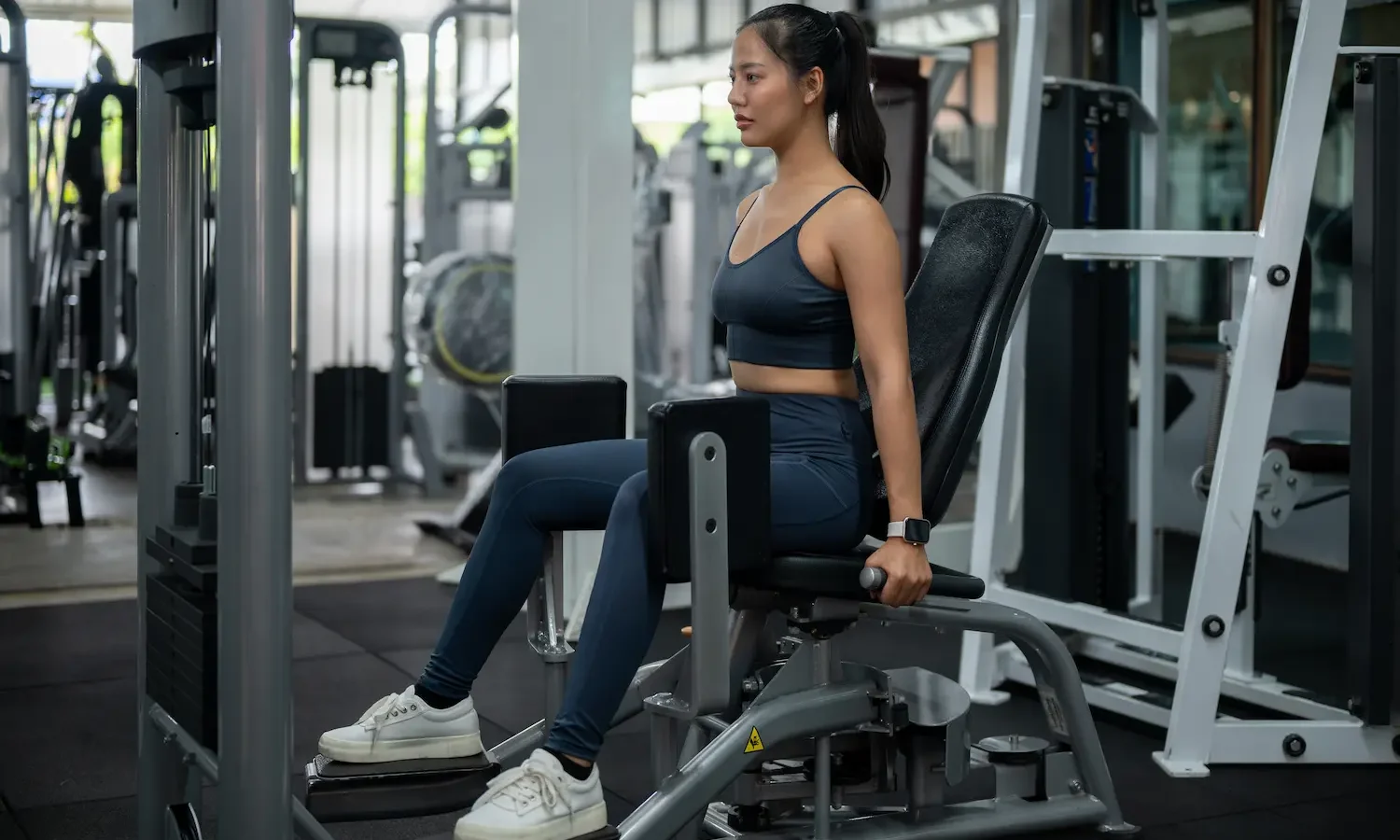
The hip adduction machine is the most direct way to train the inner-thigh muscles (adductors) — squeezing the legs together against resistance. Long stereotyped as a “ladies’ machine”, the hip adduction is in reality a critical training tool for any lifter who squats deep, sprints, plays kicking sports, or wants healthy hips that don’t collapse inward under load.
The adductors are also major hip extensors at deep angles — meaning they contribute meaningfully to squat and deadlift strength. Most strength athletes who add hip adduction work see their compound lifts improve within weeks.
What is the hip adduction?
The hip adduction is a machine isolation exercise for the adductor muscles (inner thighs). Seated on a dedicated adductor machine, you place the legs apart with pads against the inner thighs, then squeeze the legs together against resistance. The motion is pure hip adduction — bringing the femurs toward the midline of the body.
The five muscles that make up the adductor group (adductor longus, brevis, magnus, gracilis, pectineus) take primary load. The magnus, the largest of them, is also a powerful hip extensor at deep hip angles — which is why hip adduction work transfers to squat and deadlift strength.
Muscles worked
| Muscle group | Role | Contribution |
|---|---|---|
| Adductor magnus | Primary mover (large, deep) | ~40 % |
| Adductor longus, brevis | Hip adduction | ~30 % |
| Gracilis, pectineus | Adduction support | ~20 % |
| Glute fibers (lower) | Hip stabilisation | ~10 % |
The hip adduction machine is the only direct adductor isolation exercise in most gyms. Important because adductor weakness shows up as knee valgus (knees caving inward) during squats and lunges — a major injury risk factor and a strength leak.
How to hip adduction: 5 steps
-
Set up the machine
Sit on the hip adduction machine. Adjust the pads so they rest against the **inner thighs** at a comfortable stretched-apart starting position. Back firm against the back pad. Hands grip the handles for stability.
-
Set the start position
Legs spread apart, pads firmly against the inner thighs. **Brace the core**, back pressed against the pad. **Feel the adductors stretched.**
-
Squeeze the legs together
**Squeeze the knees together** by contracting the adductors. Pads travel inward together. 2 seconds. **Drive from the inner-thigh muscles**, not by leaning forward or pushing with the legs in another direction.
-
Pause and squeeze at the centre
1-second pause when the pads are together (or near together). **Squeeze the adductors hard** at peak contraction. Don't let momentum take over.
-
Return with control
Lower the legs apart in 3 seconds back to the stretched starting position. **Maintain tension throughout** — don't let the pads bang the stops. Reset, repeat.
Common mistakes to avoid
Variations
- Cable hip adduction. Cable ankle strap, standing, pull leg inward. Standing version, hits hips differently.
- Copenhagen plank. Side plank with top leg on a bench. Bodyweight adductor isometric — brutal and excellent.
- Single-leg hip adduction. One leg at a time. Identifies side imbalances.
- Sumo deadlift. Compound lift that heavily recruits adductors.
- Hip abduction. Opposite exercise — outer thigh / glute medius.
- Goblet squat. Bilateral squat using adductors in deep position.
Sample workout: 4-week adductor block
Hip adduction 1-2 times per week as accessory work, after main compound lifts.
| Week | Sets × reps | Tempo |
|---|---|---|
| 1 | 3 × 15 | 2 sec in + 1 sec squeeze + 2 sec out |
| 2 | 3 × 12 + drop set | 2 sec in + 2 sec squeeze + 3 sec out |
| 3 | 4 × 12 | 1 sec in + 2 sec squeeze + 4 sec out |
| 4 (deload) | 3 × 12 | Smooth |
Frequently asked questions
Does hip adduction make my thighs bigger?
Yes — the inner-thigh adductors grow with progressive load like any muscle. For lifters wanting bigger overall legs (not just outer quads), direct adductor work fills out the inner thigh meaningfully.
Will hip adduction help my squat and deadlift?</h3
Yes. The adductor magnus is a major hip extensor at deep angles — meaning at the bottom of a squat or sumo deadlift, the adductors contribute significantly to driving you up. Strengthening them improves the strength curve of the deep range.
Hip adduction or sumo squat?</h3
Both work adductors. Sumo deadlifts and wide-stance squats hit them in compound patterns under heavy load. Hip adduction machine isolates them — better for hypertrophy and addressing weakness. Most balanced leg programs include both.
How heavy should I hip adduct?</h3
Moderate-to-heavy. The adductors handle more load than people expect. Start at 60-80 lb / 30-40 kg and build. Most committed lifters work in the 100-150 lb / 50-70 kg range for 12-15 reps. Strict form > heavy load.
Are hip adduction machines safe?</h3
For most lifters, yes. People with active groin strains should skip until healed. Otherwise, the adductor machine is a low-injury-rate exercise.
Related exercises
- Hip Abduction: opposite machine, outer thigh
- Sumo Deadlift: compound adductor work
- Goblet Squat: deep squat using adductors
- Bulgarian Split Squat: unilateral squat
- Copenhagen Plank: bodyweight adductor isometric
Published by: Jay — Writer covering quad exercises
Reviewed, corrected and approved by: Martin Wood — Editor-in-chief
Updated on May 19, 2026