
The T-bar row is the back exercise that bridges the gap between the heavy barbell row and the lower-back-friendly seated cable row. By anchoring one end of the bar to the floor (or in a landmine attachment), you get a fixed pivot point that keeps the lift smooth and reduces lower-back strain.
The T-bar row is a favorite of bodybuilders for back thickness — particularly the mid-back. Done with proper form, it builds the rhomboids, lower traps and lats with constant tension and minimal lower-back contribution.
What is the T-bar row?
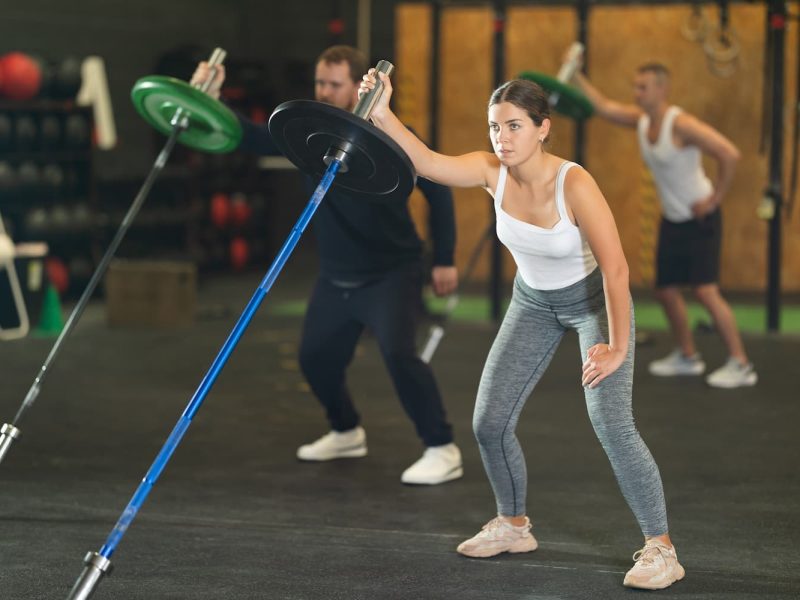
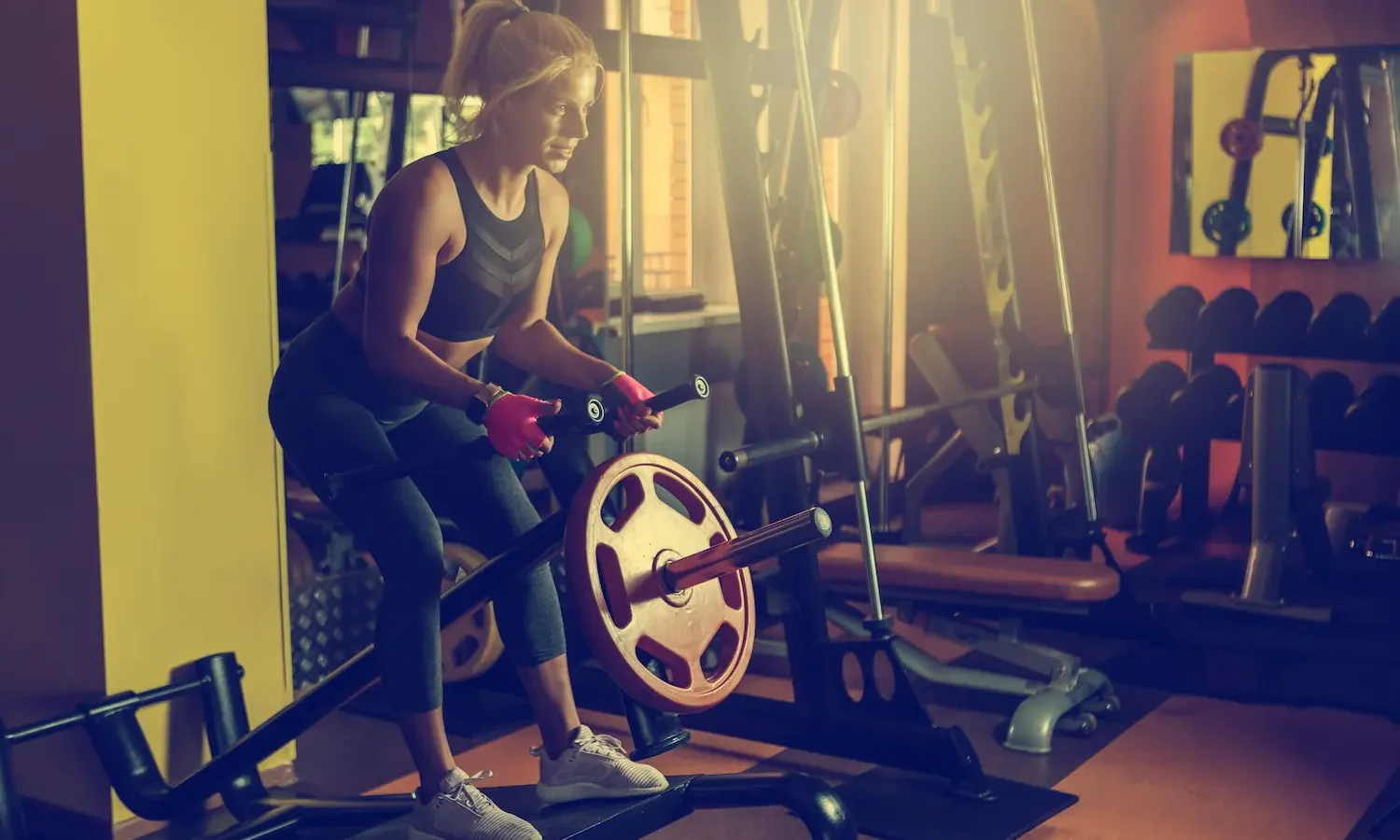
The T-bar row is a horizontal pulling movement performed with a barbell anchored at one end (in a landmine attachment, corner of a wall, or dedicated T-bar machine). You straddle the bar, hinge over with a neutral grip, and pull the bar toward your lower chest by driving the elbows back.
Two main versions exist. The chest-supported T-bar row uses a dedicated machine with a chest pad — eliminates lower-back work entirely, pure back hypertrophy. The free-standing T-bar row uses a landmine and is closer to a barbell row in feel. Both are valid — the chest-supported version is more strict, the free-standing version allows heavier loads.
Muscles worked
| Muscle group | Role | Contribution |
|---|---|---|
| Mid-back (rhomboids, lower traps) | Primary mover | ~40 % |
| Lats | Shoulder extension | ~30 % |
| Biceps brachii | Elbow flexion | ~15 % |
| Erector spinae · Rear delts | Stabilisation | ~15 % |
The T-bar row hits the mid-back harder than the lats — the neutral grip and pull angle bias the rhomboids and lower traps. For lifters chasing back thickness (rather than width), the T-bar row earns its place.
How to T-bar row: 5 steps
-
Set up the bar
Place a barbell in a landmine attachment (or wedge one end into the corner of a wall). Load weight on the other end. Straddle the bar so it sits between your feet.
-
Set the hinge position
Hinge at the hips, push the butt back, slight bend in the knees. Torso about 30-45° from horizontal. Grip the V-bar attachment (or grip near the loaded end with both hands).
-
Brace and engage the back
Pull shoulder blades back and down. Take a deep breath, brace the core. Lower back flat — no rounding. Lats engaged.
-
Pull to the lower chest
Drive the elbows back, pulling the bar toward your lower chest / sternum. **Elbows lead** — don't curl with the biceps. Squeeze the shoulder blades together at the top.
-
Lower under control
Reverse in 2-3 seconds. Maintain the hinged torso position — don't bob up and down. Fully extend the arms at the bottom for a lat stretch. Reset, repeat.
Common mistakes to avoid
Variations
- Chest-supported T-bar row. On a dedicated machine with a chest pad. Eliminates lower-back demand entirely. Most strict version.
- Landmine row. Same setup, single-arm with a wider grip. Excellent for asymmetry-fixing.
- Wide-grip T-bar row. V-bar replaced by a longer bar with wide grip. More mid-back, less biceps.
- Meadows row. Single-arm landmine row with overhand grip. Bigger lat stretch.
- Barbell row. Free-weight bilateral horizontal pull. Heavier loading.
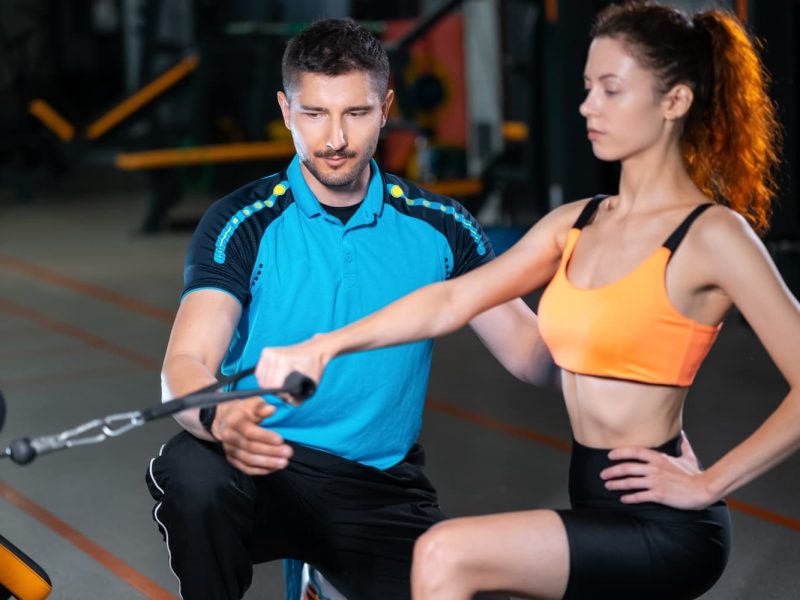
- Seated cable row. Cable variant with constant tension.
Sample workout: 4-week back thickness block
T-bar rows once or twice per week. Pair with vertical pulls (pull-ups, lat pulldowns) on alternate days.
| Week | Sets × reps | RPE |
|---|---|---|
| 1 | 3 × 10 | 7 |
| 2 | 4 × 8 | 7-8 |
| 3 | 5 × 6 | 8 |
| 4 (deload) | 3 × 8 | 6 |
Frequently asked questions
T-bar row or barbell row?
Both. T-bar row is easier on the lower back and more strict because of the fixed pivot. Barbell row allows heavier free-weight loads and trains the lower back as a stabiliser. Cycle through both across blocks.
How heavy should I T-bar row?
Most lifters can T-bar row about 60-75 % of their barbell row for the same reps. The pivot point reduces leverage. The right weight is one you can do strict for 6-10 reps with no torso bobbing.
I don’t have a T-bar machine — what alternative?
Use a landmine attachment with any barbell. Anchor one end in the corner of a wall or in a dedicated landmine. Same exercise. Or use a dumbbell row instead — different angle, similar muscle target.
Why does my lower back fatigue during T-bar rows?
The free-standing version still demands isometric lower-back work to hold the hinged position. If your back tires before your back muscles, switch to the chest-supported variant. It eliminates lower-back fatigue entirely.
Should I pull to the chest or the abdomen?
To the lower chest / sternum. That’s where the elbow position naturally stops with proper form. Pulling to the abdomen biases the lats more; pulling higher biases the upper back. Stay at the lower chest for a balance.
Related exercises
- Barbell Row: free-weight horizontal pull
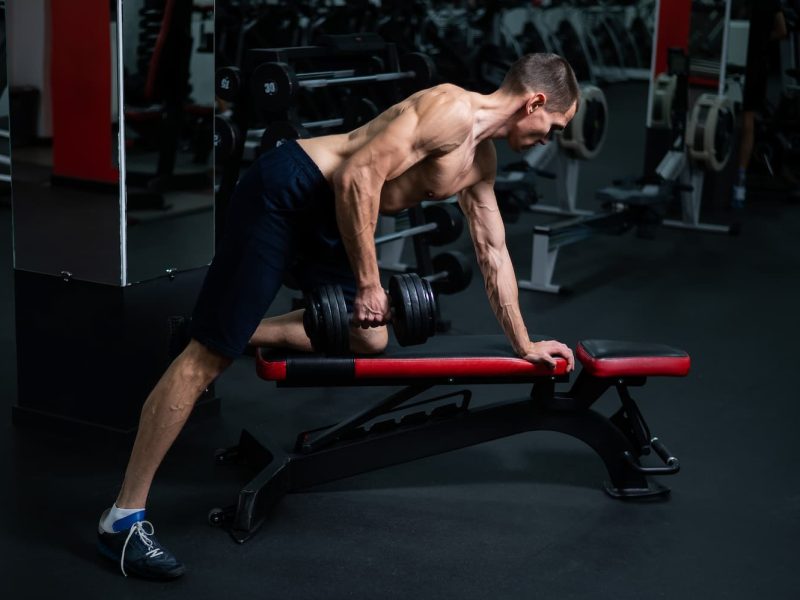
- Dumbbell Row: single-arm horizontal pull
- Seated Cable Row: cable horizontal pull
- Landmine Row: single-arm landmine variant
- Pull-Up: bodyweight vertical pull