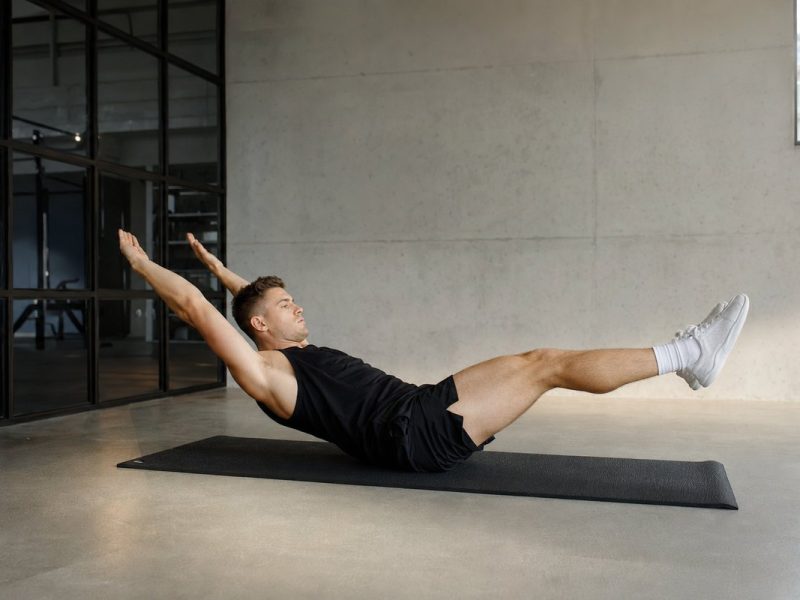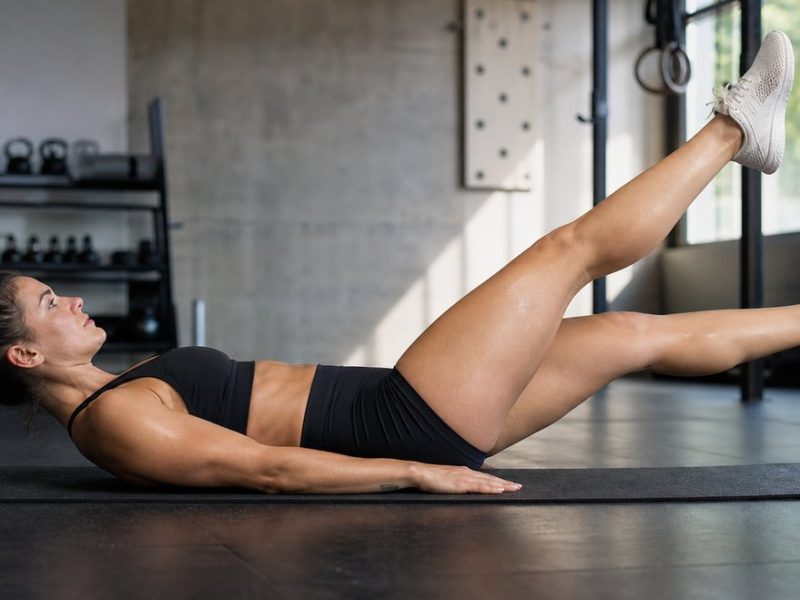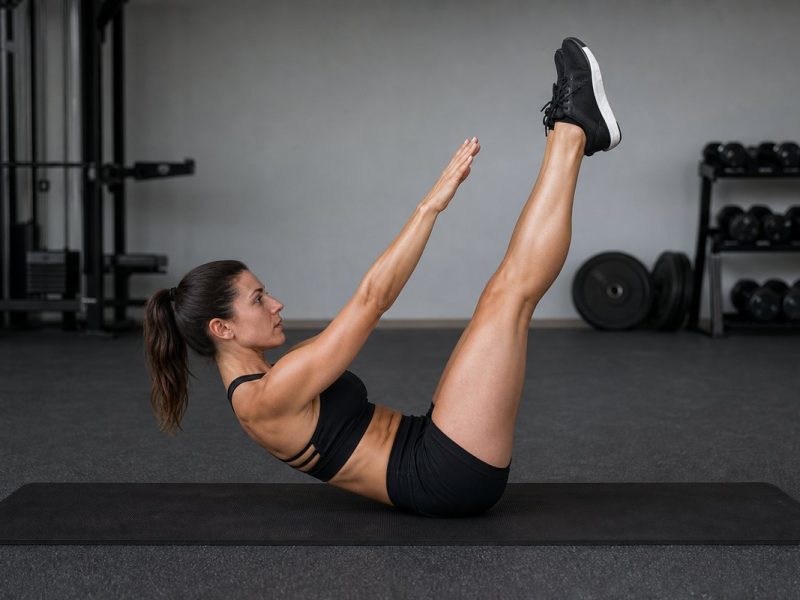

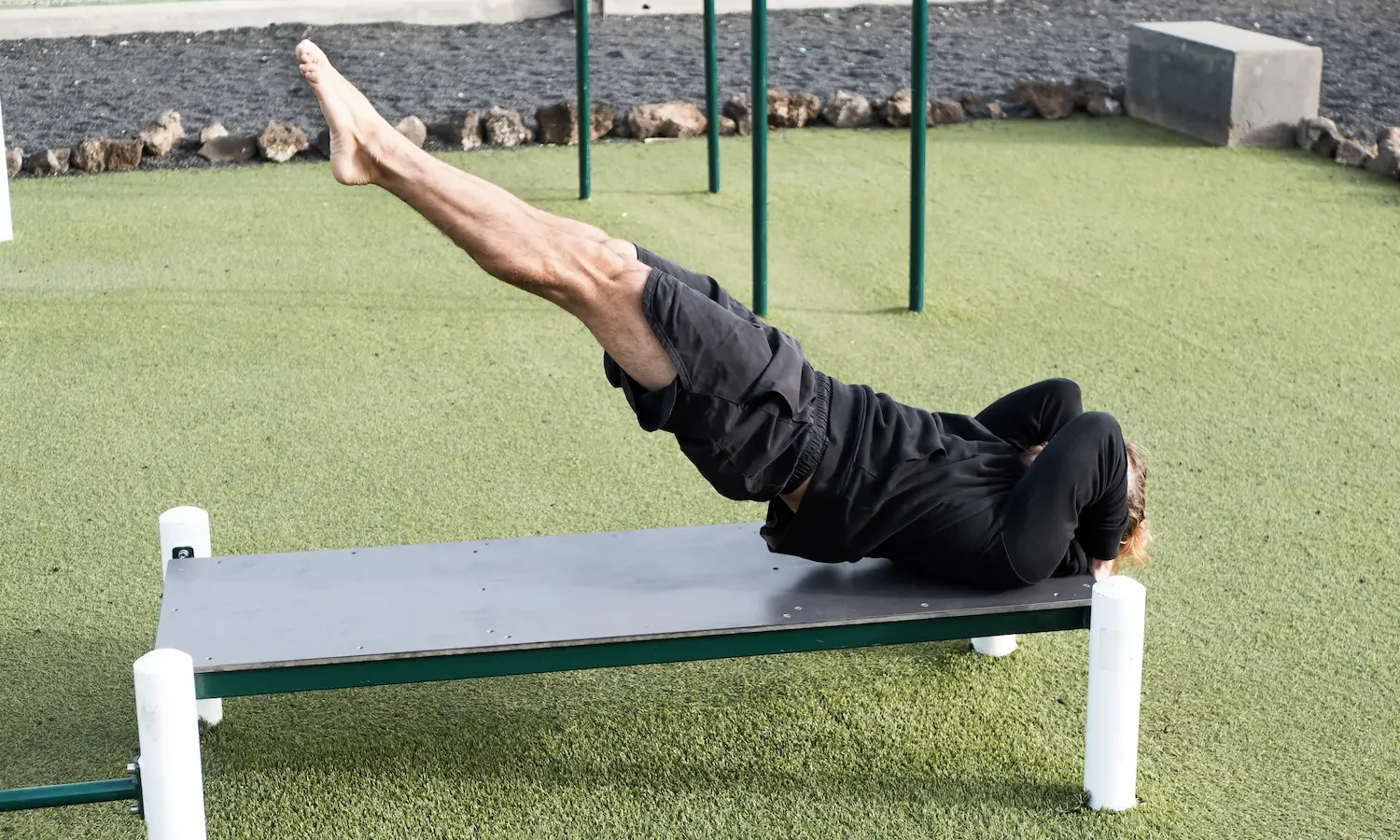
The dragon flag is Bruce Lee’s signature core exercise — and it remains, half a century later, one of the hardest ab exercises in existence. You lie on a bench, grip behind your head, then lift your entire body from shoulders to toes into a straight line above the bench. The whole body is rigid; only the shoulders touch.
This guide covers the strict bench dragon flag. It is an advanced exercise. Most adults need 6 months of dedicated core training before nailing the first strict rep.
What is the dragon flag?
The dragon flag is an advanced bodyweight ab exercise performed lying on a bench or decline bench. You grip behind your head (under the bench, a pole, or the bench legs), bring the legs to vertical, then lower the entire rigid body in one piece — toes leading — until the body is parallel to the floor or just above it. Press back up to vertical. Throughout, only the upper back and shoulders touch the bench.
Unlike crunches that train spinal flexion, the dragon flag trains the abs isometrically as anti-flexion stabilisers — the same way they fire in heavy squats and deadlifts. It’s a full-body core exercise, not just an ab exercise.
Muscles worked
| Muscle group | Role | Contribution |
|---|---|---|
| Rectus abdominis | Primary mover, anti-flexion isometric | ~45 % |
| Obliques | Anti-rotation, stabilisation | ~20 % |
| Hip flexors | Hip stabilisation, leg-holding | ~15 % |
| Lats, lower back | Spinal extension support | ~10 % |
| Glutes, quads | Body line stabilisation | ~10 % |
The dragon flag is a full-body integration exercise disguised as an ab move. The abs are the limiting factor, but every muscle from the lats to the glutes contributes.
How to dragon flag: 5 steps
-
Set up on the bench
Lie supine on a flat bench. Reach back to grip the bench above your head with both hands — the bench frame, legs, or a pole anchored above. Hands locked, elbows tucked toward each other.
-
Bring legs to vertical
Pull both legs up so they point at the ceiling. **Push the upper back into the bench**; the rest of the body is now elevated. Body forms a vertical line from shoulders to toes. Squeeze glutes, brace abs hard.
-
Lower with control
Lower the entire **rigid body** as one piece in a 3-5 second eccentric. Toes lead the way down. **No bending at the hips. No piking. Body = one straight line.** Only the upper back and shoulders remain on the bench.
-
Reach parallel
Stop when the body is parallel to the floor (heels just above the bench). Brief pause — feel the abs working maximally to prevent the hips from dropping further.
-
Return to vertical
**Drive the legs back up** in a powerful concentric — abs do the work. Maintain the rigid body line. Return to vertical. Reset, repeat.
Common mistakes to avoid
Variations & progressions
- Tuck dragon flag. Knees pulled toward chest. The first progression — much easier leverage.
- Single-leg dragon flag. One leg extended, one tucked. Mid-progression.
- Straddle dragon flag. Legs apart in straddle. Intermediate between tuck and full.
- Negative dragon flag. Start vertical, lower in 5-8 seconds, reset. Builds eccentric strength.
- Weighted dragon flag. Ankle weights or band — advanced loading.
- Hanging leg raise. Easier hanging alternative.
- L-sit. Static hold counterpart.
Sample workout: 12-week dragon flag progression
Train 2-3 times per week. The progression follows the leverage curve — shorten the lever first, lengthen progressively.
| Weeks | Progression | Sets × reps |
|---|---|---|
| 1-3 | Tuck dragon flag | 4 × 6 |
| 4-6 | Single-leg dragon flag | 4 × 5 per leg |
| 7-9 | Straddle dragon flag | 3 × 6 |
| 10-12 | Full dragon flag + negatives | 4 × 3-5 |
Frequently asked questions
How long to learn the dragon flag?
3-12 months for most adults. Athletes already strong on hanging leg raises (15+ strict reps) usually get there fastest. The key is consistent practice with the progression — not skipping ahead.
Dragon flag or cable crunch?</h3
Different goals. Cable crunch trains spinal flexion with progressive load — best for pure ab hypertrophy. Dragon flag trains anti-flexion isometric strength — best for athletic carryover (squat, deadlift, sprint). Use both in a complete program.
Can I do dragon flags without a bench?</h3
Yes — on the floor with hands gripping a heavy fixed object (a couch leg, sturdy table) or a parallel bar. The bench is the most common setup but not required. Anywhere you can anchor your hands above your head will work.
Why does my lower back hurt?</h3
You’re losing the rigid body line — letting the hips drop, creating a hinge at the lower back. Brace harder, squeeze glutes throughout. If the back keeps hurting, regress to tuck dragon flags until you can maintain a perfect body line.
How low should I go?</h3
Body parallel to the floor at the bottom — heels just above (not touching) the bench. Going lower = more eccentric loading on the lower back. Most people who can hold parallel cleanly don’t need to go further.
Related exercises
- Hanging Leg Raise: hanging core dynamic
- L-Sit: static hold counterpart
- Plank: foundational anti-extension
- Cable Crunch: loaded flexion ab work
- Reverse Crunch: lower-ab focused regression