
The clean and jerk is the king of Olympic lifts — the heaviest weight a human can lift over their head from the floor in one continuous sequence. It combines two distinct movements: the clean (floor to the front-rack shoulders) and the jerk (shoulders to locked-out overhead). Together, they’re the ultimate test of athletic power, mobility, and timing.
This guide covers the full clean and split jerk — the standard competition variant. Most lifters take 12+ months to land it confidently with meaningful loads.
What is the clean and jerk?
The clean and jerk is a two-stage competitive Olympic lift. The clean: barbell from floor to front-rack catch in a deep squat. Stand up. The jerk: dip-drive the bar overhead, splitting the legs forward and back to drop under into a stable overhead lockout, then bring the feet back together.
It allows more load than the snatch — typically 25-30 % heavier — because both phases happen in stronger positions (front rack is stronger than overhead; jerk allows leg drive). The world record is around 2.2x bodyweight for top male lifters; serious recreational lifters can chase 1.5x bodyweight over a few years.
Muscles worked
| Muscle group | Role | Contribution |
|---|---|---|
| Glutes, hamstrings, quads | Pull + squat + jerk drive | ~40 % |
| Erector spinae, traps | Pull control, second pull | ~20 % |
| Deltoids, triceps | Jerk drive + overhead lockout | ~15 % |
| Lats, mid-back | Bar path control, front rack | ~10 % |
| Core, forearms | Full-body bracing, grip | ~15 % |
The clean and jerk is the most total-body power exercise in lifting. Every muscle from grip to calves fires explosively. Compared to a deadlift + overhead press done separately, the clean and jerk demands more speed, mobility, and coordination.
How to clean and jerk: 5 steps
-
Clean — set up at the bar
Feet hip-width, **clean grip — just outside shoulders, hook grip**. Hips above knees, chest up, back tight, bar over mid-foot.
-
Clean — pull and catch in front rack
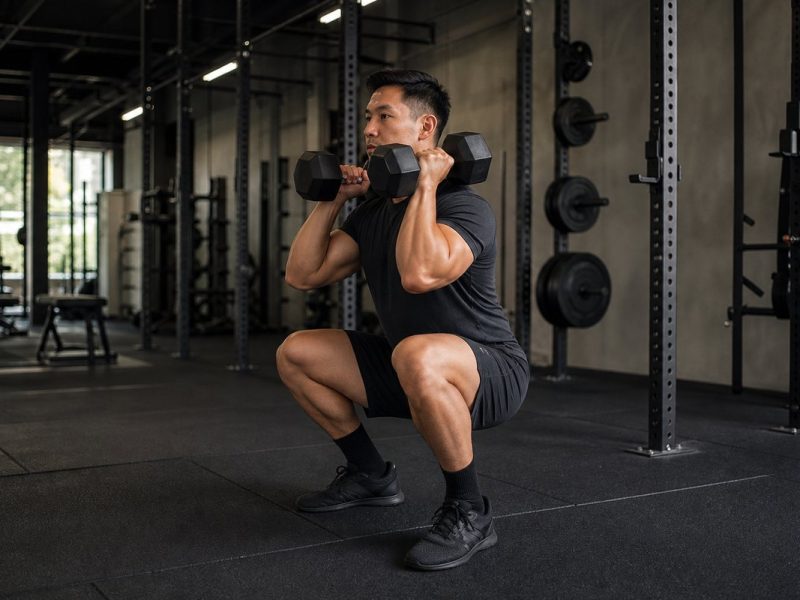
**First pull** with leg drive (bar to knee, back angle constant). **Second pull**: explosive triple extension at hip-crease — bar accelerates up. **Third pull**: drop into deep front squat as the bar travels up, **catch the bar in the front rack** (elbows high, bar resting on shoulders). Stand up.
-
Reset for the jerk
Standing with bar in front rack. **Reset breath, brace core**. Elbows still slightly forward, bar resting on shoulders. Feet hip-width, weight in mid-foot.
-
Jerk — dip and drive
**Quick controlled dip** (15-20 cm, knees stay over toes, no forward lean). **Reverse explosively** — drive through the heels and push the bar up violently from the legs through the shoulders.
-
Jerk — split under the bar to catch overhead
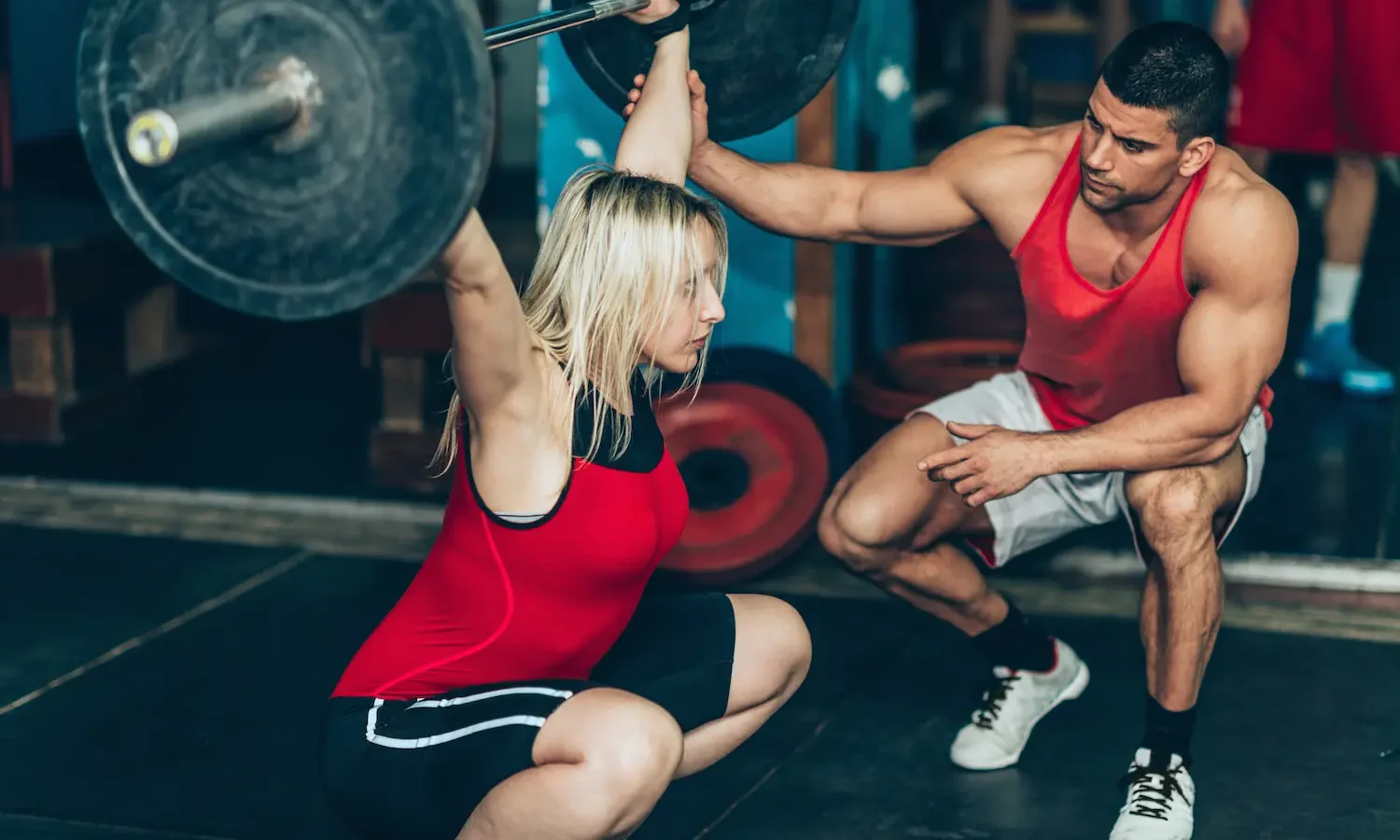
As the bar travels up, **split the feet — one forward, one back** (split jerk), or drop into a quarter-squat (push jerk). **Catch the bar with arms locked overhead, head pushed through**. Recover by bringing feet back together. Lower or drop the bar.
Common mistakes to avoid
Variations & progressions
- Power clean. Clean catch above parallel — no full squat. Beginner progression.
- Hang clean. Clean from hang position. Removes floor-to-knee pull.
- Clean pull. First and second pull only — no catch. Builds pulling strength.
- Push press. Dip-drive press without splitting under. Builds jerk drive.
- Push jerk. Jerk catch in a power squat (no split). Bridge to split jerk.
- Split jerk. Standard competition jerk variant.
- Front squat. Builds the clean catch strength.
Sample workout: 12-week clean and jerk teaching block
Train 3-4 times per week. Practice both phases separately and combined. Heavy loads only after technique is consistent.
| Weeks | Focus | Sets × reps |
|---|---|---|
| 1-3 | Front squat + push press | 5 × 5 building |
| 4-6 | Hang clean + push jerk | 5 × 3 light-moderate |
| 7-9 | Power clean + split jerk | 5 × 2 moderate |
| 10-12 | Full clean + split jerk | 5 × 1-2 working up |
Frequently asked questions
Clean and jerk or snatch?
Both are competition lifts and complementary skills. The snatch is more technical and demands more shoulder mobility. The clean and jerk allows heavier loads. Most weightlifters train both; if you can only pick one, the clean and jerk is more athletically transferable.
Should I jerk split, power, or squat?
Split jerk is the standard for max load (most stable). Power jerk (push jerk with quarter-squat catch) is more accessible to beginners. Squat jerk is the rarest and most technical. Most competition lifters split.
How long to land a competitive clean and jerk?
12-24 months of consistent training under a coach. Most amateur lifters can build to a clean and jerk equal to their deadlift over 2-3 years.
Is the clean and jerk safer than the snatch?
Marginally. The front rack and overhead lockout are slightly more stable than the snatch’s overhead squat. Both are very safe with proper coaching and bumper plates; both are dangerous with bad form and heavy loads.
Should I clean and jerk as a non-competitor?
Yes — the athletic benefits (power, mobility, coordination) transfer to almost any sport. Even at moderate loads, training the lift develops qualities that pure strength training doesn’t.
Related exercises
- Snatch: the other Olympic lift
- Power Clean: clean teaching variant
- Push Jerk: jerk teaching variant
- Front Squat: clean catch foundation
- Overhead Press: overhead strength base