
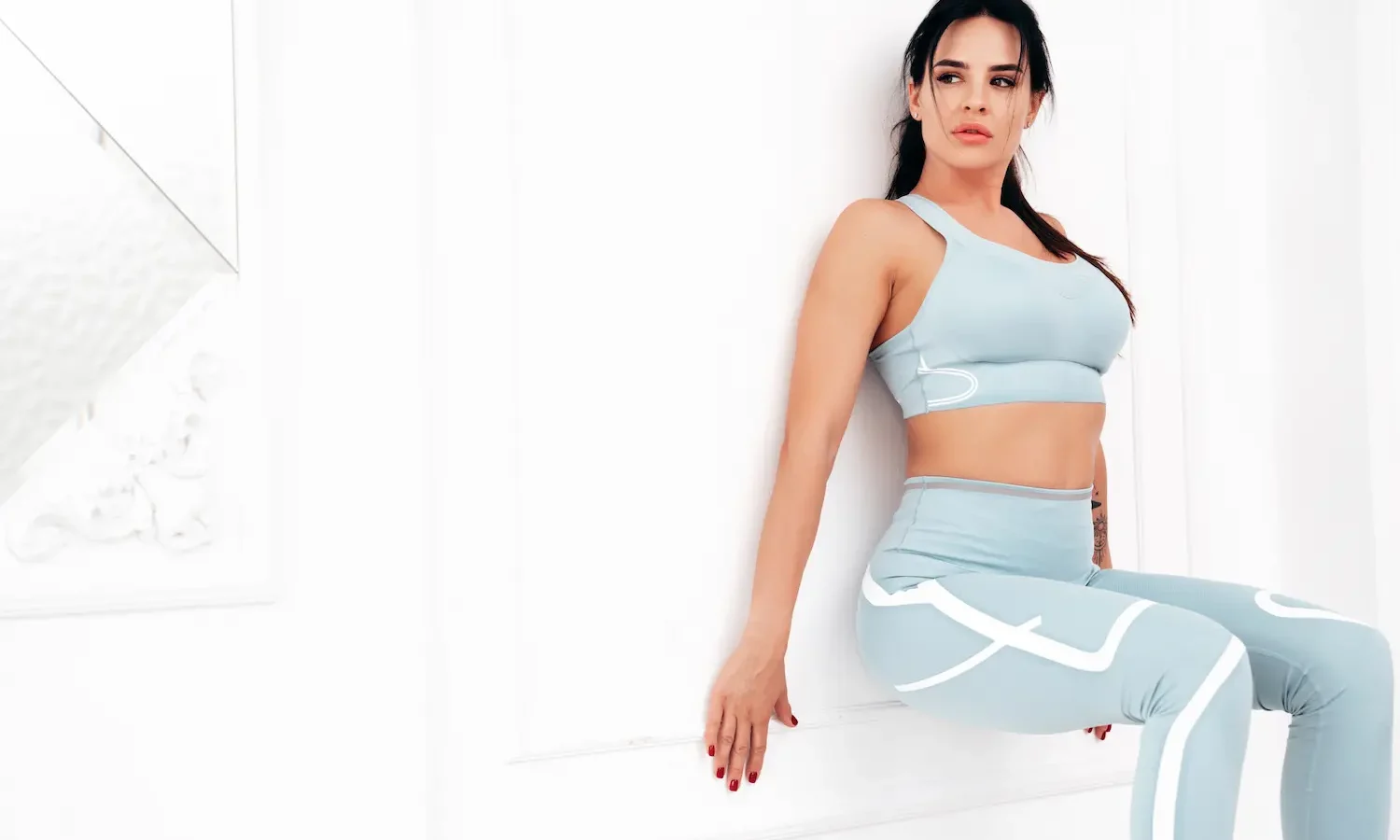
The wall sit is the simplest, most accessible quad isometric in any program. Lean against a wall, slide down to a 90° squat position, and hold. No equipment, no skill, no excuses. Done correctly, it builds quad endurance, knee stability, and a uniquely brutal kind of mental toughness.
Wall sits are also a useful diagnostic. If you can’t hold one for 60 seconds, your quads have endurance work to do before adding heavier strength training. This guide covers the strict version — back flat against the wall, knees at 90°, time held to failure.
What is the wall sit?
The wall sit is an isometric (no-movement) quad exercise performed with the back flat against a wall, knees bent at ~90°, and feet flat on the floor. The thighs are parallel to the floor, the body forms an “L” shape against the wall. You hold this position for time — typically 30 seconds to 2 minutes.
The wall sit trains the quads under sustained load — completely different stimulus than the dynamic squat or leg extension. It builds endurance and time-under-tension that strength exercises don’t replicate. It’s also one of the few quad exercises completely safe for beginners and rehab patients.
Muscles worked
| Muscle group | Role | Contribution |
|---|---|---|
| Quadriceps | Primary mover, isometric knee extension | ~70 % |
| Glutes | Hip extension hold | ~15 % |
| Calves, hamstrings | Stabilisation | ~10 % |
| Core | Posture against the wall | ~5 % |
The wall sit primarily trains the quadriceps in their endurance fibres. While the squat trains them dynamically with strength gains, the wall sit specifically builds isometric strength and mental tolerance. Useful for athletes, ski/winter sports, and rehab.
How to wall sit: 5 steps
-
Set up against the wall
Stand with your back against a smooth wall, feet about 50-60 cm in front of you, hip-width apart. Slide down the wall by bending the knees.
-
Lower into a 90° squat position
Slide down until your **knees are bent at ~90°** — thighs parallel to the floor. Knees directly over the ankles (not in front of the toes). Adjust foot position if needed.
-
Set the back position
**Lower back flat against the wall** — no gap. Tilt the pelvis posteriorly. Shoulders against the wall too if possible. Brace the core.
-
Hold the position
Maintain the strict position. Breathe normally — don't hold the breath. Arms can be at your sides, hands on hips, or extended in front for stability.
-
Hold for time, then exit
Hold for the prescribed duration. To exit, push off the wall by extending the legs and standing up. Don't let the knees collapse inward as you stand.
Common mistakes to avoid
Variations
- Weighted wall sit. Holding a plate or dumbbell on the lap. Adds load to challenge the quads further.
- Single-leg wall sit. One leg at a time. Doubles the load on the working leg, exposes asymmetries.
- Wall sit with march. Alternately lift each foot off the floor. Adds dynamic challenge to the isometric.
- Wall sit with calf raise. Lift heels off the floor while holding the wall sit. Brutal calf work added.
- Wall sit with shoulder raise. Hold light dumbbells and perform lateral raises while wall sitting. Combo move.
- Swiss ball wall sit. Swiss ball between back and wall. Adds instability.
Sample workout: 4-week endurance block
Wall sits 2-3 times per week as a quad endurance finisher.
| Week | Sets × time |
|---|---|
| 1 | 3 × 30 sec |
| 2 | 3 × 45 sec |
| 3 | 4 × 60 sec |
| 4 (deload) | 3 × 30 sec |
Frequently asked questions
How long should I hold a wall sit?
30 seconds for beginners. 60 seconds is solid. 90+ seconds is endurance territory. Past 2 minutes, you’re training pain tolerance more than strength. Better to add load (weighted wall sit) than just extending time.
Are wall sits good for the knees?</h3
Generally yes — they’re a low-impact exercise often used in physical therapy for knee rehab. The 90° knee position can stress the patella for some lifters; if pain persists, raise the position to a less deep angle (60-70° knee bend).
Wall sit or squat — which is better?</h3
Different stimuli. Squats build dynamic strength. Wall sits build isometric endurance. Most balanced programs include the squat as primary; wall sits as accessory or for rehab.
Why does my back hurt during wall sits?</h3
You’re probably arching the lower back — there should be no gap between your lower back and the wall. Tilt the pelvis posteriorly to flatten the lower back against the wall. Engage the abs.
Should I add weight to wall sits?</h3
Once 60-90 seconds becomes easy, yes. Hold a plate or dumbbell on your lap. Most lifters can build to 60-90 seconds with 10-25 kg of load.
Related exercises
- Squat: dynamic quad foundation
- Leg Extension: dynamic quad isolation
- Single-Leg Wall Sit: unilateral variant
- Plank: similar isometric core work
- Goblet Squat: dynamic quad-focused variant
Published by: Jay — Writer covering quad exercises
Reviewed, corrected and approved by: Martin Wood — Editor-in-chief
Updated on September 29, 2026