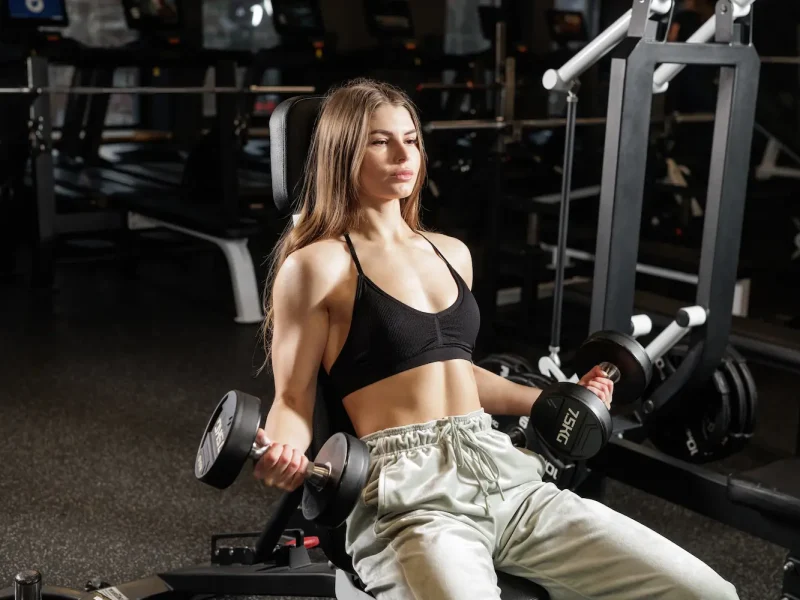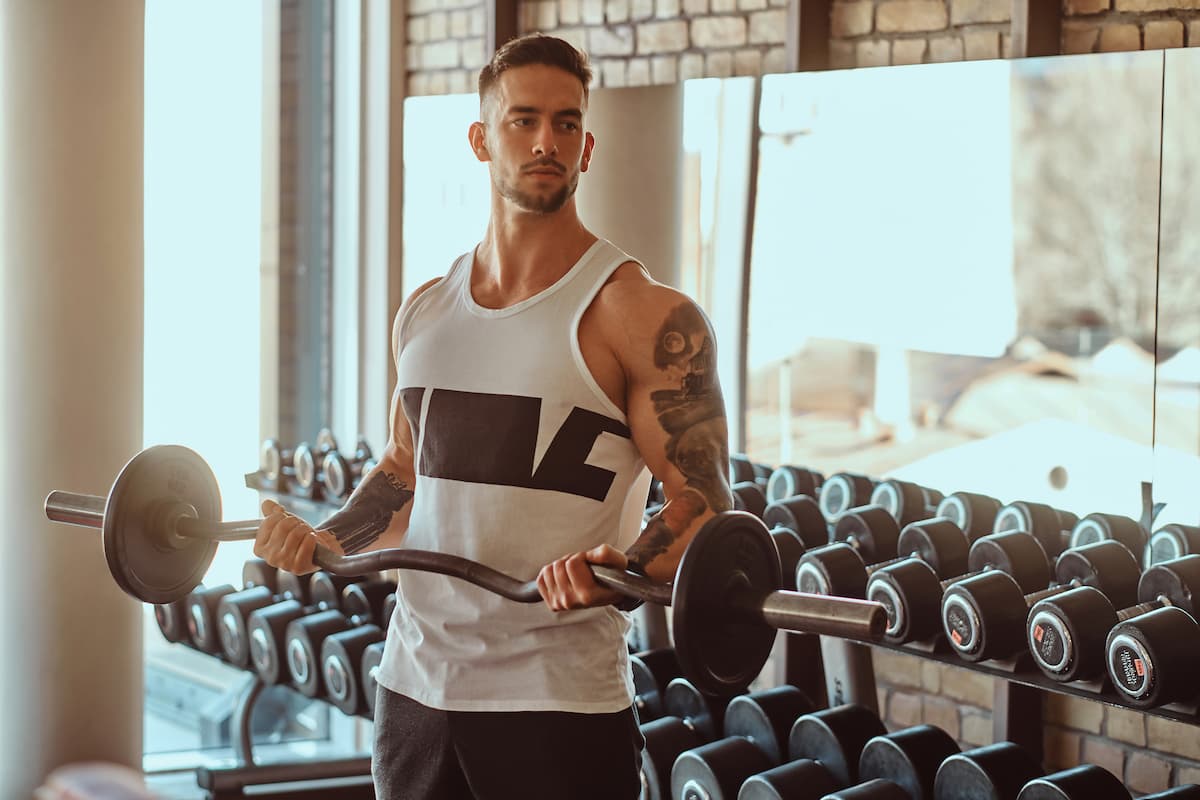


The spider curl is the biceps curl that eliminates all cheating. Lying chest-down on an incline bench with the arms hanging straight down, you curl dumbbells (or a barbell) up — and the bench position prevents body swing, elbow drift, or anything else that lets you fake more weight than your biceps can actually move.
For lifters whose curls feel like a full-body motion (everyone, secretly), the spider curl is the corrective. Your biceps do the work or the weight stays put.
What is the spider curl?
The spider curl is a strict biceps isolation performed lying chest-down on an incline bench (typically 45-60° incline), with the arms hanging straight down from the shoulders. You grip dumbbells, a barbell, or an EZ-bar with a supinated grip, then curl the weight up toward the shoulders by bending the elbows. The chest pad eliminates body sway; the gravity-perpendicular arm position keeps tension constant.
Unlike standing curls, the spider curl loads the biceps maximally throughout the entire range — including the top half, where standing curls lose tension (because the forearm becomes vertical and gravity does the work).
Muscles worked
| Muscle group | Role | Contribution |
|---|---|---|
| Biceps brachii (both heads) | Primary mover, elbow flexion | ~80 % |
| Brachialis | Elbow flexion assist | ~10 % |
| Forearms, brachioradialis | Grip + secondary flexion | ~10 % |
The spider curl is one of the cleanest biceps isolations available. Even cleaner than the preacher curl for peak contraction, because the spider position keeps the arm hanging perpendicular to gravity — constant tension throughout.
How to spider curl: 5 steps
-
Set up the bench
Set an incline bench to 45-60°. **Lie chest-down on the bench**, chest flat against the pad, feet on the floor for stability. Arms hang straight down from the shoulders, perpendicular to the floor.
-
Grip the weights
Grip a dumbbell in each hand (or a barbell) with a **supinated grip — palms facing forward**. Arms fully extended. **Brace the core**, chest pressed against the bench.
-
Curl up with control
**Curl the weights up toward the shoulders** by bending the elbows in 2 seconds. **The upper arms stay perfectly vertical** — only the forearms move. No swinging.
-
Squeeze at the top
1-2 second pause at the top with the weights at shoulder height. **Squeeze the biceps maximally** at peak contraction. Don't let the elbows drift forward.
-
Lower with control
Lower the weights in 3 seconds back to full elbow extension. **Maintain biceps tension throughout** — no rest at the bottom. Reset, repeat.
Common mistakes to avoid
Variations
- Barbell spider curl. Straight bar or EZ-bar instead of dumbbells. Heavier load possible, less wrist freedom.
- Single-arm spider curl. One dumbbell at a time. Identifies asymmetries, allows greater mind-muscle focus.
- Hammer-grip spider curl. Neutral grip. Brachialis emphasis.
- Cable spider curl. Cable instead of free weight. Constant tension throughout (already excellent on dumbbells but cable adds more).
- Preacher curl. Strict-elbow alternative on a preacher bench.
- Dumbbell curl. Standard standing curl.
Sample workout: 4-week biceps strict block
Spider curls as an accessory on pull days or arm-focus days, 1-2 times per week. Pair with hammer curls for full biceps coverage.
| Week | Sets × reps | Tempo |
|---|---|---|
| 1 | 3 × 10 | 2 sec up + 1 sec squeeze + 3 sec down |
| 2 | 4 × 10 | 2 sec up + 2 sec squeeze + 3 sec down |
| 3 | 3 × 12 + drop set | 1 sec up + 2 sec squeeze + 4 sec down |
| 4 (deload) | 3 × 10 | Smooth |
Frequently asked questions
Spider curl or preacher curl?
Spider curl keeps tension constant throughout (arms perpendicular to gravity). Preacher curl has more peak-contraction emphasis but loses tension at the top. For pure constant tension, spider wins. For peak squeeze, preacher.
What bench angle should I use?
45-60° incline is the standard. Higher angle (60-75°) increases the arm-perpendicular-to-gravity zone (more constant tension). Lower angle (30°) gets some forearm support. 45° is the most common starting point.
How heavy should I spider curl?
Lighter than standing curls — typically 60-75 %. The lack of body swing means the biceps actually do the work. Most lifters use 7-15 kg per hand for 10-12 reps.
Why do my biceps cramp during spider curls?
That’s the biceps doing what they’re supposed to do — sustained contraction with no relief. It’s a sign the exercise is working. Hydrate, maintain electrolytes, and embrace the burn.
Will spider curls give me bigger biceps than standing curls?
If your standing curls were sloppy with body swing, yes — meaningfully. If your standing curls were already strict, spider curls add a different stimulus (constant tension) that complements other curl variations. Best to use both.
Related exercises
- Dumbbell Curl: standard standing curl
- Preacher Curl: strict-elbow curl
- Concentration Curl: peak-contraction isolation
- Hammer Curl: brachialis-focus curl
- Cable Curl: constant-tension cable curl