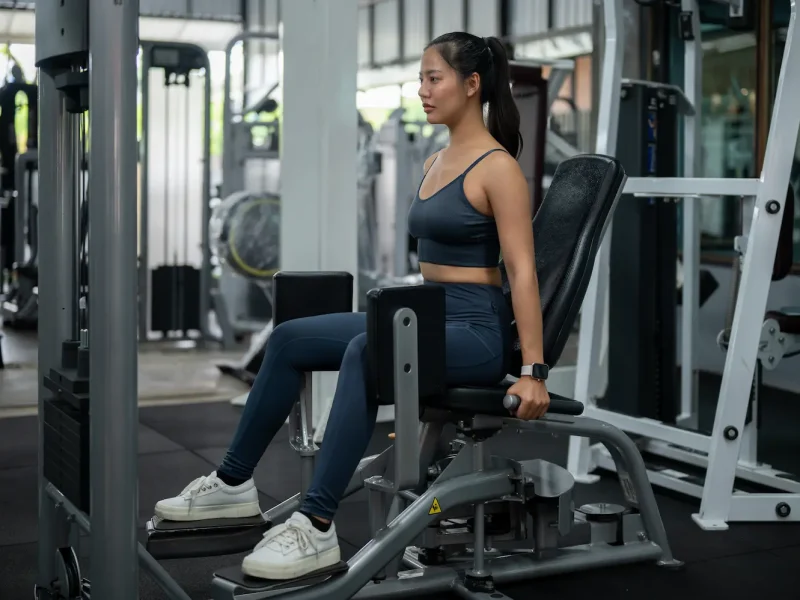

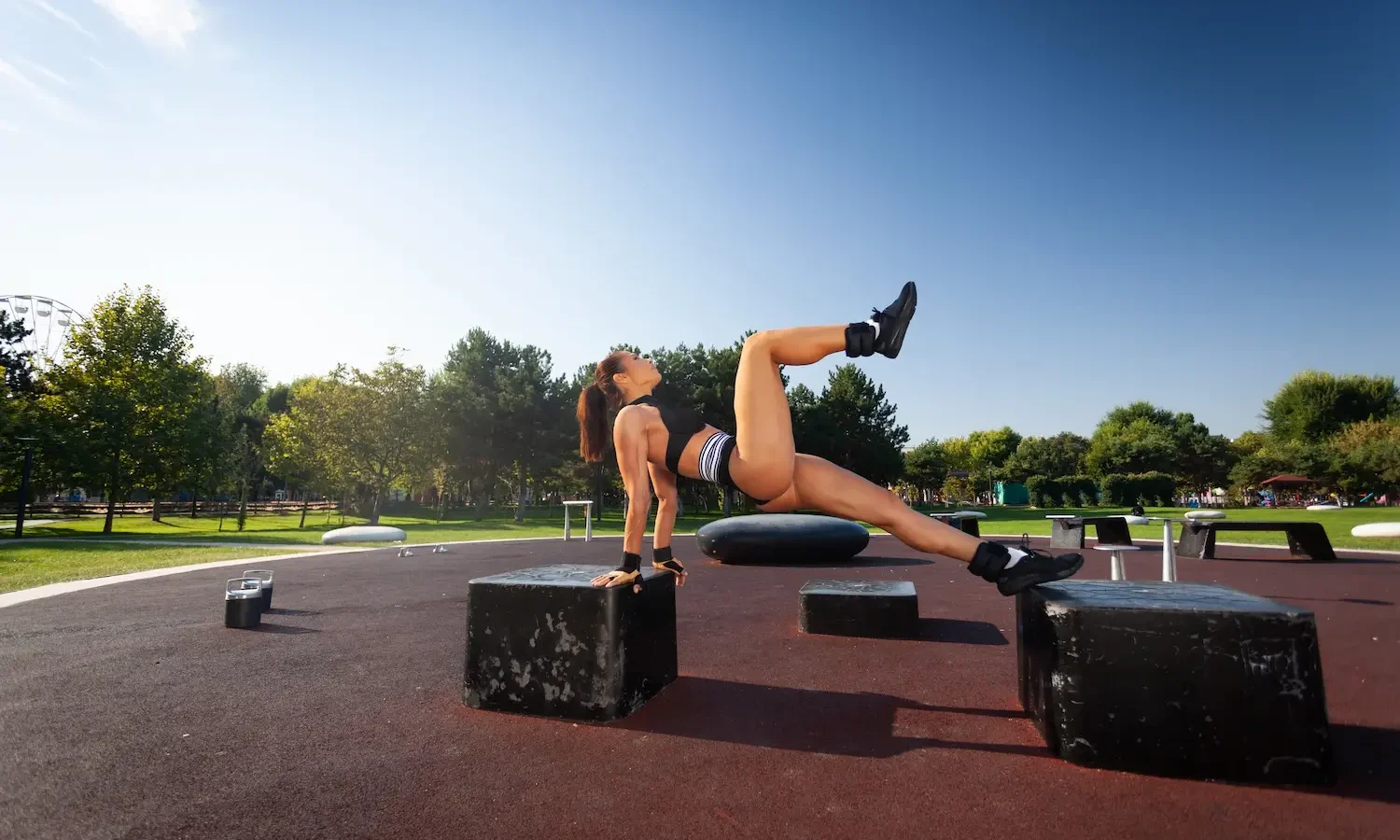
The single-leg hip thrust is the unilateral version of the hip thrust — same setup, same motion, but performed on one leg at a time. It exposes left-right glute strength differences that bilateral hip thrusts hide, builds glute medius alongside the gluteus maximus, and is the bridge between bodyweight glute work and heavy barbell hip thrusts.
For runners, sprinters and athletes, single-leg glute work is more functional than bilateral. The single-leg hip thrust trains exactly the pattern needed for sprinting, jumping and changing direction — explosive single-leg hip extension.
What is the single-leg hip thrust?
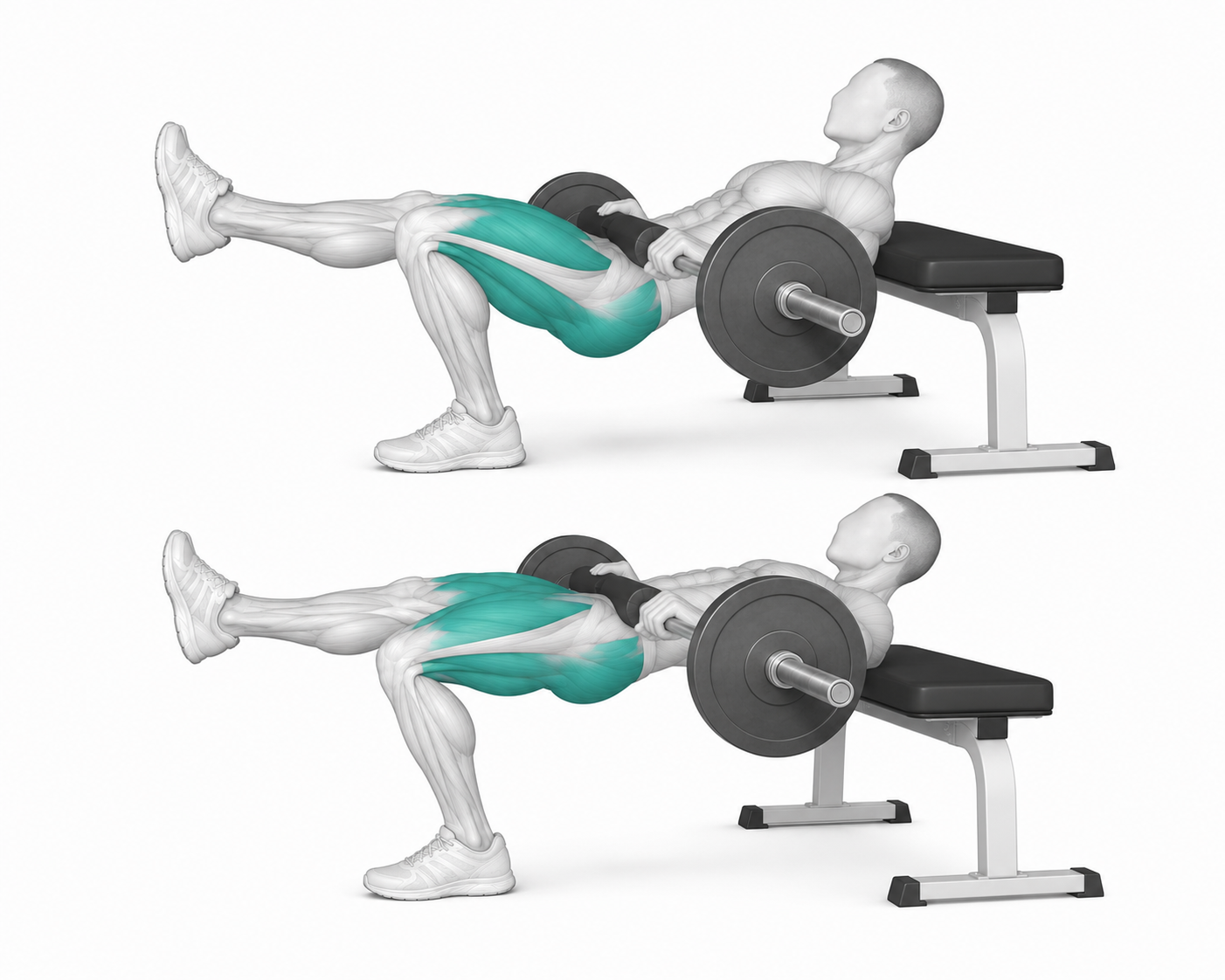
The single-leg hip thrust is a unilateral hip-extension exercise performed with the upper back resting on a bench, one foot planted on the floor, and the other leg lifted off (knee bent or extended). You drive the planted-leg hip up by squeezing the glute, pause at the top, then lower under control.
The lifted leg can be either bent (knee toward chest) or extended (leg out straight). The bent-knee version is easier and recommended for beginners; the extended version is harder because the hip flexors of the lifted leg work to keep it elevated.
Muscles worked
| Muscle group | Role | Contribution |
|---|---|---|
| Gluteus maximus (working leg) | Primary mover, hip extension | ~55 % |
| Glute medius (working leg) | Hip stabilisation, anti-collapse | ~15 % |
| Hamstrings (working leg) | Hip extension support | ~15 % |
| Quads (working leg) | Knee extension | ~10 % |
| Core, lower back | Stabilisation, anti-rotation | ~5 % |
The single-leg hip thrust activates the gluteus maximus AND the glute medius on the working side. The medius is the muscle that prevents the hip from collapsing inward — most lifters underdevelop it, leading to knee valgus during squats and lunges. Single-leg hip thrusts fix that.
How to single-leg hip thrust: 5 steps
-
Set up at the bench
Sit on the floor with the bench behind you, upper back against the bench edge. Plant one foot flat on the floor about hip-width from the bench. Lift the other leg off the floor — knee bent (easier) or extended (harder).
-
Set the body position
Brace the core. Tuck the chin slightly. Squeeze the glute of the planted leg to initiate. Add a dumbbell on the working-side hip if loading.
-
Drive the planted-leg hip up
**Squeeze the glute hard** to drive the hip toward the ceiling. The body lifts on one leg. Lock out at full hip extension — body forms a straight line from the planted knee to the shoulders.
-
Pause and squeeze at the top
1-3 second pause at the top. **Squeeze the glute** as if pinching a coin between the cheek of the planted side and a wall behind you. Don't let the hip drop or rotate.
-
Lower with control
Lower in 2 seconds, hips toward the floor. Don't crash down — control the descent. The lifted leg stays in position throughout the rep. Reset, repeat. Switch legs.
Common mistakes to avoid
Variations
- Bent-knee single-leg hip thrust. Lifted leg bent (knee toward chest). Easier — beginner version.
- Extended-leg single-leg hip thrust. Lifted leg extended straight. Harder — adds hip flexor demand.
- Weighted single-leg hip thrust. Holding a dumbbell or kettlebell on the working-side hip. Heavier loading.
- Feet-elevated single-leg hip thrust. Working foot on a small platform. Greater range of motion.
- Banded single-leg hip thrust. Band around the working knee. Forces glute medius engagement (push knee outward).
- Bilateral hip thrust. Both feet on the floor — heavier-loaded variant.
Sample workout: 4-week unilateral glute block
Single-leg hip thrusts twice per week. Pair with bilateral hip thrusts on the other glute day for full coverage. Reps are per leg.
| Week | Sets × reps/leg | Tempo |
|---|---|---|
| 1 | 3 × 10 | 1 sec pause at top |
| 2 | 3 × 12 | 2 sec pause at top |
| 3 | 4 × 10 | 2 sec pause + slow eccentric |
| 4 (deload) | 3 × 8 | 1 sec pause |
Frequently asked questions
Single-leg or bilateral hip thrust?
Both. Bilateral allows much heavier loading. Single-leg trains glute medius and asymmetries. Most balanced glute programs include both — bilateral for absolute strength, single-leg for asymmetry-fixing and athletic carryover.
How heavy should I single-leg hip thrust?</h3
Most lifters can single-leg hip thrust about 50-60 % of their bilateral hip thrust per side. Bodyweight is brutal at first — most beginners can do 8-12 reps per side. Add light dumbbells (5-15 kg) once bodyweight feels easy.
One side feels much weaker than the other — is that normal?</h3
Very normal. Most adults have a strong glute side and a weak side. Train the weak side first each session, match the rep count to the weak side, and add an extra set on the weak side once a month.
Why do my hips rotate to one side at the top?</h3
Anti-rotation core weakness. The lifted leg pulls the pelvis to that side. Brace the core hard, focus on keeping the hips square. Reduce the load if rotation can’t be controlled.
Bent or extended leg position?</h3
Bent for beginners and most lifters — easier balance. Extended for advanced lifters who want extra hip flexor work on the lifted side. Both are valid.
Related exercises
- Bilateral Hip Thrust: heavy bilateral version
- Glute Bridge: floor-based foundational
- Glute Kickback: cable isolation
- Single-Leg Deadlift: unilateral hinge counterpart
- Bulgarian Split Squat: unilateral squat counterpart
Published by: Jay — Writer covering glute exercises
Reviewed, corrected and approved by: Martin Wood — Editor-in-chief
Updated on September 29, 2026