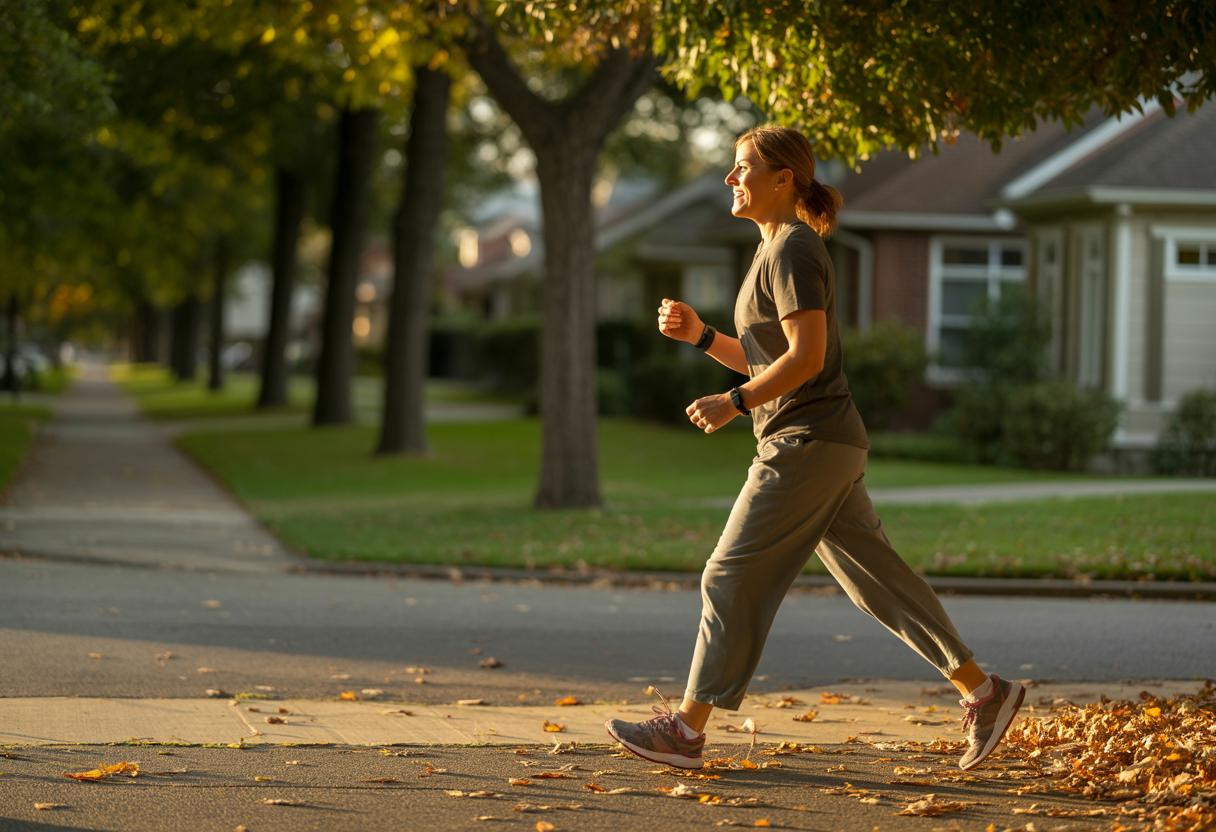


Walking 10 km usually takes about 1 hour 40 minutes to 2 hours 30 minutes. At a steady 5 km/h pace, expect around 2 hours. Faster walkers can be closer to 1 hour 40 minutes, while an easy pace, hills or breaks can push the walk beyond 2 hours 30 minutes.
A 10 km walk is a meaningful endurance walk. It is twice a 5K and sits between everyday short walks and longer efforts such as 12 km or 20 km, so pacing and footwear matter more than they do on a quick neighborhood loop.
10 km walking time by pace
| Walking speed | Type of pace | Time to walk 10 km |
|---|---|---|
| 3 km/h | Very easy / recovery pace | 3 hours 20 minutes |
| 4 km/h | Relaxed walk | 2 hours 30 minutes |
| 4.5 km/h | Steady easy walk | 2 hours 13 minutes |
| 5 km/h | Average comfortable pace | 2 hours |
| 5.5 km/h | Brisk walk | 1 hour 49 minutes |
| 6 km/h | Fast fitness walk | 1 hour 40 minutes |
The simple formula is:
Walking time = distance ÷ speed
10 km ÷ 5 km/h = 2 hours
Is 10 km a long walk?
For a regular walker, 10 km is a solid but manageable session. For a beginner, it is a long walk and should be built up gradually. If you currently walk 2–4 km comfortably, moving toward 6 km and then 10 km is a more realistic progression than jumping straight to 10 km.
For nearby comparisons, see how long a 5K takes, how long it takes to walk 6 km and how long it takes to walk 12 km.
How many miles is 10 km?
10 km is about 6.21 miles. That makes it twice as long as a 5K and roughly half of a 20 km walk.
How many steps is 10 km?
A 10 km walk is usually around 12,500 to 15,400 steps, depending on stride length.
| Average stride length | Approximate steps for 10 km |
|---|---|
| 0.65 m | About 15,400 steps |
| 0.70 m | About 14,300 steps |
| 0.75 m | About 13,300 steps |
| 0.80 m | About 12,500 steps |
If step count is your main question, the dedicated guide to how many steps are in 5 km gives a shorter-distance benchmark you can multiply by two.
How many calories does walking 10 km burn?
For many adults, walking 10 km burns roughly 270 to 585 calories. Body weight, speed, terrain and walking efficiency all change the estimate.
| Body weight | Easy/moderate pace | Brisk pace |
|---|---|---|
| 60 kg / 132 lb | About 270 kcal | About 390 kcal |
| 70 kg / 154 lb | About 315 kcal | About 455 kcal |
| 80 kg / 176 lb | About 360 kcal | About 520 kcal |
| 90 kg / 198 lb | About 405 kcal | About 585 kcal |
For time-based calorie estimates, compare this with calories burned walking for 1 hour.
How to prepare for a 10 km walk
- Start slower than your target pace. The first 10–15 minutes should feel controlled.
- Use shoes you already trust. Do not test brand-new shoes on a 10 km walk.
- Bring water if the route is warm, hilly or exposed.
- Plan the route. Loops and turnaround points make distance easier to manage.
- Build up gradually. If 10 km feels ambitious, use 4 km, 5K and 6 km as stepping stones.
Compare 10 km with other walking distances
- How long it takes to walk 2 km — short-distance benchmark.
- How long it takes to walk 4 km — moderate-distance comparison.
- How long a 5K takes — half of a 10 km walk.
- How long it takes to walk 6 km — bridge toward 10 km.
- How long it takes to walk 12 km — slightly longer endurance walk.
- How long it takes to walk 20 km — twice the distance.
Before 10 km: build from a 5K base
If 10 km feels like a big jump, start with the 5K distance and pace guide. It gives a simpler benchmark for time, walking speed and beginner expectations before doubling the distance. You can also estimate steps with the 5 km step-count guide.
FAQ
How long does it take to walk 10 km on average?
At a comfortable 5 km/h pace, walking 10 km takes about 2 hours. Many people fall between 1 hour 40 minutes and 2 hours 30 minutes.
Can a beginner walk 10 km?
Some beginners can, but it is better to build up gradually if your current walks are much shorter.
How many steps are in 10 km?
Most people take about 12,500 to 15,400 steps to walk 10 km.
Bottom line
A 10 km walk usually takes around 2 hours at a normal pace. Treat it as an endurance walk: pace yourself, choose reliable shoes and build up if you are not used to longer distances.
Safety note: this article is informational and does not replace medical advice. Stop and seek guidance if you experience chest pain, dizziness, unusual breathlessness or sharp joint pain.
Published by: Martin Wood — Writer covering cardio
Reviewed, corrected and approved by: Martin Wood — Editor-in-chief
Updated on July 27, 2026