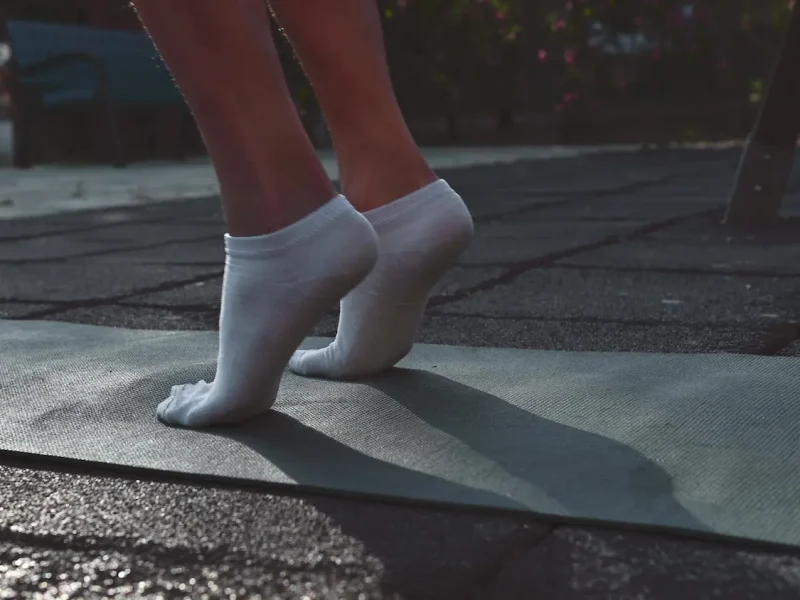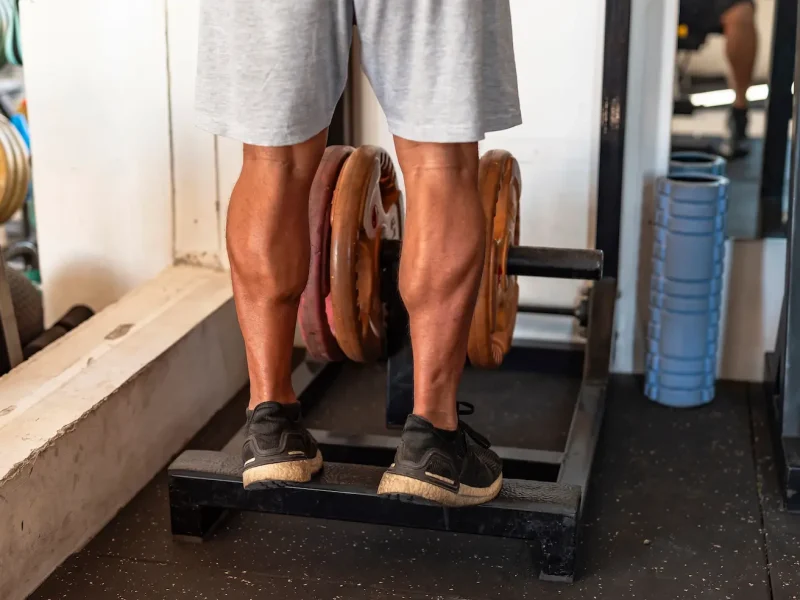

The seated calf raise is the soleus exercise. While the standing calf raise primarily trains the gastrocnemius (the visible upper calf), the seated version specifically isolates the soleus — the muscle underneath that contributes 60-70 % of total calf size. If your calves don’t grow despite hours of standing raises, the seated calf raise is what’s missing.
The bent-knee position of the seated raise takes the gastrocnemius (which crosses the knee) out of the equation, forcing the soleus to do all the work. That’s why most balanced calf programs include both standing and seated variations.
What is the seated calf raise?
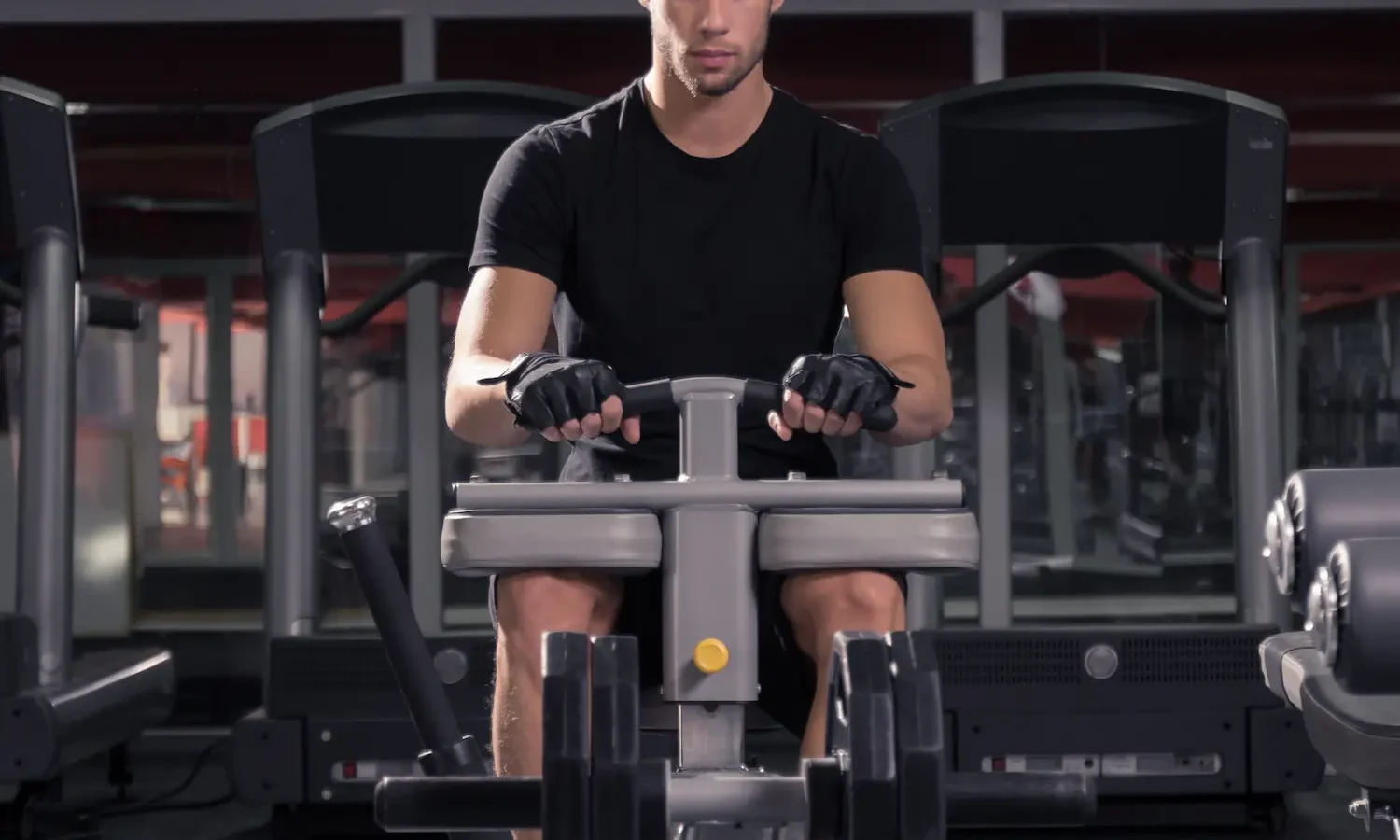
The seated calf raise is an isolation exercise performed on a seated calf raise machine (or with a barbell across the knees), in which you sit with knees bent at 90°, place the balls of your feet on a footrest, and lift the heels up against load by squeezing the calves. The bent-knee position isolates the soleus muscle.
The two main calf muscles are biased differently by knee angle. The gastrocnemius (the diamond-shaped upper calf) crosses both the knee and ankle, so it’s most active when the knee is straight. The soleus sits underneath, only crosses the ankle, and stays active when the knee is bent. Standing raises = gastroc; seated raises = soleus.
Muscles worked
| Muscle group | Role | Contribution |
|---|---|---|
| Soleus | Primary mover, ankle plantarflexion | ~80 % |
| Gastrocnemius | Minor (knee bend reduces involvement) | ~10 % |
| Tibialis posterior, foot stabilisers | Stabilisation | ~10 % |
The soleus is composed mostly of slow-twitch fibres, meaning it responds best to higher-rep training (15-25 reps per set). For full calf development, train soleus with high reps (seated raises) and gastrocnemius with moderate reps (standing raises) — different stimuli for different muscle types.
How to seated calf raise: 5 steps
-
Set up on the machine
Sit on the seated calf raise machine. Adjust the knee pad so it sits firmly on top of your thighs (just above the knees). Place the balls of your feet on the footrest, heels hanging off below.
-
Set the body position
Sit upright, knees bent at ~90°. Engage the core. Hold the handles of the machine for stability. Don't lean forward — stay upright.
-
Lower into the stretch
Drop the heels slowly below the level of the toes. **Feel a strong stretch in the calves** at the bottom. Pause 1-2 seconds in the stretch — this is the most important part for soleus growth.
-
Push up onto the toes
Drive up by pushing through the balls of the feet. Rise as high as possible — heels should end well above the toe level. Squeeze the calves at the top.
-
Pause and lower
Half-second pause at the top. Lower in 2-3 seconds with control. Don't bounce — soleus needs the stretch and slow eccentric. Reset, repeat.
Common mistakes to avoid
Variations
- Dumbbell seated calf raise. Sitting on a bench, dumbbell on each thigh, balls of feet on a small platform. Home gym version.
- Single-leg seated calf raise. One leg at a time. Doubles load, exposes asymmetries.
- Seated calf raise machine. The dedicated machine — easiest setup with progressive load.
- Leg press calf raise. On the leg press, push through balls of feet only. Bilateral but uses the leg press machine.
- Standing calf raise. Bent-knee variant’s straight-knee counterpart. Hits gastrocnemius.
- Donkey calf raise. Bent-over with weight on the lower back. Greater stretch.
Sample workout: 4-week soleus block
Seated calf raises 2-3 times per week. Pair with standing calf raises on the same day or alternate days for full calf coverage. Soleus likes high reps.
| Week | Sets × reps | Tempo |
|---|---|---|
| 1 | 3 × 20 | 2 sec eccentric + 1 sec stretch pause at bottom |
| 2 | 4 × 18 | 3 sec eccentric + 1 sec stretch pause |
| 3 | 4 × 15 + 1 dropset | 3 sec eccentric + 2 sec stretch pause |
| 4 (deload) | 3 × 15 | Smooth |
Frequently asked questions
Standing or seated calf raise — which is better?
Different muscle targets. Standing = gastrocnemius (visible upper calf). Seated = soleus (deeper muscle). For full calf development, do both. If forced to choose one, do the standing variant — gastrocnemius is more visible. But you’ll never get optimal calf size without seated work.
How heavy should I seated calf raise?
The soleus is composed of mostly slow-twitch fibres — high reps respond best. Most lifters use 50-100 % of bodyweight for sets of 15-25 reps. Heavier loads with fewer reps don’t produce the same growth.
Why don’t I feel a stretch at the bottom?
Your platform is too high or your range of motion too short. The heels should drop visibly below the level of the toes at the bottom. Pause for 1-2 seconds in the stretch every rep — that’s where soleus growth happens.
Do I need a dedicated seated calf machine?
No. Sit on a bench with the balls of your feet on a small platform (a step, a low box). Place a dumbbell or two on each thigh. Same exercise, no machine needed.
How often should I train soleus?
Frequently. The soleus is mostly slow-twitch and recovers fast. 3-5 times per week with moderate volume is fine for most lifters. Daily light work is also fine if you want to chase calf size.
Related exercises
- Standing Calf Raise: gastrocnemius counterpart
- Donkey Calf Raise: greater stretch variant
- Single-Leg Calf Raise: unilateral
- Leg Press Calf Raise: heavy machine variant
- Jump Rope: dynamic calf conditioning
Published by: Jay — Writer covering calf exercises
Reviewed, corrected and approved by: Martin Wood — Editor-in-chief
Updated on September 29, 2026