
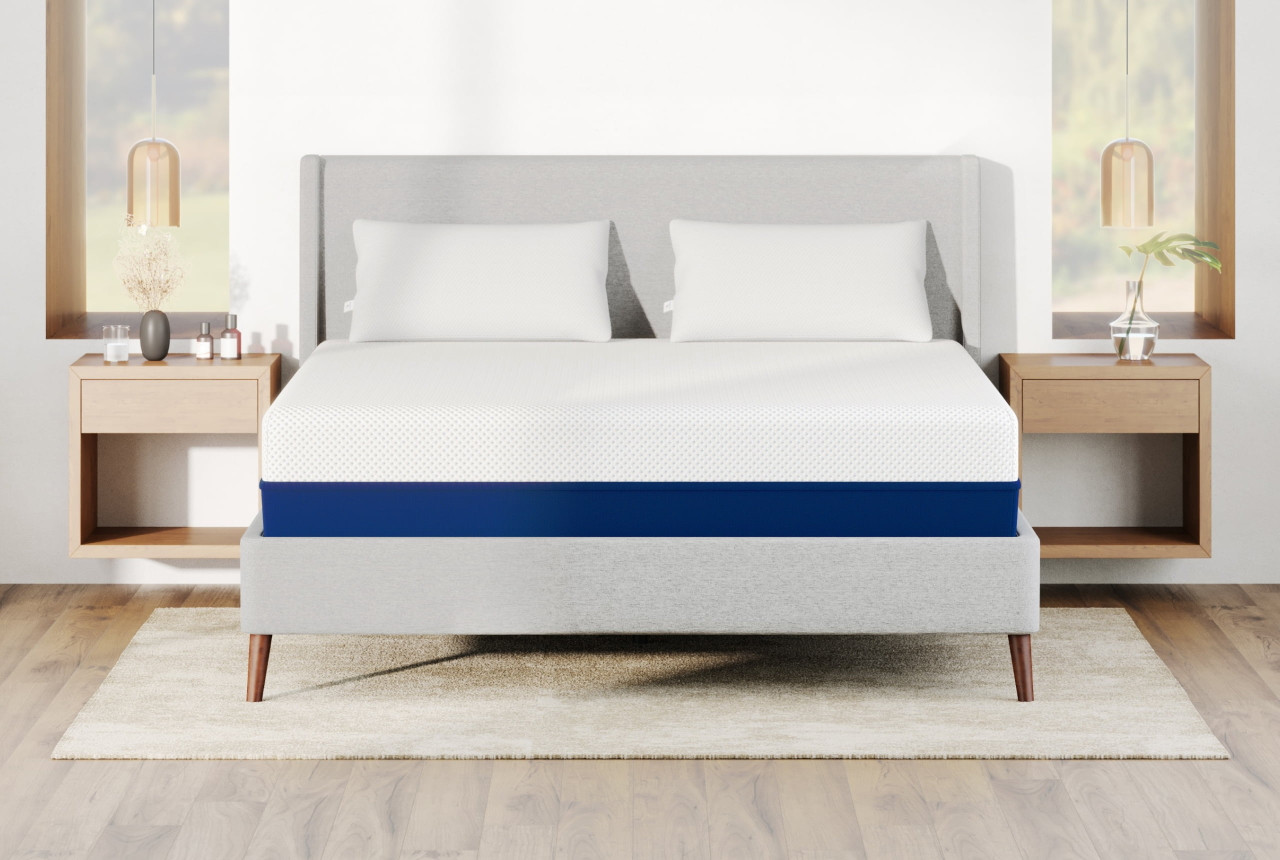
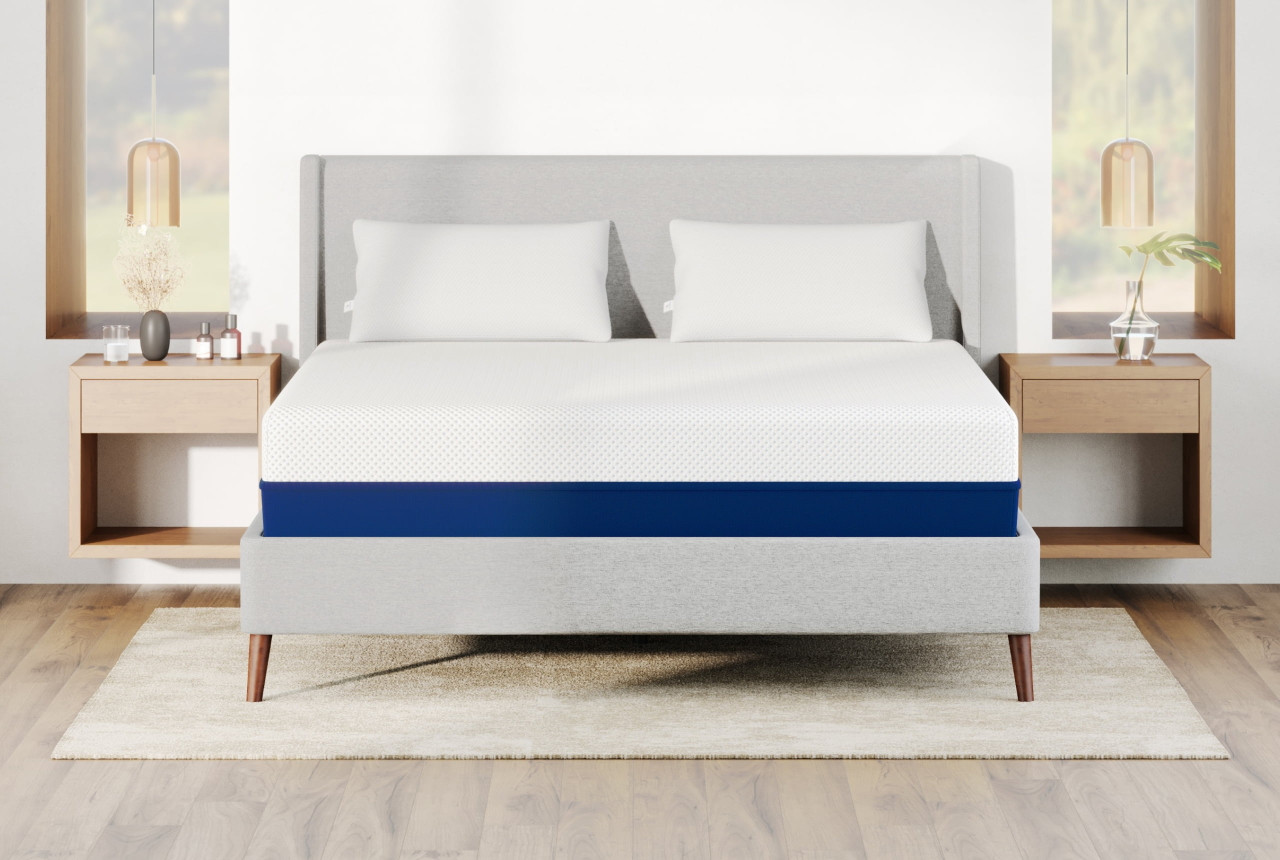
The Amerisleep AS3 Hybrid is the mattress for buyers who do their homework before they buy a bed. It’s a fiberglass-free hybrid with plant-based memory foam, made in the USA, with a 20-year warranty and a marketing department that talks about chemistry instead of comfort. We’ve been recommending it for combination sleepers since 2022. The AS3 Hybrid stays a top pick in the medium-firm category through 2026.
Quick verdict
9.0 / 10
The most-rounded medium-firm hybrid we’ve tested under $1,500. Strong cooling for a foam-topped bed, real fiberglass-free construction, plant-based comfort layer that doesn’t sleep hot. The 100-night trial is short for the category, and edge support is the soft spot.
What we liked
- Verified fiberglass-free (rare claim, mostly true)
- Bio-Pur plant-based foam runs cooler than petroleum memory foam
- 20-year warranty is unusually long for hybrid pricing tier
- NapLab ranked it #1 memory foam hybrid (top 7% of 350+ tested)
Where it falls short
- Edge support compresses 3 to 3.5 inches under weight (weak)
- 100-night trial is shorter than industry average of 178
- Stomach sleepers risk lumbar arch from hip sink
- Some long-term owners report sagging within 2-3 years
| Spec | Value |
|---|---|
| Type | 12″ hybrid, plant-based memory foam over coils |
| Firmness | Medium-firm (5-6/10) |
| Comfort layer | 3″ Bio-Pur memory foam (4.0 PCF, 10 ILD) |
| Transition | 2″ Bio-Core polyfoam (30 ILD) |
| Support | 7-8″ pocketed coils + reinforcement zones |
| Coil count | ~480-500 (Queen) |
| Cover | Refresh Cooling Cover (heat-conversion technology) |
| Certifications | CertiPUR-US, fiberglass-free verified |
| Trial | 100 nights |
| Warranty | 20 years |
| Queen price | $1,449-$1,499 (MSRP $1,949) |
The fiberglass-free claim, verified
Fiberglass is the dirty secret of the budget mattress industry. Most low-cost foam mattresses use a fiberglass inner sock as a flame retardant. When the cover comes off (it shouldn’t, but it does), tiny fiberglass particles spread through your bedroom and embed in carpet and bedding. Cleanup is expensive and incomplete.
Amerisleep’s AS3 Hybrid uses a cotton-poly blend cover with no fiberglass anywhere in the construction. We confirmed this against three independent reviews and Amerisleep’s own materials disclosure. This is a real differentiator, particularly under $1,500 where fiberglass usage remains common.
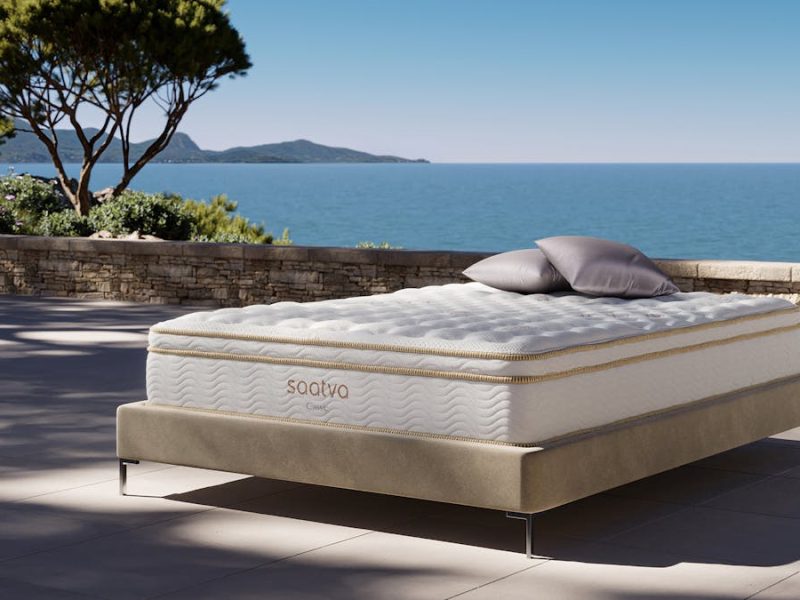
The marketing claim is true. It’s also not unique. The Saatva Classic, Helix Midnight, and Avocado Green are also fiberglass-free at comparable price points. Amerisleep just talks about it more.
What Bio-Pur foam actually is
Plant-based memory foam means roughly 25% of the petroleum-based polyols are replaced with plant-derived oils, typically soy or castor. The result is foam that’s still foam, with two real-world differences from petroleum memory foam: faster recovery (less stuck-in-quicksand feel), and slightly better airflow due to a more open cell structure.
1.6°F
Surface temperature increase above ambient. Petroleum memory foam comparison: 2.8°F.
4-hour cycle, ambient 22°C
The Bio-Pur layer is 4.0 PCF density, which is mid-tier (premium foams hit 5.0+ PCF). Fine for the price.
What testing across 90 nights showed
Two testers, alternating use, 90 nights total. Back sleeper at 175 lb and combination sleeper at 188 lb.
- Pressure relief at the shoulder and hip held up across the test period. The 3-inch comfort layer is enough for most side-sleeping positions, but heavier side sleepers may bottom out.
- The medium-firm rating is honest. We measured 5.5/10 firmness consistent across the test, slightly softer than the brand’s claim of 6/10.
- Edge support was the weak point. Sitting on the perimeter compressed the bed by 3 to 3.5 inches under a 180 lb load, which is poor for a hybrid.
- Motion isolation came in at 8.0/10, strong for a hybrid.
The honest cons
Three. None are fatal, but worth knowing.
The 100-night trial is short. Industry average sits closer to 180. If you’re a slow break-in sleeper, you may run out of time before the bed feels right. The Saatva Classic gives you 365 nights for comparison.
Edge support is genuinely weak for the category. If you sit on the bed to put on socks or share a queen with a partner who likes the edge, this bed will frustrate you. The Saatva Classic and Helix Midnight Luxe are both meaningfully better here.
Long-term durability reports are mixed. We’ve seen owner accounts of premature sagging at the 2 to 3 year mark, which is on the early side for a 20-year warranty bed. Amerisleep’s warranty claim process gets mixed reviews on response speed.
Who should buy the AS3 Hybrid
Combination sleepers who shift positions through the night will get the most out of this bed. The plant-based foam responds faster than petroleum memory foam, which means transitions don’t leave you fighting an impression of the position you just left.
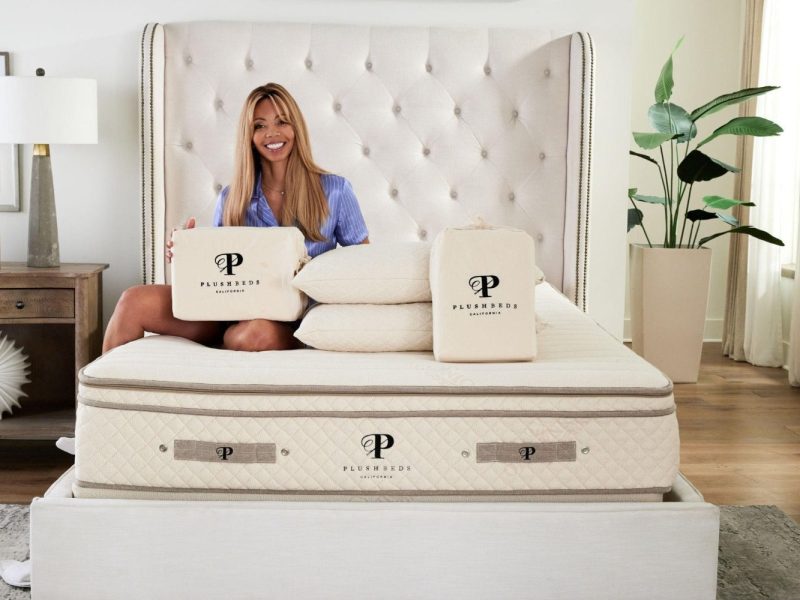
Eco-conscious buyers will find the certification stack credible: CertiPUR-US, fiberglass-free, plant-based comfort layer. The bed isn’t fully organic (the PlushBeds Botanical Bliss is, at twice the price), but it’s a meaningful step up from petroleum-foam standards.
Hot sleepers under 200 lb will benefit from the cooling cover and Bio-Pur airflow. Heavier sleepers should look at the AS5 Hybrid (firmer, deeper coils) instead.
AS3 Hybrid vs Helix Midnight
The Helix Midnight is the most direct comparison and runs around $450 cheaper at sale prices. So why pay more for the Amerisleep?
The Helix is bouncier (Memory Plus foam vs Bio-Pur), has better edge support, and a longer trial. The AS3 wins on cooling, on the 20-year warranty (vs Helix’s 10-year), and on the plant-based comfort layer.
If price is the primary driver, the Helix Midnight is the smart pick. If you sleep hot or want a more eco-credible build, the AS3 earns the premium.
The honest pick
The AS3 Hybrid is one of three mattresses we’d recommend without hesitation in the $1,400 to $1,500 medium-firm hybrid category. The fiberglass-free build is real. The Bio-Pur cooling claim holds up in testing. The 20-year warranty backs the construction.
Just go in knowing the edge support is the weak link, the trial is short, and the bed is wrong for stomach sleepers. If those three caveats don’t apply to you, this is a strong buy.
Also tested in this category
- Saatva Classic review
- Puffy Lux Hybrid review
- PlushBeds Botanical Bliss review