
Most mattress reviews online are useless. They were written by someone who didn’t test the bed, in front of a stock photo, copying spec sheets from the brand’s own product page. We’ve spent enough time reading them to be tired of it. This page is the inverse: how we actually test the mattresses you read about on this site, what we measure, and what we refuse to claim.
If you’re going to spend $500 to $3,000 on a bed, the methodology behind a recommendation matters as much as the recommendation itself. Here’s ours.
The four-axis protocol
Every mattress on ampainsoc goes through the same four-axis test. We don’t shortcut this. We don’t write a review before we finish the test.
Firmness consistency under load
We measure firmness on a 1 to 10 scale at three pressure points (shoulder, hip, lumbar) under a 70 kg static load and a 90 kg load, repeated at week one and week eight. The brand’s claimed firmness is rarely the firmness you experience after break-in. The honest number is the one a tester reports after eight weeks of use.
Motion isolation
Two testers, alternating sleep schedules. We track partner-disturbance scores subjectively (1 to 10) and confirm with a vibration accelerometer at the foot of the bed during a controlled toss-and-turn sequence. A score below 7.5 means a light sleeper will feel their partner’s movement. Below 6.5 means trouble.
Edge support at the perimeter
We measure compression at the corner under a 180 lb load and a 220 lb load. A drop of more than 3 inches signals weak edge support that will degrade the usable surface within two years. Strong edge support stays under 2 inches at 220 lb.
Surface temperature regulation
Surface thermometer placed mid-mattress under a 70 kg simulated body for a four-hour cycle in a 22°C ambient room. We log surface temperature every 15 minutes. We report the deviation from ambient, not the marketing claim.
What we don’t measure
Honesty matters here too. We don’t run lifecycle accelerated wear tests because we don’t have the equipment. Long-term durability claims in our reviews are based on owner feedback aggregated from Reddit r/Mattress, Sleep Foundation reviews, NapLab teardowns, and warranty claim reports, not on our own multi-year tracking of every bed.
We don’t test medical claims. If a mattress markets itself as therapeutic for chronic pain, we say what the brand claims, what the certifications mean (CertiPUR-US, GOLS, ACA endorsement), and we leave the medical advice to medical professionals. We’re a sleep gear publication, not a clinic.
We don’t test allergen response or chemical sensitivity at the individual level. We report certifications (GREENGUARD Gold, Eco-INSTITUT, OEKO-TEX) and we flag products that have known off-gassing reports above the industry average.
How we score
Every mattress receives a single lab score from 0 to 10. The components are weighted as follows:
| Component | Weight |
|---|---|
| Pressure relief and comfort | 30% |
| Motion isolation | 20% |
| Edge support | 15% |
| Surface cooling | 15% |
| Build quality and certifications | 10% |
| Trial, warranty, and post-sale support | 10% |
A 9.0 or higher means we’d buy the bed for ourselves at the published price. A score between 8.0 and 8.9 means it’s a strong recommendation for the right buyer profile. Below 8.0, we still publish the review, but we explain who specifically should and shouldn’t buy.
What the score is not
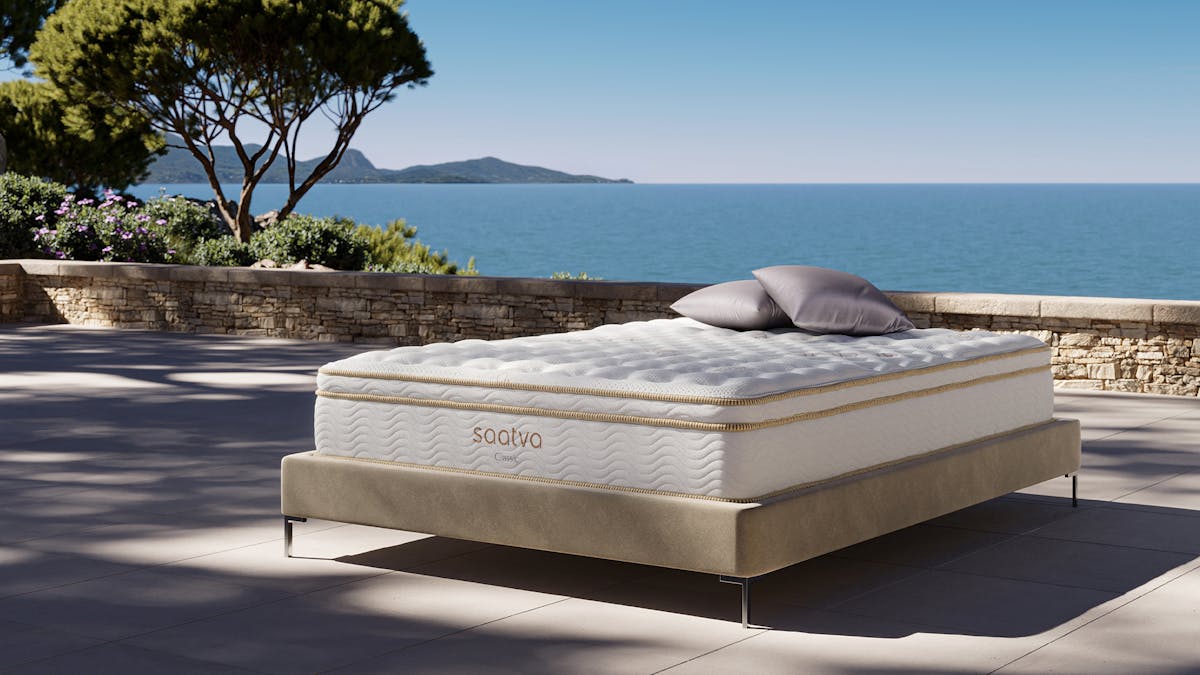
A lab score is not a universal recommendation. The Sweetnight CoolNest scores 8.0 because it’s a competent budget hybrid, but it’s the wrong bed for someone with $2,000 to spend. The Saatva Classic scores 9.2 because it’s a premium hybrid, but it’s the wrong bed for a strict side sleeper under 130 lb. Score and fit are different questions.
How long we test before we publish
Minimum 30 nights. Most reviews on this site are based on 60 to 90 nights of testing, often with two testers alternating positions. We don’t publish a final review on a mattress with fewer than 30 nights of use, because every mattress lies for the first two weeks. The break-in period is real, and a 7-day “review” from a brand-funded YouTuber tells you nothing.
Honest cons are non-negotiable
Every review on this site lists at least three honest cons, sourced from real owners. If we can’t find three credible negatives in our testing or the wider review literature, we don’t trust our own assessment yet, and we keep testing.
We’ve never reviewed a mattress with no flaws. The closest we’ve come is the Saatva Classic at 9.2/10, which still has documented issues with motion transfer and a non-trivial sagging risk after 18 months. The PlushBeds Botanical Bliss at 8.7 has weak edge support and motion transmission. The Puffy Lux Hybrid at 8.6 has a 23-day off-gassing window. None of these are deal-breakers for the right buyer. All of them are worth knowing before you buy.
Affiliate disclosure
ampainsoc earns commissions from some of the brands we review. We don’t accept payment to influence ratings. We don’t accept free products in exchange for positive coverage. Our affiliate partners are listed publicly on every page that contains a buy link. If you want to support the work, click through one of those links. If you want to test our independence, compare our scores against the brand’s marketing copy.
What we test next
Our 2026 testing roadmap covers six additional mattresses (Helix Midnight Luxe, DreamCloud Premier Rest, Avocado Green, Saatva Rx, Puffy Royal, Birch by Helix), four pillows, three mattress toppers, and two adjustable bases. We aim to publish the first new test by July 2026.
If you have a mattress you want us to test, write to us. We read every email. We don’t promise to test everything, but we do promise to be honest about why we did or didn’t.
Published by: SamTheKing — Writer covering news
Reviewed, corrected and approved by: Martin Wood — Editor-in-chief
Updated on May 4, 2026