

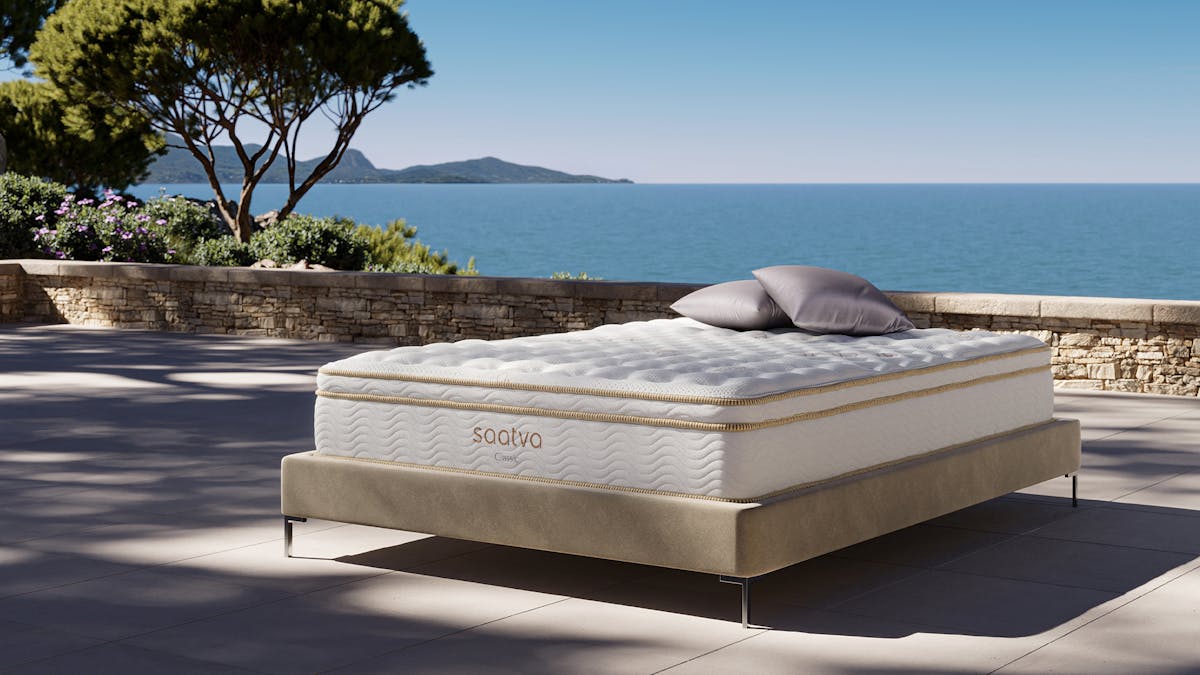
Walk through any mattress showroom and listen to what the salesperson talks about. Firmness scale. Cooling tech. Pressure relief. Maybe motion isolation if you mention a partner. You will not hear the words “edge support” unless you say them first. That’s a problem, because edge support is the spec that quietly determines whether you’ll like your mattress in year three.
Here’s why.
The two jobs a mattress is asked to do
A mattress is asked to do two jobs: hold you up while you sleep, and hold itself up while you live around it. The first job is well-marketed. Every brand has a story about lumbar support, spinal alignment, contour mapping. The second job is invisible until it fails. When edge support fails (and it does, on most mid-tier mattresses, around month 18) three things happen at once.
You start to feel like you’re rolling toward the middle when you sit on the edge to put on socks. The corners begin to compress permanently, leaving a visible dent. And the usable surface of the bed shrinks, because both sleepers gravitate inward to avoid the soft perimeter. A queen mattress with collapsed edges effectively functions as a full. You paid for square footage you no longer have access to.
62 cm
Theoretical width per sleeper on a queen, assuming the edges hold up. They often don’t.
Industry data, average usable width per sleeper, queen size
What edge support actually is, mechanically
In hybrid and innerspring mattresses, edge support comes from a perimeter reinforcement system: typically a steel rail, a reinforced foam encasement, or both. The Saatva Classic uses a tempered steel coil rail. The Helix Midnight Luxe uses a high-density foam encasement. Cheaper hybrids use thin foam strips, which compress and don’t recover. In all-foam beds, edge support comes from higher-density foam at the perimeter; the cheapest mattresses skip this layer entirely.
The difference shows up in two tests. First, sit on the corner. A mattress with weak edge support will tilt your hips down by more than 15° from horizontal. A strong one keeps you within 5°. Second, lie all the way to the edge. On a strong mattress, you can sleep within 5 cm of the perimeter without rolling. On a weak one, you naturally migrate 20 to 30 cm in. That’s lost surface area you never get back.
The compounding cost of bad edges
Here’s the part nobody warns you about. Compromised edge support doesn’t just make sitting on the bed annoying. It accelerates wear on the rest of the mattress.
“When the perimeter gives, sleepers shift toward the center, and the center wears out 20 to 40 percent faster. A mattress with a 10-year warranty and weak edges will functionally fail at year four to five.”
— Industry teardown data, mattress lifecycle studies
A mattress with strong edges will deliver its full warranty period, and often more.
The buyer’s heuristic
If a mattress brand doesn’t specify its edge reinforcement system on the product page, assume it doesn’t have one worth specifying. This single rule will eliminate roughly 60% of mid-tier hybrids from your shortlist.
What to ask before you buy
One question: “What is the perimeter reinforcement system, and is the edge support warranted?” If the salesperson hesitates, you have your answer. Premium hybrids (Saatva Classic, Helix Midnight Luxe, DreamCloud Premier Rest) all publish their perimeter specs because they’re a feature. Bargain mattresses bury the spec because there isn’t one.
Where the mattresses we’ve reviewed land on edge support, by our 2026 lab measurements:
• Saatva Classic — 8.7/10, best in our test panel.
• Amerisleep AS3 Hybrid — weak (3 to 3.5 inch compression).
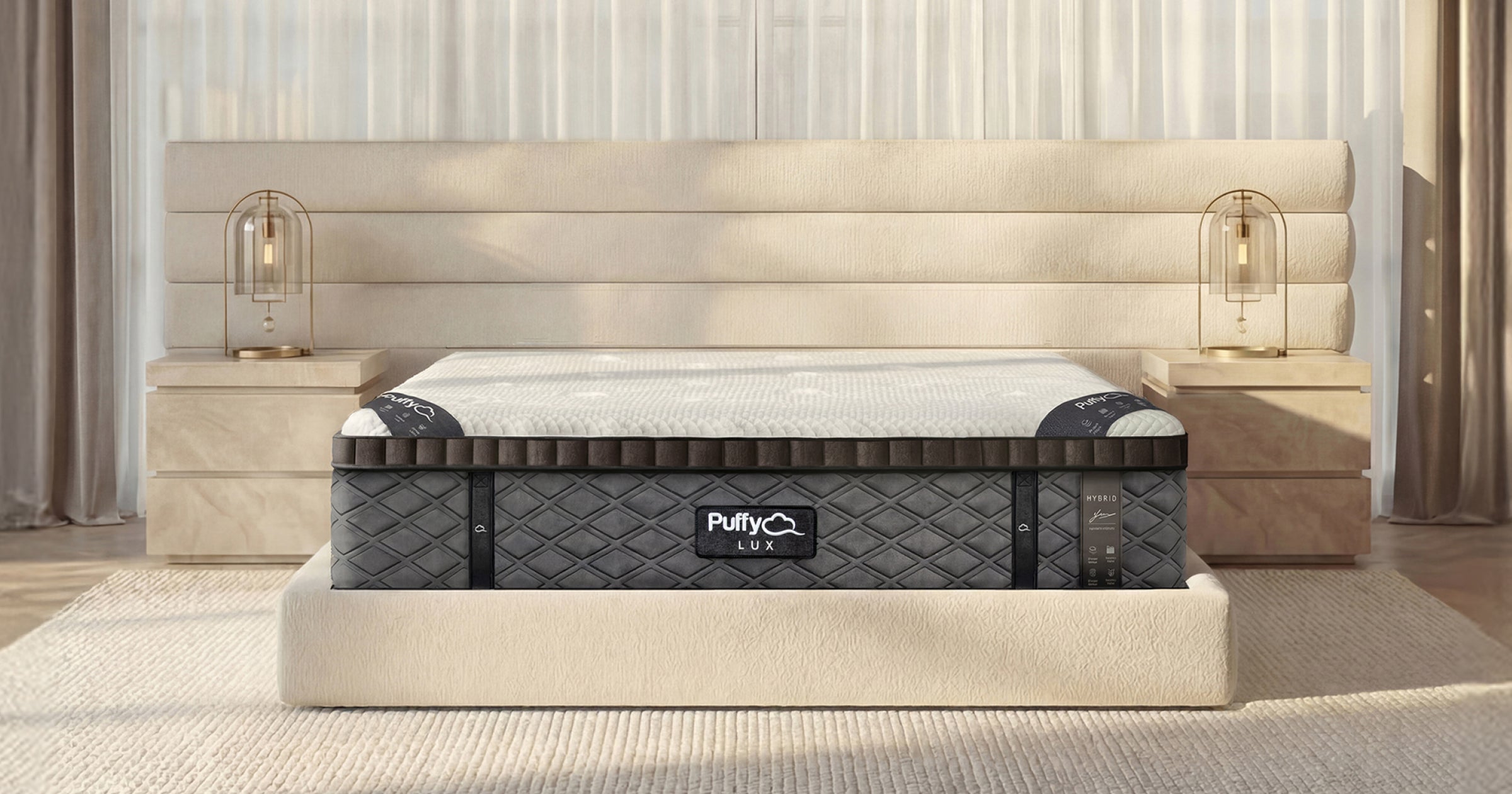
• Puffy Lux — 7.5/10, adequate.
• PlushBeds Botanical Bliss — weak (4-inch compression).
• Sweetnight CoolNest — average for the price tier.
Bottom line
Edge support is the unsexy half of the mattress decision. It’s also the half that determines whether your $1,800 purchase still feels like an asset in 2029, or whether you’ll be back in a showroom 18 months from now wondering where the value went. Ask the question.
If you want the broader breakdown, see our guide to hybrid mattresses under $1,500 or our how we test mattresses methodology for what we measure and why.
Published by: SamTheKing — Writer covering health
Reviewed, corrected and approved by: Martin Wood — Editor-in-chief
Updated on May 4, 2026