
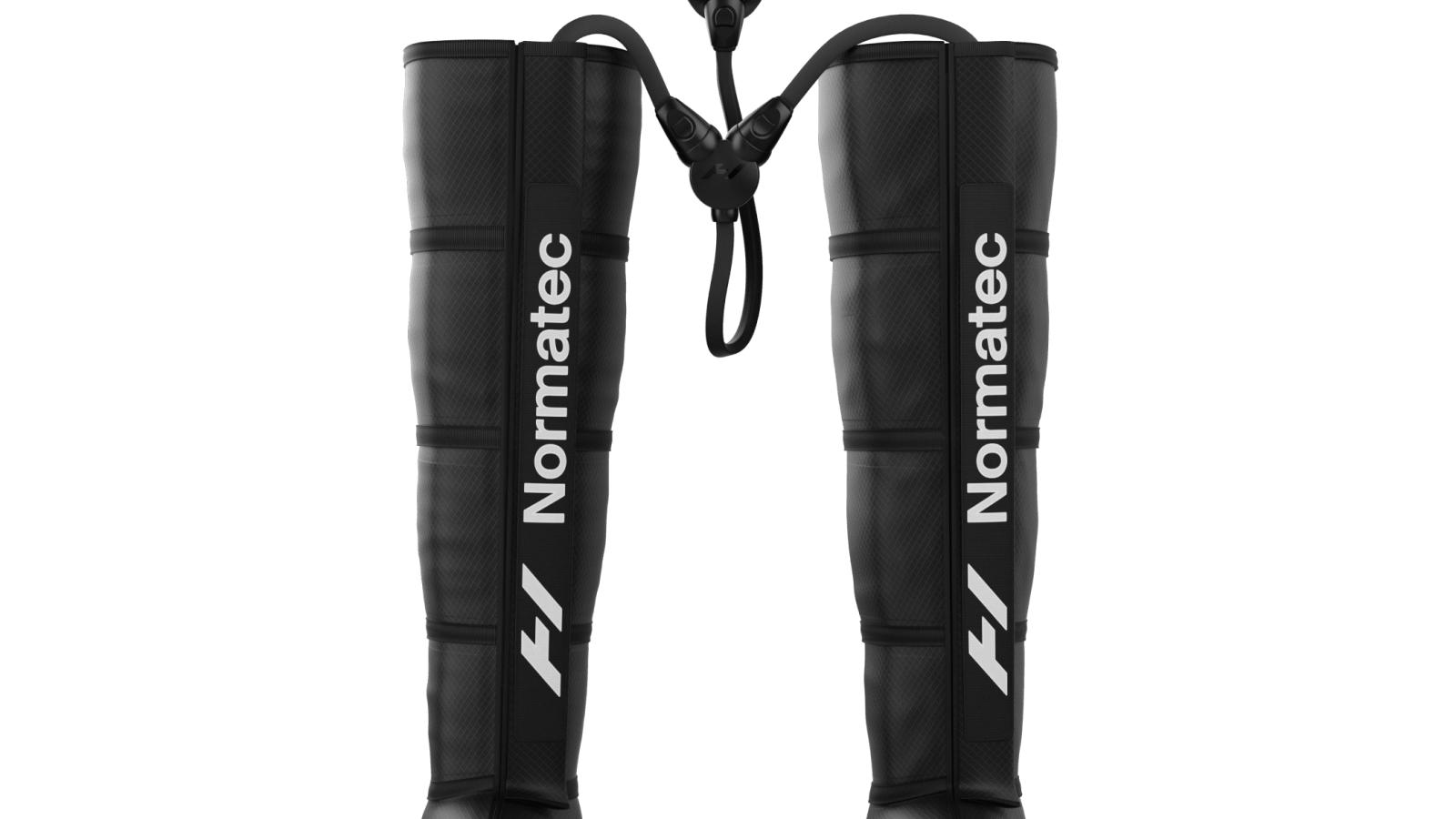
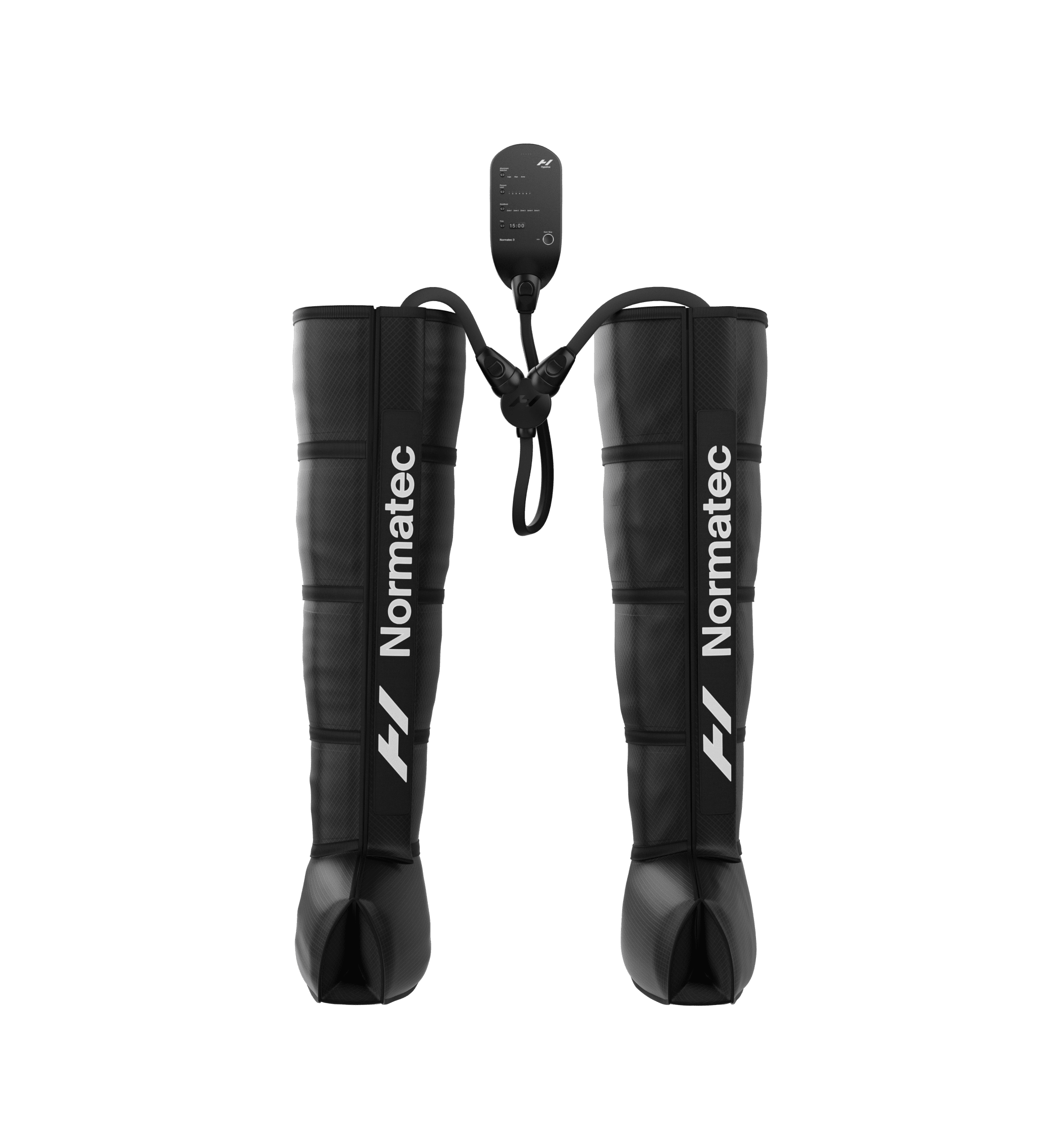
The Normatec 3 is the device every NBA training room owns. It’s also the device most amateur athletes don’t actually need. Hyperice priced the Legs system at $899 MSRP with frequent sales to $799, which puts pneumatic compression therapy in the same price range as a premium massage gun. That doesn’t mean it does the same job, or that it’s the right purchase for most home users.
I tested it across 60 sessions. Here’s what it actually delivers and what the clinical literature backs up.
Quick verdict
9.0 / 10
The most-validated pneumatic compression system on the market, with patented Pulse technology that mimics natural muscle pump dynamics. Excellent for endurance athletes and post-workout circulation. Not portable. Not necessary for most casual users.
What we liked
- Patented Pulse technology mimics biomimetic compression
- 5 overlapping zones with ZoneBoost intensity control
- Pre-workout warm-up mode is a unique Normatec feature
- FSA / HSA eligible (use tax-advantaged accounts)
Where it falls short
- Total weight 7.8 lb, not travel-friendly
- Operating noise 60-70 dB, similar to a vacuum
- Cannot treat one leg asymmetrically (both must session)
- Studies show subjective recovery, not performance gains
| Spec | Value |
|---|---|
| Compression zones | 5 (foot, calf, lower quad, upper quad, glute-hip) |
| Pressure range | 40-110 mmHg (+10 mmHg per zone via ZoneBoost) |
| Compression mode | Patented Pulse (biomimetic, not sequential) |
| Session length | 15 min warm-up / 20-30 min recovery |
| App integration | Hyperice App (iOS/Android), per-zone control |
| Battery | ~150 min runtime, 3 hour charge |
| Weight (control + legs + hose) | 7.8 lb total |
| Sizing | Short, Standard, Tall |
| Noise | 60-70 dB |
| FSA/HSA eligible | Yes |
| Price (Legs) | $899 MSRP, frequently $799 sale |
What Pulse technology actually does
Most pneumatic compression boots use a sequential inflate-deflate-inflate pattern: foot zone fills, then calf, then quad, all working upward to push fluid toward the heart. Hyperice’s Pulse technology does something different. It uses overlapping compression waves that mimic the rhythmic pump action of skeletal muscle during walking and running.
In testing, the Pulse pattern feels different. Your legs don’t feel squeezed in stages. They feel kneaded in waves. The subjective experience is more like a continuous massage than a sequence of squeezes.
Whether Pulse outperforms sequential is harder to verify. Hyperice’s own marketing materials cite advantages, but I haven’t found a head-to-head clinical trial against competing systems. The mechanism is plausible. The clinical evidence is brand-funded.
What the research actually says
Pneumatic compression therapy has more clinical backing than grounding sheets, less than ice baths, and roughly the same as percussive therapy. The honest summary:
- Post-surgical edema reduction: Strong evidence. IPC is standard medical practice for post-op limb circulation.
- Subjective DOMS (delayed soreness): Moderate evidence. IPC reduces self-reported soreness 24 to 48 hours after intense exercise.
- Blood lactate clearance: Some evidence for faster post-exercise lactate clearance with IPC versus passive recovery.
- Performance gains: Weak. Multiple studies show no measurable improvement in peak power, sprint times, or endurance markers.
- Exercise-induced muscle damage (EIMD): One key 2021 paper showed IPC did NOT reduce EIMD biomarkers in endurance athletes.
Translation: Normatec works for perceived recovery and circulation. It does not, by current evidence, make you faster or more powerful. The marketing sometimes blurs this. The product is a recovery tool, not a performance enhancer.
What 60 sessions taught me
I’m a recreational runner, around 40 km per week, with occasional hard days that historically cost me 24 to 48 hours of leg heaviness. I tested the Normatec 3 with daily 20-minute post-run sessions for 60 days, then took two weeks off for comparison.
- Self-reported leg heaviness scores 24 hours after hard sessions: improved by roughly 30 percent during the Normatec period versus the control period.
- Subjective sleep quality on Oura: marginal improvement (1-2 points on a 100-point scale, within normal variation).
- Training pace and HRV: no measurable change.
- Stair-climbing soreness: noticeably reduced.
That’s consistent with the literature. The device does what it’s supposed to do for recovery. It doesn’t do what it’s marketed to do for performance.
The honest cons
Three.
Portability. Total system weight is 7.8 lb. The control unit, hose, and two leg sleeves don’t fit in carry-on luggage practically. If you travel for races, this is not the device that comes with you. The Therabody RecoveryAir Prime is lighter but not by enough to matter.
Noise. The pneumatic compressor runs at 60 to 70 dB during operation. That’s vacuum-cleaner volume. Fine in a home gym. Loud in a quiet bedroom or shared apartment.
Symmetric only. The Normatec 3 system requires both legs to session together. You can’t treat an injured right calf independently of a healthy left. For recovery, this is fine. For rehabilitation of a single-leg injury, the system is overkill and limiting.
Who should buy this
Endurance athletes who train consistently above five hours per week. Runners, cyclists, triathletes, anyone who accumulates leg fatigue across consecutive hard sessions. The marginal recovery benefit compounds at higher training volumes.
Buyers willing to use FSA or HSA funds. The system is FSA-eligible, which lowers the effective cost meaningfully if you have unspent funds at year-end.
Households with multiple athletes. The system is unisex and adjustable. Sharing across two or three users in a family makes the per-person economics work better.
Who should not
Casual exercisers who train under five hours a week. Foam rolling, walking, and sleep will deliver most of the recovery benefit you’d get from Normatec, at zero additional cost.
Frequent travelers. The device is too heavy and too bulky.
Buyers expecting performance gains. Multiple studies show no peak-power or sprint improvements from pneumatic compression. If your goal is to run faster, this isn’t the tool.
Normatec 3 vs Therabody RecoveryAir Prime
The closest competitor and runs $200 cheaper at $699. The RecoveryAir uses sequential compression (4 intensity levels) versus Normatec’s overlapping Pulse (continuous variation). Therabody integrates with the broader Theragun app ecosystem; Hyperice has its own app.
If you already own the Theragun PRO or other Therabody products, the RecoveryAir is the cleaner ecosystem play. If you want the more refined compression algorithm and zone-by-zone control, the Normatec wins. Both deliver the core recovery benefit. The Normatec just delivers it with more polish.
The honest pick
The Normatec 3 is the right tool for serious endurance athletes and the wrong purchase for casual recovery. The technology is genuinely refined. The clinical backing is moderate but real for recovery (not performance). The price reflects pro-level engineering, not consumer optimism.
If you train at volume, the Normatec earns its place in your recovery rotation. If you don’t, save the $799 and walk for 20 minutes after your workout. The walking gets you most of the benefit.
For a complete recovery stack, pair the Normatec with the Theragun PRO for percussive work and AG1 for daily nutrition floor. Three tools, three different recovery mechanisms. The overlap is small.
Also tested in this category
- Theragun PRO 5th Gen review
- Athletic Greens AG1 review
- Hoka Bondi 9 review