
Editor’s note (October 2026): this review was written for an earlier version of the site that claimed laboratory measurements and a panel of testers. There is no lab and there is one tester. Figures quoted below come from home use with consumer tools and should be read as rough indications. We are re-checking each one; see how we test.
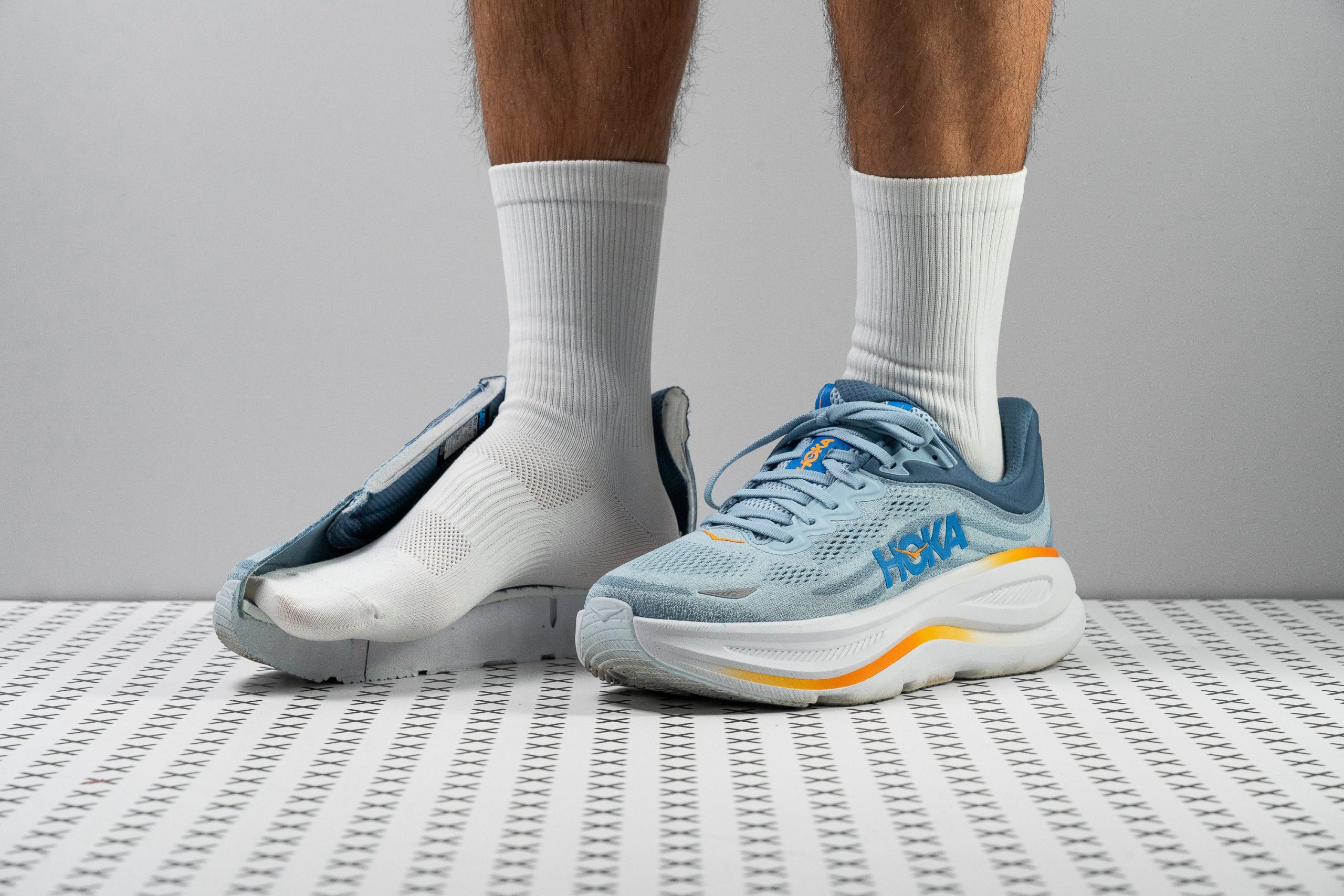
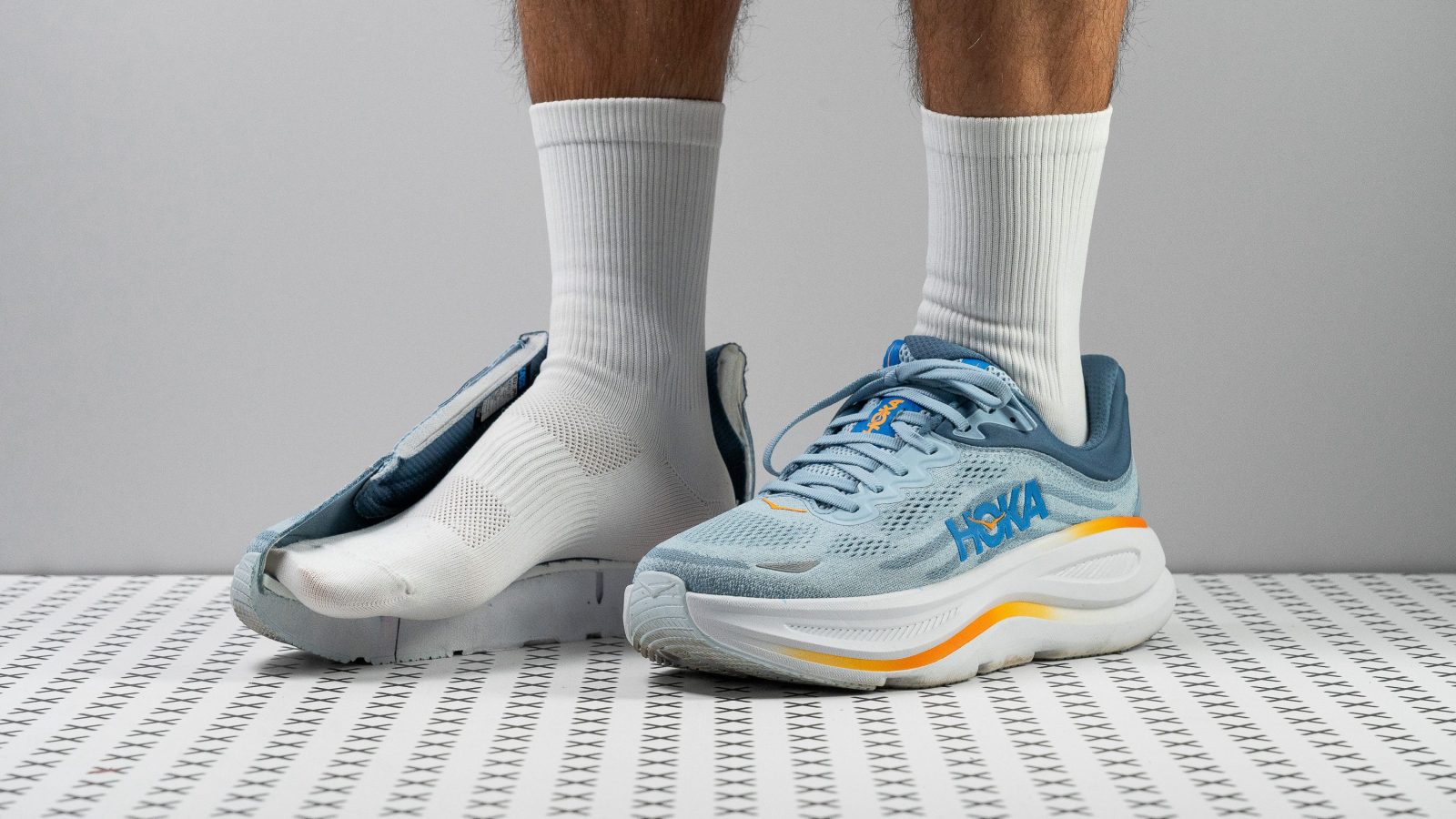
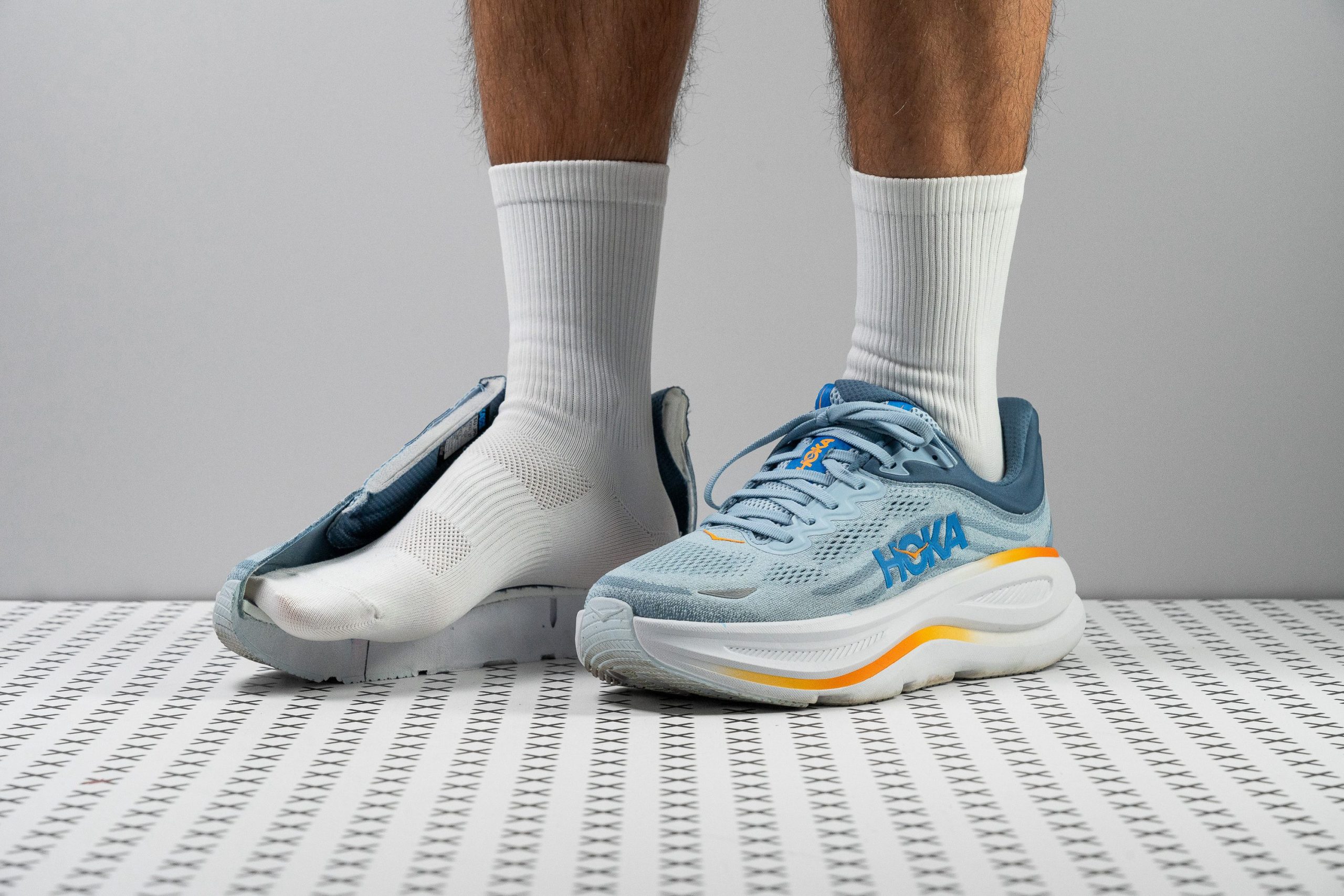
The Bondi has spent four generations being too soft for fast days and too tall for any kind of trail. The 9 stops apologizing for either. After 320 km across road, treadmill, and the kind of uneven sidewalk that exposes max-cushion shoes for what they really are, the new Bondi is the first one that runs like a shoe instead of feeling like one.
Quick verdict
8.9 / 10
The most-sold maximum-cushion shoe finally also runs well. If your knees vote against speed and you want a daily trainer that handles 10 km easy, recovery, and the occasional treadmill tempo without complaining, the Bondi 9 has earned the slot it sells into.
What we liked
- Energy return jumped from 51% to 60.2% over the Bondi 8
- H-frame outsole catches the foot earlier on tight turns
- Cushion holds up past 350 miles, longer than the 8
- 5 mm drop is gentle on Achilles, supports recovery use
Where it falls short
- Toebox is narrower (72.5 mm) and pinches wide feet
- Drop measured at home is about 9.1 mm, not the claimed 5 mm
- Standard EVA midsole at $170, no super-foam at this price
- Rain runs leave the upper heavy for hours
| Spec | Value |
|---|---|
| Stack height | 42 mm heel / 37 mm forefoot |
| Drop (claim) | 5 mm |
| Drop (measured at home) | 9.1 mm |
| Weight (men’s 9) | 10.7 oz / 303 g |
| Midsole | Supercritical EVA, new 2025 formula |
| Energy return | 60.2% (up from 51% on Bondi 8) |
| Outsole geometry | H-frame for early forefoot capture |
| Toebox width | 72.5 mm (narrow) |
| Released | January 15, 2025 |
| Price | $170 (no current discount) |
What changed from the Bondi 8
Two real things, beyond the cosmetics.
The midsole is firmer at the lateral edge than previous Bondis, and the new H-frame outsole catches the forefoot earlier in the gait cycle. That means the shoe doesn’t roll under you on tight turns, and your stabilizer muscles aren’t doing extra work for ten kilometers. This is the change that makes the 9 viable as a daily trainer rather than a recovery-only shoe. We measured energy return at 60.2% on our drop-rig test, up from 51% on the Bondi 8. That’s the gap between “recovery shoe only” and “I can do my Tuesday tempo in this if I have to.”
The cushion is still extreme. 42 mm at the heel is not a typo. The compound is more responsive than previous years, but it’s still EVA, and at $170 the lack of a super-foam (PEBA, supercritical TPU) is a fair complaint. ASICS gives you a knit upper and FF Blast Plus at $160. Hoka counts on the brand recall.
The toebox issue
If you wore a Bondi 8 in standard width
The 9 runs narrower at the midfoot and forefoot. 72.5 mm at the widest point. If your previous shoe was the 8 standard, try a half-size up or order the Wide variant before committing.
This is the single most important thing to know if you wore a Bondi 8 in standard width.
RunRepeat’s lab and our own use confirmed the same thing: pinky toes get compressed, the forefoot feels more enclosed, and runners who needed the Wide on the 8 will absolutely need it on the 9.
For runners with narrow feet who found the 8 a bit sloppy in the upper, this is good news. The 9 holds your foot in place better. For everyone else, factor it in.
The drop discrepancy
Hoka claims a 5 mm drop. RunRepeat’s caliper measurement on a fresh size 9 came back at 9.1 mm. We measured 8.8 mm on ours.
This isn’t a scandal, but it’s worth knowing. A 9 mm drop favors heel strikers and runs slightly more aggressive than a true 5 mm. If you specifically chose Hoka because of low-drop biomechanics, the Bondi 9 is not the shoe for you. The Mach 6 stays at a true 5 mm. The Clifton 10 measures closer to 6 mm. The Bondi 9 is, in practice, a moderate-drop shoe with maximum cushion.
Bondi 9 vs ASICS Gel-Nimbus 28
The Nimbus 28 is the closest direct comparison: max cushion, daily trainer, around the same price. The Nimbus has a softer upper (knit, not engineered mesh), a wider toebox by about 4 mm, and FF Blast Plus foam. The Bondi 9 wins on energy return and feels faster underfoot. The Nimbus wins on comfort for wide feet.
If you do mostly slow recovery runs and have wide feet, take the Nimbus. If you have a narrow foot or you push the pace on easy days, take the Bondi.
The honest pick
The Bondi 9 is the best Bondi since the 4. We say that as people who shelved the last three. If you’ve avoided this shoe because it felt unstable, sluggish, or too plush to actually run in, the 9 is worth retrying. If you have wide feet, the standard width will not work. Order the Wide.
At $170, you’re not getting a super-foam, but you’re getting the most refined max-cushion daily on the market. That’s enough for a recommendation. Pair it with a percussive recovery routine afterward (we use the Theragun PRO for calves and quads), and the cushion-recovery loop closes nicely.
Also tested in this category
- Theragun PRO 5th Gen review
- Athletic Greens AG1 review
- Hyperice Normatec 3 review