
Editor’s note (October 2026): this review was written for an earlier version of the site that claimed laboratory measurements and a panel of testers. There is no lab and there is one tester. Figures quoted below come from home use with consumer tools and should be read as rough indications. We are re-checking each one; see how we test.
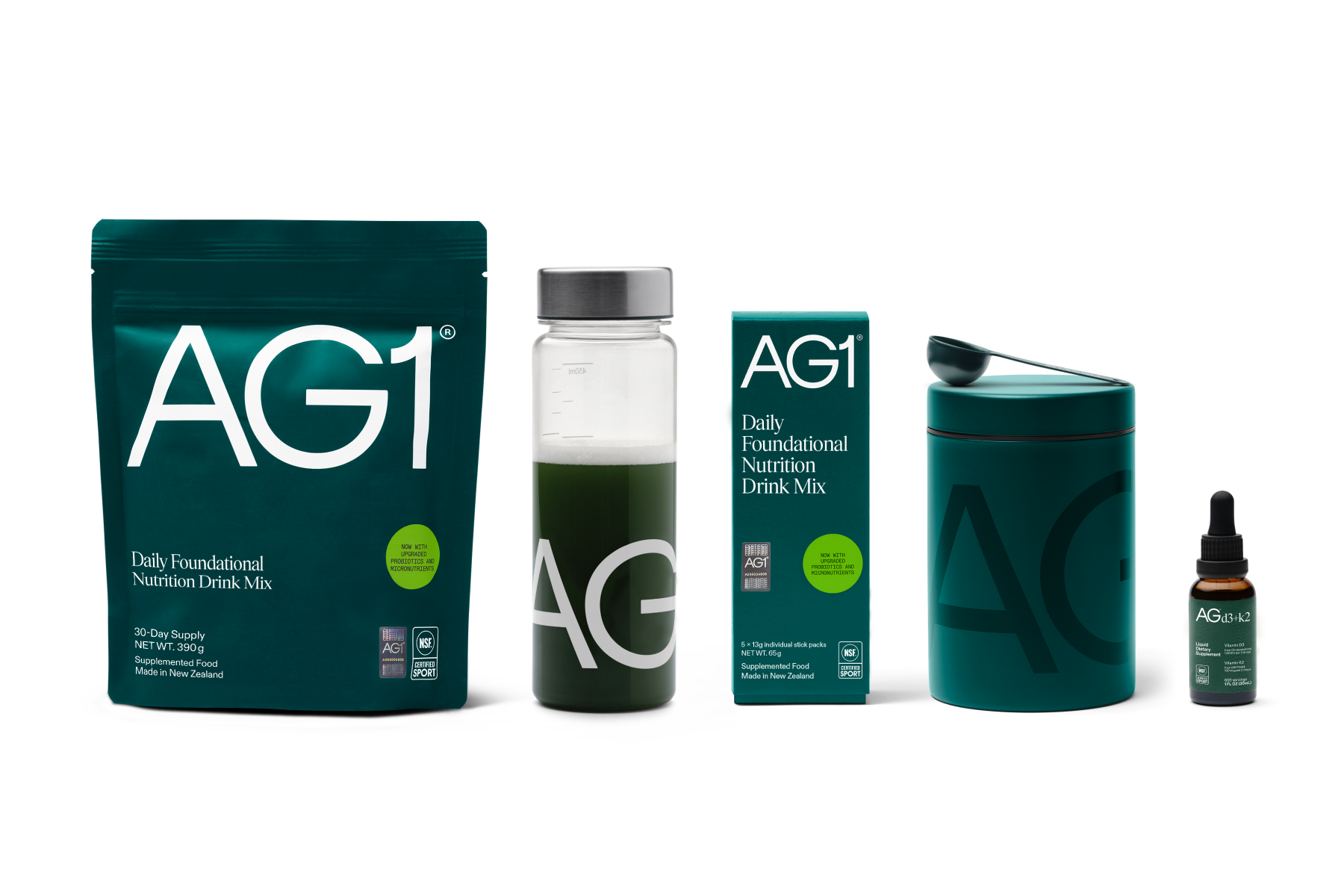
You’ve heard about AG1. Probably from a podcast you didn’t subscribe to. The marketing budget is the size of a midsize country, the host-read scripts have all blurred into the same paragraph, and somewhere along the way the question of whether the product actually works got buried under the question of whether you can stand listening to one more ad about it.
We took 60 days of AG1, including the new 2026 “Next Gen” formula, and tracked three things: energy through the day, gut comfort, and whether we’d reorder. Two of three came back positive. Here’s the part the marketing won’t tell you.
Quick verdict
8.4 / 10
A competent, well-tested daily greens powder with a pricing problem and a science problem the brand prefers not to discuss. Worth it if you’ve failed at five other supplement stacks. Skip it if you have a balanced diet and don’t lose sleep over micronutrient gaps.
What we liked
- NSF Certified for Sport (tested for 280+ banned substances)
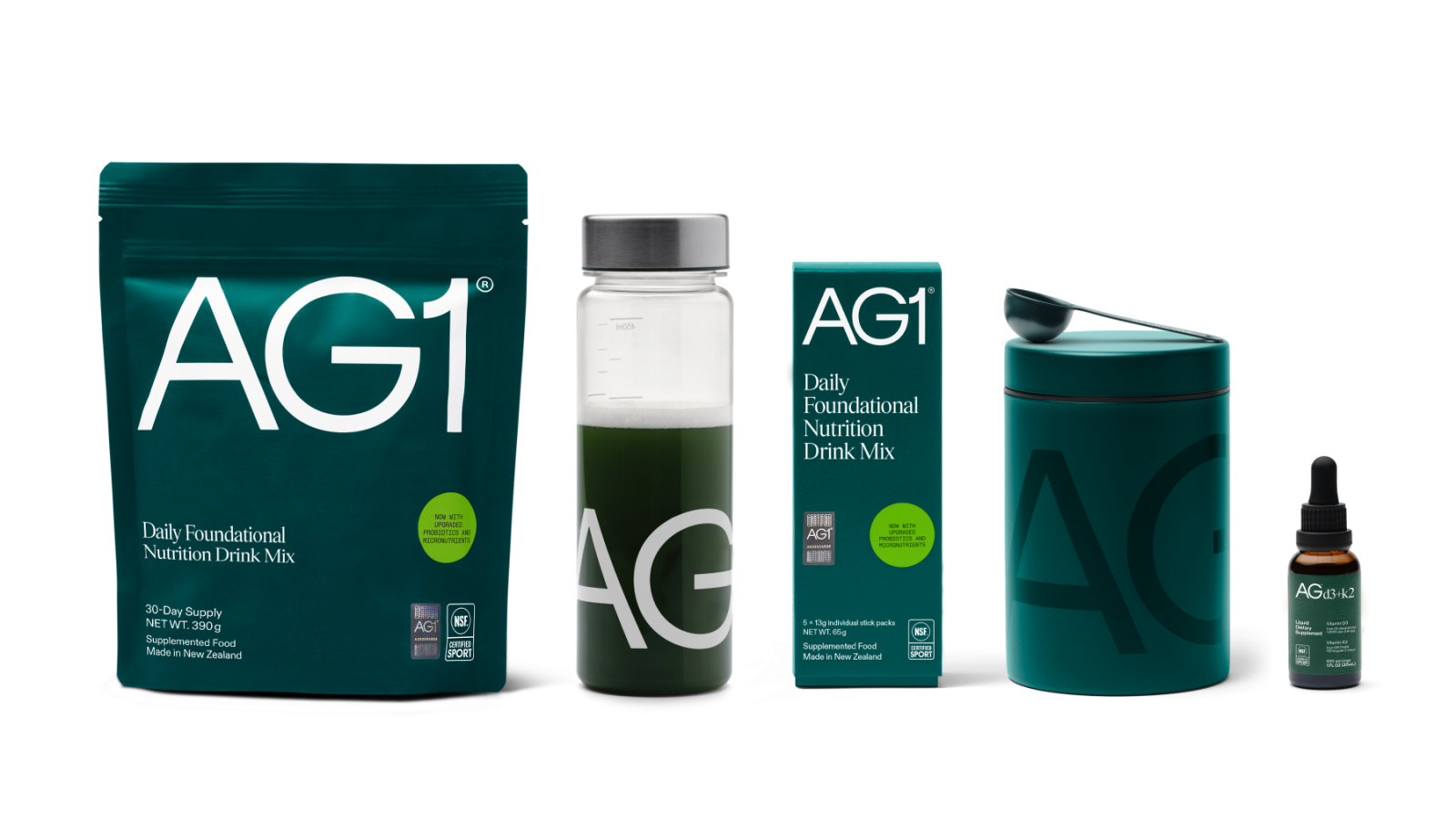
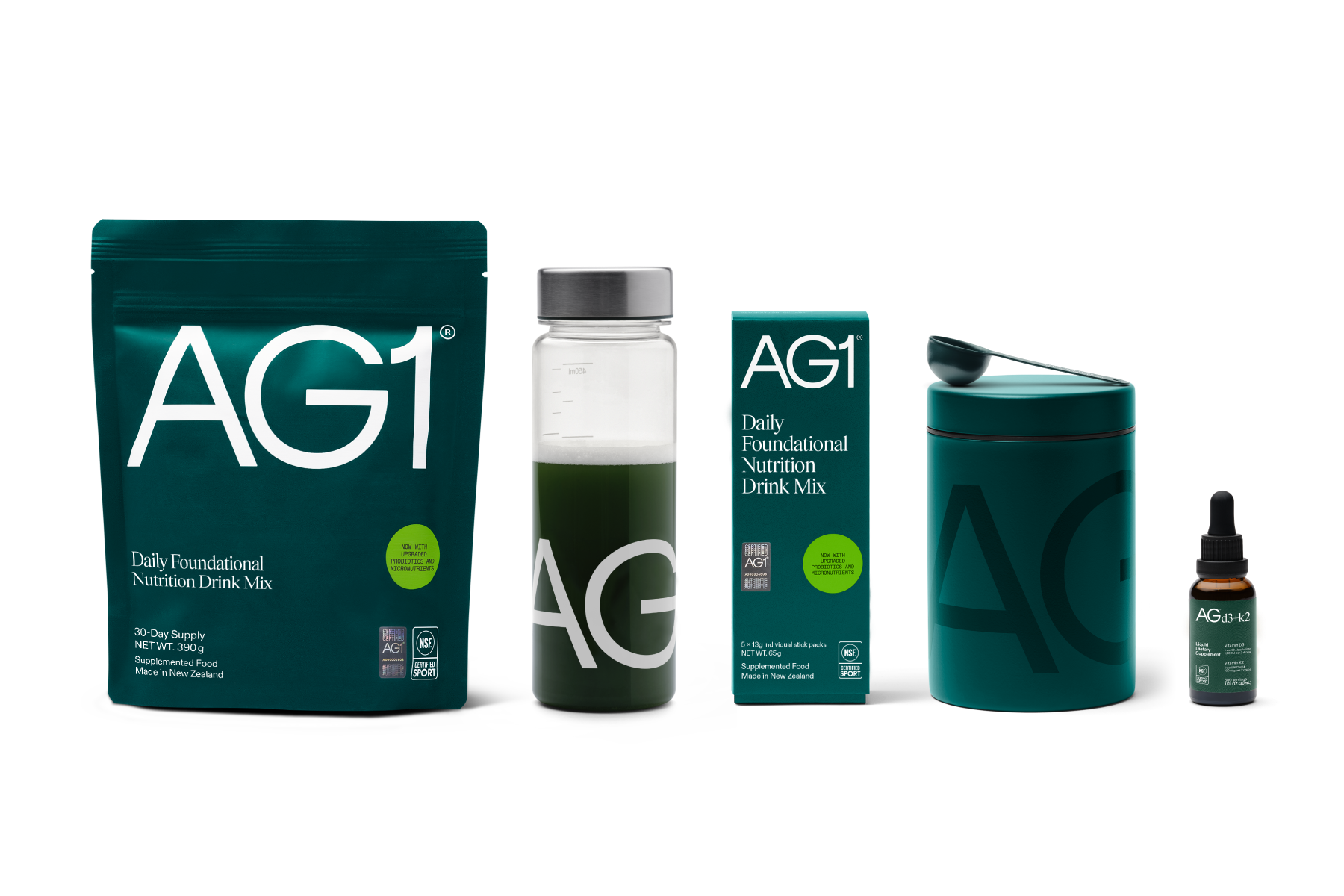
- 2026 Next Gen formula adds 5 clinically-studied probiotic strains
- Single-serving format actually gets taken daily (compliance is real)
- 90-day money-back guarantee, no hassle to cancel
Where it falls short
- $79/month subscription is steep ($2.63 per serving)
- Greens powders have weak peer-reviewed evidence
- Next Gen causes mild GI distress for first 1-2 weeks
- Some users report bitter aftertaste vs the original
| Spec | Value |
|---|---|
| Format | Powder, mix with 8-12 oz cold water |
| Serving size | 13 g (Next Gen, up from 12 g) |
| Ingredient count | 83 (up from 75 pre-2026) |
| Probiotics | 10 billion CFU, 5 new strains |
| Third-party testing | NSF Certified for Sport |
| Subscription | $79/month (30 servings) |
| One-time | $99 / 30-day pouch |
| Guarantee | 90 days, full refund |
| Latest reformulation | Spring 2026 (Next Gen) |
What the science actually says
This is the part of greens powder reviews that usually gets skipped. It shouldn’t.
12
Total “green powder” + health-term papers in the entire literature. Fewer than 15% are randomized, double-blind, placebo-controlled.
PubMed-indexed papers, broad search
One small trial showed an 8% increase in self-reported vitality on a greens powder versus 5% on placebo, which is not statistically significant. Another showed a roughly 30% reduction in oxidative stress markers in a six-week trial. Neither study used AG1 specifically.
What the literature is consistent on: whole vegetables outperform powdered equivalents on every measured outcome. AG1 is not a substitute for eating produce. It’s a supplement for people whose diets have gaps.
NSF Certification for Sport tells you the powder doesn’t contain banned substances or contaminants. It does not validate the health claims. Read AG1’s marketing as: “a comprehensive, clean multivitamin in greens-flavored form.” That’s a fair claim. “Foundational nutrition” is the kind of phrase that sounds true but doesn’t mean anything specific.
The 2026 Next Gen update
This is the first reformulation since 2016. After ten years of “foundational nutrition,” the brand finally moved.
What’s new: 5 additional probiotic strains, three new minerals (molybdenum, boron, choline), the scoop is now 13 g instead of 12, and the flavor is marginally cleaner. The probiotic strains are the most defensible upgrade. The mineral additions are useful only if your diet was specifically low in them.
Heads-up
The increased probiotic load can cause bloating and mild GI distress for the first one to two weeks. This is normal. It also goes away. Several reviewers on r/AthleticGreens flagged a subtle bitter aftertaste with Next Gen versus the original.
Who should and shouldn’t buy this
Buy AG1 if you have tried four or more supplement stacks and stopped taking each by week three. The convenience premium is real, and AG1’s biggest strength is that it gets taken. Compliance is the failure mode of most loose-vitamin protocols.
Buy AG1 if you compete and need NSF Certified for Sport assurance. Banned-substance contamination is a real risk in supplement powders, and AG1 publishes its NSF status openly.
Don’t buy AG1 if you cook three vegetable-rich meals a day and your bloodwork is normal. The math doesn’t work for you. Don’t buy it if you can’t afford $79 a month without thinking about it. Transparent Labs Greens, Nuun Daily, or Bloom Greens cost roughly half. They’re less complete, but not worse for the median person.
AG1 vs Huel Daily Greens
Huel runs slightly cheaper, has more ingredients (91 vs 83), includes vitamin D and K which AG1 doesn’t, and tastes earthier. AG1 has 50x more probiotics, NSF Sport certification, and a smoother taste profile.
If probiotic dose and competition compliance matter, AG1. If price and vitamin D matter, Huel. Neither is a bad choice. Both are better than not eating vegetables.
The honest pick
AG1 works. The 2026 Next Gen update is a real improvement on a 10-year-old formula. The price is the price, and it’s not for everyone.
Three months on it, we kept reordering. That’s the only metric that matters for a daily supplement. If you’ve tried other stacks and stopped, AG1’s compliance premium will probably justify the cost. If you’re disciplined, the math goes the other way.
Either answer is defensible. We just wish the marketing said any of this. If you train hard, pair AG1 with mechanical recovery (we use the Theragun PRO for percussion and the Hyperice Normatec 3 for compression). Stack works better than any supplement alone.
Also tested in this category
- Theragun PRO 5th Gen review
- Hyperice Normatec 3 review
- Hoka Bondi 9 review