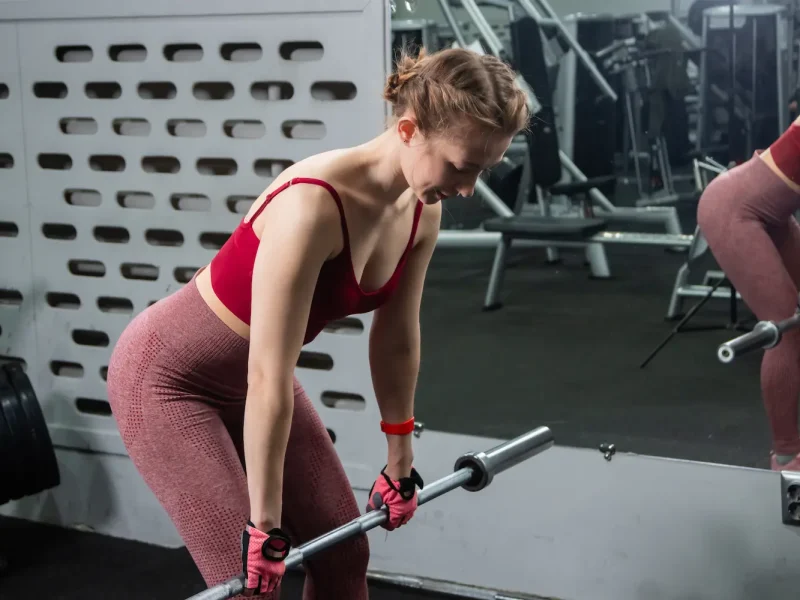

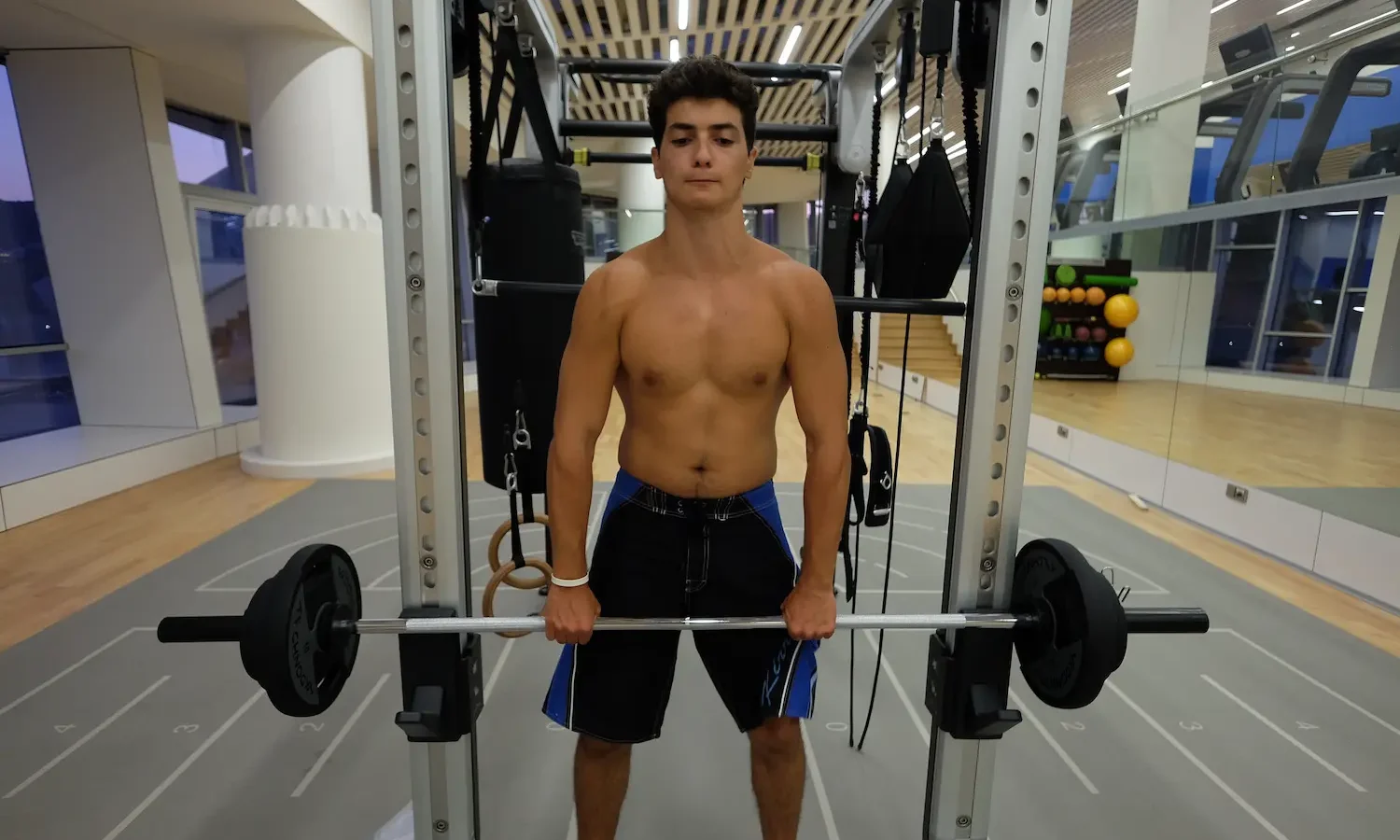
Le rack pull est un soulevé de terre partiel effectué depuis les crochets d’un rack ou d’une plateforme, la barre commençant au niveau des genoux ou au-dessus. Amplitude réduite = charge supérieure de 20-30 % au deadlift complet. Un outil parfait pour surcharger la portion haute du deadlift et construire un dos massif.
Ce que c’est
Le rack pull est un soulevé de terre effectué depuis une barre placée sur les supports (pins) d’un rack ou sur des blocs, généralement à hauteur du genou ou juste au-dessus. Le pratiquant tire uniquement la deuxième moitié du mouvement — la partie où la charge est la plus lourde.
Muscles travaillés
| Muscle | Contribution |
|---|---|
| Erecteurs, trapèzes | ~40 % |
| Fessiers, ischios | ~30 % |
| Grand dorsal | ~20 % |
| Avant-bras (grip) | ~10 % |
Comment faire un rack pull : 5 étapes
En quoi ça diffère du soulevé complet
- Amplitude réduite. Départ au niveau du genou ou au-dessus.
- Charge 20-30 % supérieure. Position mécaniquement avantageuse.
- Focus lockout. Renforce la partie haute du deadlift.
- Cible : trapèzes. Surcharge dorsal + trapèzes.
Erreurs courantes
Quand l’utiliser
Programme le rack pull en accessoire lourd du deadlift, 3-4 séries de 3-6 reps à 105-120 % de ton 1RM deadlift. Excellent en fin de séance dos pour finir sur du lourd sans la fatigue lombaire du deadlift complet. Utilise des sangles — le grip lâche vite.
FAQ
Hauteur des pins ?
Sous le genou = variante longue, plus proche du deadlift complet. Au-dessus du genou = variante courte, focus lockout + trapèzes. Alterne.
Rack pull ou block pull ?
Rack pull = pins fixes, mouvement plus strict. Block pull = blocs libres, plus proche d’un vrai deadlift avec pause. Les deux fonctionnent.
Combien de charge ?
Commence à 100 % de ton deadlift, monte progressivement à 110-120 %. Au-delà, le grip lâche même avec des sangles.
Exercices liés
- Soulevé de terre : version complète
- Soulevé en déficit : opposite (travail démarrage)
- Rowing barre : construction du dos
- Block pull : variante blocs libres
Publié par : Jay — Rédacteur sur dos
Relu, corrigé et validé par : Martin Wood — Rédacteur en chef
Mis à jour le 29 septembre 2026