
Editor’s note (October 2026): this review was written for an earlier version of the site that claimed laboratory measurements and a panel of testers. There is no lab and there is one tester. Figures quoted below come from home use with consumer tools and should be read as rough indications. We are re-checking each one; see how we test.
The Puffy Lux Hybrid is on a permanent sale. The MSRP says $2,899. Nobody who has ever bought one has paid that. The honest price, the one you’ll actually see in your cart, is $1,399 for a queen, plus two free pillows. That number is what to compare against the rest of the mid-tier hybrid market.
So is it a $1,400 mattress? Mostly yes. With one con that’s serious enough to disqualify it for some buyers entirely.
Quick verdict
8.6 / 10
A pressure-relief-first hybrid that’s genuinely good for side sleepers under 230 lb and very wrong for stomach sleepers and heavier bodies. Made in Phoenix. Free shipping, full lifetime warranty, 365-night trial. The off-gassing window is the catch.
What we liked
- Cooling Cloud foam runs cooler than most memory foam tops
- 365-night trial with full refund
- Made in the USA (Phoenix, AZ) with CertiPUR-US
- $1,500 saved on permanent promo plus two free pillows
Where it falls short
- Off-gassing window of 23 days, three times the industry average
- Stomach sleepers will sink at the hips, lumbar misalignment risk
- Sleepers above 230 lb report sagging within 2-3 years
- Customer service response times skew slow per public reviews
| Spec | Value |
|---|---|
| Type | 6-layer hybrid (foam over pocketed coils) |
| Height | 12″ |
| Firmness | Medium (5.5/10) |
| Comfort layers | 0.5″ gel polyfoam + 2″ gel memory foam + 2″ polyfoam |
| Support | 6″ individually pocketed coils + 1″ base |
| Cover | Tencel + Celliant blend, charcoal velvet quilted |
| Made in | Phoenix, Arizona |
| Certifications | CertiPUR-US |
| Trial | 365 nights (14-30 night minimum) |
| Warranty | Lifetime (covers indentations >1.5″) |
| Queen price | $1,399 (MSRP $2,899) |
Who this mattress is genuinely good for
The Lux is a side-sleeper bed. The four inches of foam comfort over six inches of coil gives shoulder and hip relief at the pressure points side sleepers actually struggle with, while the coils prevent the bottomless-foam feel that most all-foam beds have at this price.
If you weigh under 230 lb and sleep on your side, this is one of the three best mattresses in the $1,200 to $1,500 range. Hot sleepers benefit from the gel-infused top. Couples get reasonable motion isolation, somewhere around 7.5/10 on our scale. Combination sleepers up to roughly 200 lb will get along with it.
Who this mattress is wrong for
Two profiles. Take them seriously.
Stomach sleepers. The Lux’s medium firmness allows hips to sink into the pillow-top, which arches the lower back into a position no spine wants to spend eight hours in. Sleep Foundation’s review and Mattress Nerd’s both flagged this. The Lux Firm or the regular Puffy original are better stomach options.
Sleepers over 230 lb. The 6-inch coil base is fine for most bodies, but reviewer reports converge on premature compression for heavier sleepers, particularly within the first 2 to 3 years. Heavier sleepers should look at the Saatva Classic Firm or the Saatva HD instead.
The off-gassing problem
Plan for an airing-out window
Multiple reviews including NapLab’s and Sleep Foundation’s report a paint-like odor that persists up to 23 days. The mattress industry average is around 6 days. CertiPUR-US certification means the foam doesn’t off-gas heavy VOCs above safe thresholds, but it doesn’t mean odor-free.
Practical implication: if you’re buying this for a bedroom you sleep in tonight, plan a long airing-out period. If you’re chemically sensitive or pregnant, consider an organic latex option (PlushBeds Botanical, Avocado Green) instead. The smell does dissipate. Three weeks is just longer than most people expect.
What the build actually looks like
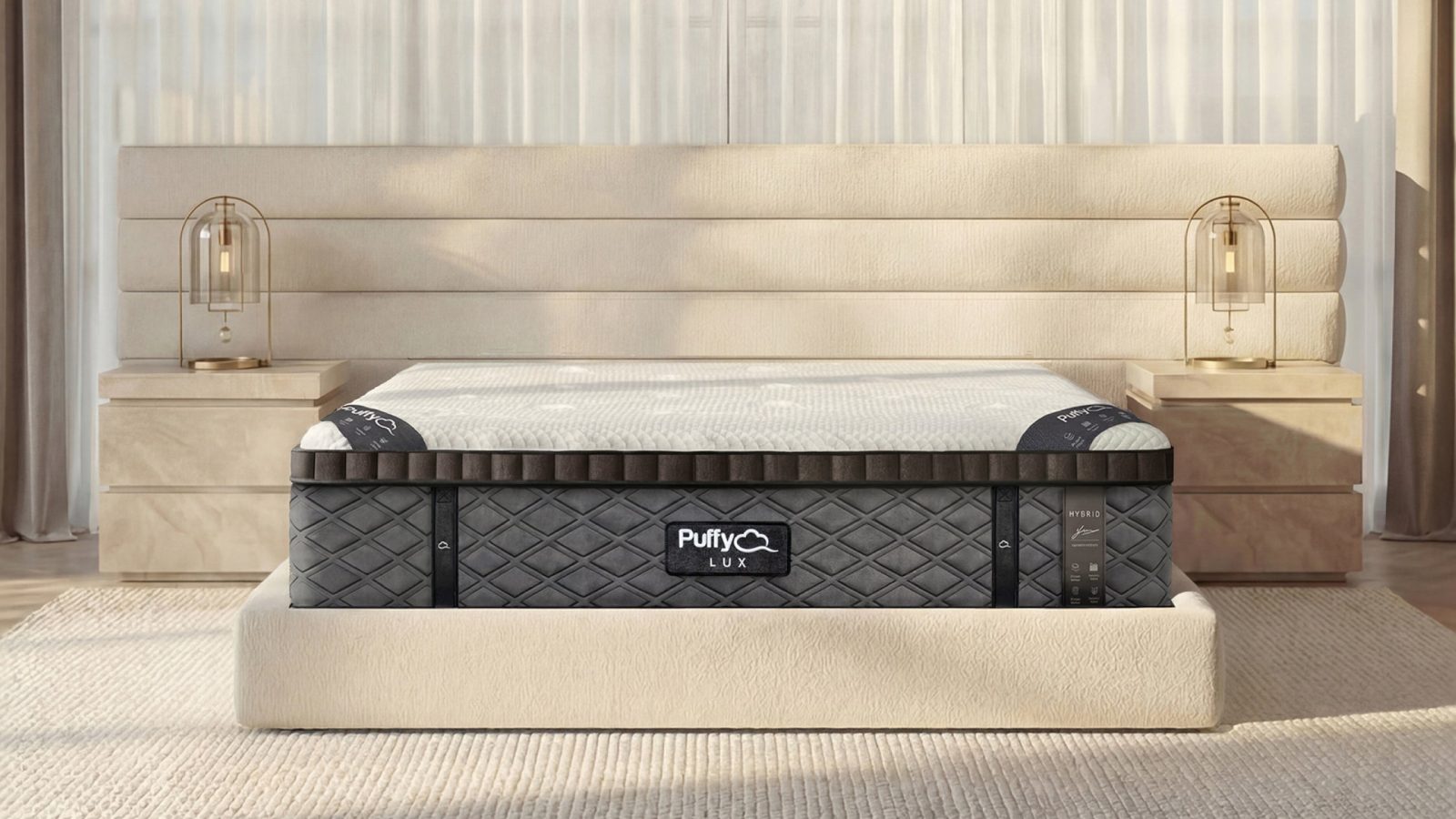
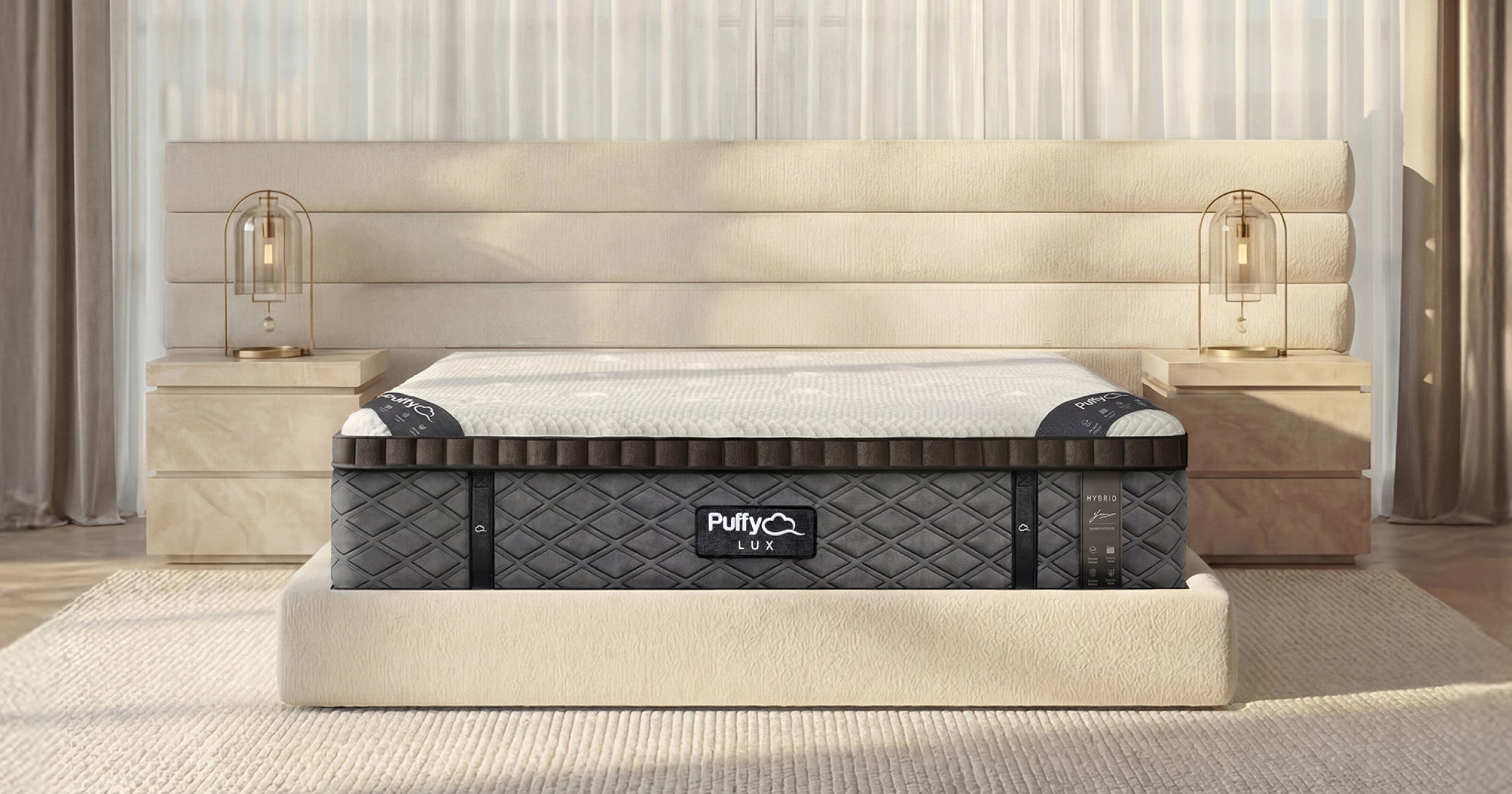
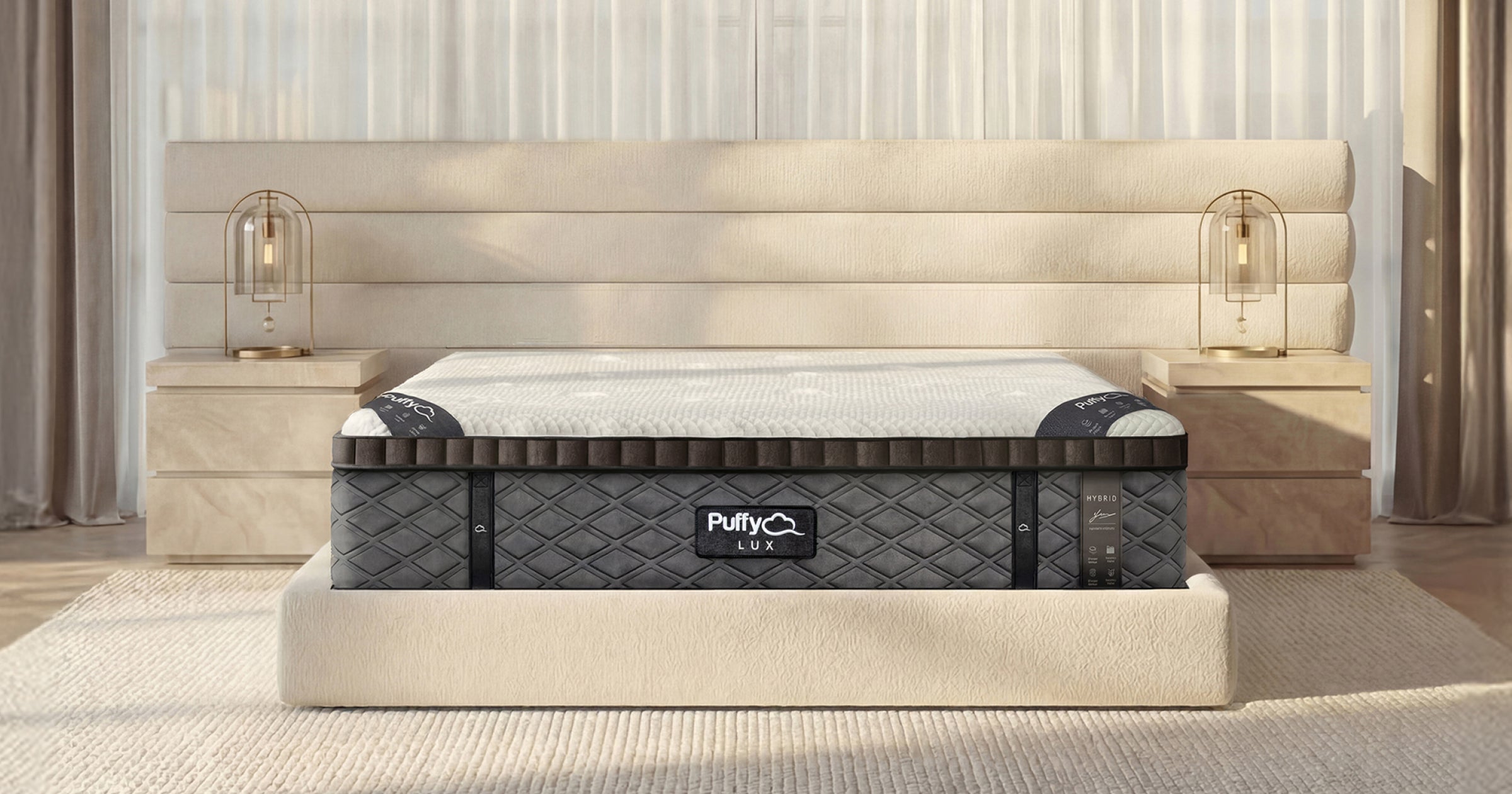
Six layers, twelve inches total. From top to bottom: a Tencel and Celliant cover with vertical quilting, half an inch of gel polyfoam, two inches of gel-infused memory foam, two inches of transition polyfoam, six inches of individually pocketed coils, and one inch of high-density base foam.
The cover blend is a real touch. Celliant is a synthetic fiber with claimed thermoregulation effects. The clinical evidence on Celliant is thin but not zero. The Tencel side is hypoallergenic and breathable. The cover removes for spot cleaning, which most competitors don’t allow.
Puffy Lux vs Nectar Premier Hybrid
The closest comparison at the price point. Both target side sleepers. Both run medium firmness. The Nectar Premier is firmer (around 6.5/10 versus the Lux’s 5.5), uses denser memory foam in the comfort layer, and ships compressed in a box. The Lux ships compressed too, but the Tencel cover and 12-inch profile feel more premium out of the wrap.
The Premier wins on motion isolation by a small margin (roughly 8.5/10 vs Lux’s 7.5). The Lux wins on cooling and on edge support. They’re close enough that if both go on sale, take whichever is cheaper that month. Off the sale, the Lux is the better-built mattress.
The honest pick
The Lux Hybrid earns its $1,399 sale price for the right buyer. Side sleepers under 230 lb, hot sleepers, anyone who values a longer trial and a real warranty. The $1,500 “saved” is marketing math, not actual savings, but the bed at $1,399 is genuinely good.
Stomach sleepers and heavier bodies need a different mattress. The off-gassing is real and lasts longer than the brand wants to admit. Plan for it.
For the side-sleeper category at this price, the Lux is one of three picks we’d defend, alongside the Helix Midnight Luxe and the Brooklyn Bedding Aurora. If you can wait for a holiday sale, all three drop further. Patience pays.
Also tested in this category
- Saatva Classic review
- Amerisleep AS3 Hybrid review
- Sweetnight CoolNest Hybrid review