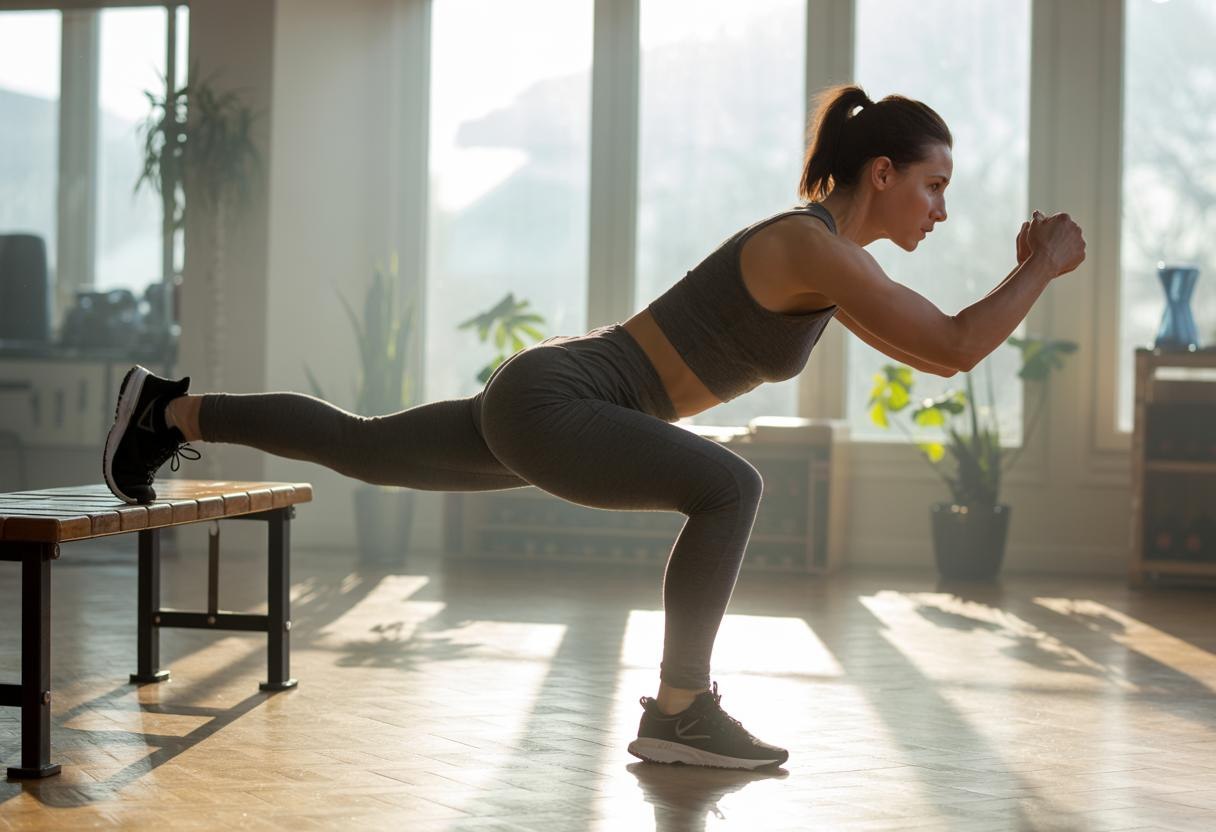


The Bulgarian split squat is a staple exercise in strength training routines, renowned for its effectiveness in building lower body strength and stability.
However, there are numerous alternatives that provide similar benefits while targeting different muscle groups or accommodating various fitness levels. In this article, we will delve into several powerful Bulgarian split squat alternatives, examining their unique benefits and applications.
Squats: the foundation of leg workouts
No discussion about lower body exercises is complete without mentioning squats. These foundational movements are essential for building strength in the quadriceps, hamstrings, glutes, and core muscles.
Body weight squats
One of the simplest yet most effective squat variations is the bodyweight squat. This exercise requires no equipment and can be performed anywhere. Simply stand with your feet shoulder-width apart, lower your hips back and down as if sitting into a chair, and then return to the starting position. Bodyweight squats enhance muscular endurance and improve overall lower body flexibility.
Goblet squats
Goblet squats introduce a weighted element by holding a kettlebell or dumbbell close to your chest. This variation engages the core more intensely while still focusing on the primary muscles targeted by traditional squats.
- Stand with feet shoulder-width apart
- Hold the weight close to your chest
- Lower into a squat, keeping your chest up
- Push through your heels to return to standing
Lunges: versatile and dynamic movements
Lunges offer a dynamic alternative to Bulgarian split squats, effectively engaging multiple muscle groups while offering versatility in application.
Walking lunges
This lunge variation emphasizes balance and coordination while working the legs and glutes. Perform walking lunges by taking a large step forward and lowering your hips until both knees are bent at 90-degree angles. Step forward with the opposite leg and repeat.
Reverse lunges
Reverse lunges involve stepping backward rather than forward, which can reduce stress on the knee joints. Start from a standing position, step one foot back, and lower into a lunge. Push off the back foot to return to standing and switch legs.
Leg press: focused muscular engagement
The leg press is an excellent machine-based alternative that isolates the lower body muscles for intense strength training. It primarily targets the quadriceps, hamstrings, and glutes.
Horizontal leg press
Using a leg press machine, you can perform horizontal presses where you push the platform away from your body using your legs. This exercise allows control over the resistance and focuses intensely on the lower body’s primary muscles.
Seated leg press
The seated leg press variation similarly involves pushing against resistance but places you in a seated position, which may be more comfortable for those with back issues.
- Sit with your back flat against the pad
- Place your feet shoulder-width apart on the platform
- Push through your heels to extend your legs
- Slowly return to the starting position
Extensions and curls: isolation and definition
Leg extensions and curls are exercises that provide specific focus on certain muscle groups, making them perfect for targeted strengthening and definition.
Leg extensions
Performed on a leg extension machine, this exercise isolates the quadriceps for concentrated muscle-building efforts. Set the machine to the desired weight, sit and adjust the pads to rest on your shins, then extend your legs to lift the weight and lower it back down slowly.
Hamstring curls
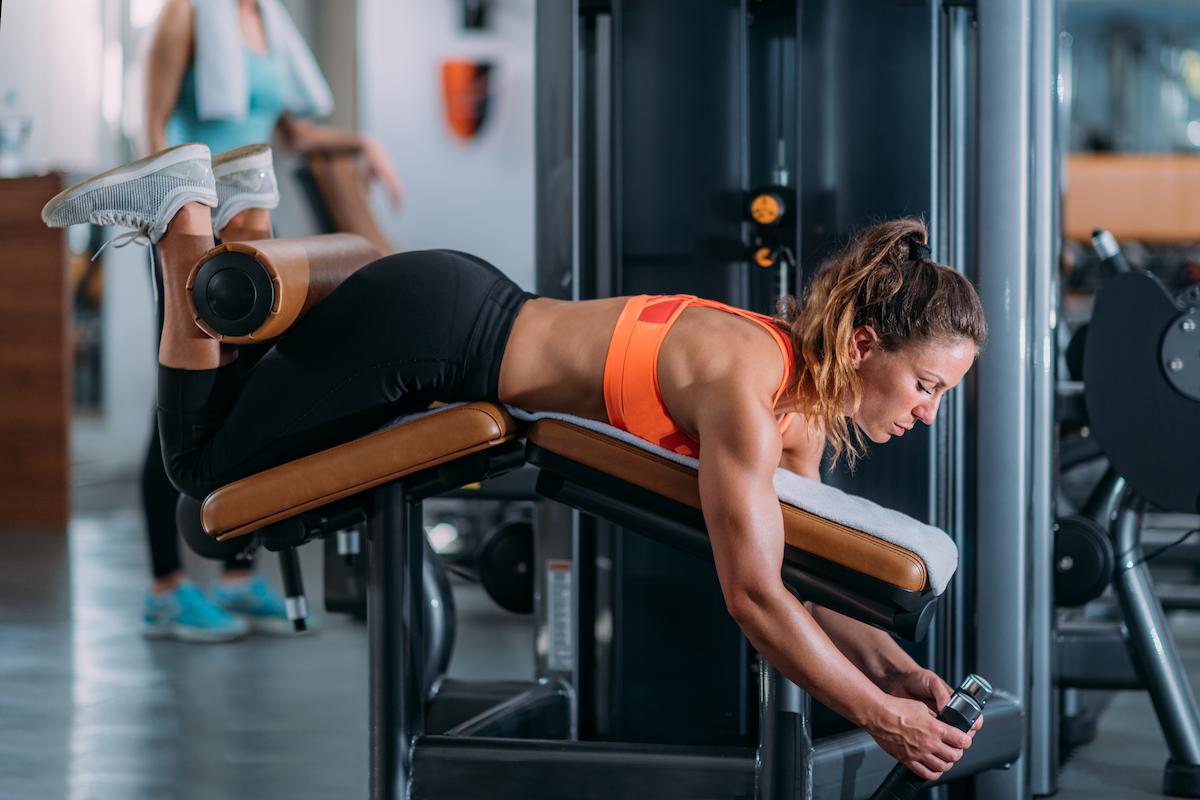
Hamstring curls target the hamstrings exclusively. Using a seated or lying leg curl machine, you’ll flex your knees to bring your heels toward your glutes, then slowly extend them back to the starting position.
Step-ups: building unilateral strength
https://www.youtube.com/watch?v=v2GfVnjmY7c
Step ups are a functional movement that mimics everyday activities while offering exceptional lower body benefits. They significantly develop unilateral strength and balance.
Platform step ups
Perform platform step ups by placing one foot on a sturdy platform or bench and pushing through your heel to lift your body onto the platform. Step back down and repeat on the other side.
Aerobic step ups
Aerobic step ups use a lower platform and quicker pace, enhancing cardiovascular fitness in addition to strength gains. Simply alternate stepping up and down at a brisk rhythm.
- Use a platform approximately knee height
- Engage your core throughout the movement
- Maintain proper form to prevent injury
Glute bridges and hip thrusts: posterior chain powerhouses
These exercises prioritize the glutes and hamstrings, important components of the posterior chain, contributing to overall lower body strength and stability.
Glute bridges
For glute bridges, lie on your back with knees bent and feet flat on the ground. Lift your hips toward the ceiling, squeezing your glutes at the top, then lower back down. This movement is excellent for isolating and strengthening the glute muscles.
Hip thrusts
Similar to glute bridges but slightly more advanced, hip thrusts involve elevating your upper back on a bench and using added weights to increase resistance. Position a barbell across your hips, thrust your hips upward while stabilizing your torso, and control the descent.
RDL: emphasizing hamstring and lower back strength
Romanian Deadlifts (RDLs) are integral for developing the hamstrings, glutes, and lower back muscles, providing a comprehensive workout for the posterior chain.
Dumbbell rdls
Dumbbell RDLs offer a user-friendly introduction to the movement. Hold a dumbbell in each hand, soften your knees, hinge at the hips to lower the weights while maintaining a straight back, and rise to the starting position.
Barbell rdls
More advanced lifters might prefer barbell RDLs, which follow the same movement pattern but use heavier weights for greater muscle engagement.
- Keep the spine neutral throughout the movement
- Avoid rounding the shoulders
- Lift primarily using your hamstrings and glutes
Curtsy lunges: adding variety and balance
Curtsy lunges incorporate a twisting motion, targeting the glutes, thighs, and improving overall balance and coordination.
Basic curtsy lunges
Starting from a standing position, move one leg behind and across the other like a curtsy, lower your hips, and rise back up. Repeat on the opposite side, ensuring controlled and deliberate movements.
Dumbbell curtsy lunges
Adding weights increases the intensity of the exercise. Hold a dumbbell in each hand while performing the lunge, maintaining a strong core to stabilize the movement.
Incorporate these Bulgarian split squat alternatives into your workout routine to diversify your exercises and achieve balanced leg development. Each exercise offers unique benefits, allowing you to tailor your training to meet specific strength and performance goals.
Published by: Martin Wood — Writer covering exercices
Reviewed, corrected and approved by: Martin Wood — Editor-in-chief
Updated on September 29, 2026